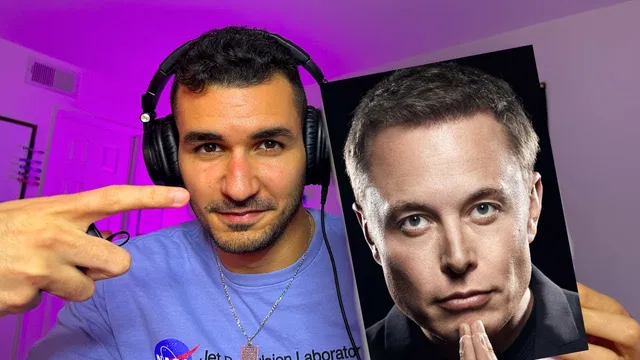
10 Lessons from Elon Musk's Biography
Based on Ali Alqaraghuli, PhD's video on YouTube. If you like this content, support the original creators by watching, liking and subscribing to their content.
Trauma is framed as a potential source of long-term motivation and deeper thinking, even though it originates from negative experiences.
Briefing
Elon Musk’s biography, as interpreted through a set of “lessons,” frames success less as luck or hustle and more as a repeatable psychology: early adversity can become fuel, and the real edge comes from how a person thinks, decides, and builds teams around a mission. The most central claim is that trauma—bullying, violence, and other childhood hardships—can hardwire a drive to act, push for deep thinking, and keep searching for solutions. That early pressure doesn’t get romanticized as good; it’s treated as a negative experience that still shapes motivation, critical thinking, and a willingness to confront difficulty.
From there, the guidance pivots to what should *not* dominate personal and business growth. Biohacking trends—pill stacks, injections, extreme optimization rituals—are dismissed as largely overhyped. The argument isn’t that health habits don’t matter, but that they’re not the main lever for performance. Musk’s early routine is used as a counterexample: while building ZIP 2, he ate fast food repeatedly (including Jack in the Box), suggesting that diet may provide baseline energy, while the decisive factor is a compelling goal and the right environment—especially being surrounded by capable people who hold one another accountable.
Decision-making and thinking methods take center stage next. Musk is portrayed as unusually willing to ask for advice early and often—collecting mentors in high school, college, internships, and even during the Stanford PhD decision process. The practical takeaway is a two-step loop: seek input across domains, then filter it through one’s own judgment and intuition. That intuition is strengthened by “first principles” thinking: breaking assumptions down to fundamentals by asking “why” until the real driver is clear. The transcript illustrates this with marketing metrics—arguing that entrepreneurs should focus on the few variables that connect directly to outcomes (like cost per click versus cost per sale) rather than drowning in dashboards.
Another theme is emotional realism. When setbacks hit—such as a PayPal power struggle that led to a coup—Musk is described as retreating, acknowledging the loss, and sending a conciliatory message that accepts fault while committing to do better. The lesson is to admit defeats without spiraling: analyze what went wrong, correct course, then stop replaying it.
The later lessons shift from cognition to lifestyle and leadership. Sustained effort requires fun; Musk is depicted as most energized when tinkering with engineers on hard problems tied to meaningful impact. Recruiting, likewise, is framed as non-transactional: top talent is attracted by mission and vision, not just salary. Musk’s authenticity—being relentlessly himself rather than chasing guru-style branding—is presented as a safeguard against regret and noise. Even hard work is paired with life: taking time off to travel and enjoy relationships is treated as part of maintaining perspective and returning with sharper ideas.
Finally, the set culminates in a single skill: decision-making. Everything—business, life, scaling—reduces to making better decisions more consistently. The transcript’s author ties that philosophy to his own work, positioning systems and leverage as tools that free time for higher-quality decisions.
Cornell Notes
The transcript distills Elon Musk’s biography into ten lessons aimed at how people build momentum and make progress. It argues that early trauma can become a lasting source of motivation and deep thinking, and that the biggest performance lever is often goal clarity and the right environment—not extreme self-optimization. Musk’s approach to growth emphasizes asking for mentors, then filtering advice through intuition, and using first-principles thinking by repeatedly asking “why” to reach fundamentals. Setbacks should be acknowledged and analyzed, then released after corrective action. Long-term success also depends on enjoying the work, recruiting through mission rather than transactions, staying authentic, valuing life alongside hard work, and improving decision-making frameworks.
How does the transcript connect childhood trauma to later success without treating trauma as “good”?
Why does the transcript dismiss biohacking as a primary growth strategy?
What decision-making framework does the transcript attribute to Musk?
What does “first principles” thinking mean in practical terms here?
How should someone respond to major setbacks, according to the transcript’s PayPal example?
What does the transcript claim attracts top talent most effectively?
Review Questions
- Which “lever” does the transcript treat as more important than biohacking for performance, and what evidence is used to support that claim?
- How does the transcript connect first-principles thinking to avoiding herd behavior in business decisions?
- What balance does the transcript suggest between hard work and taking time off, and why is that balance portrayed as strategically useful?
Key Points
- 1
Trauma is framed as a potential source of long-term motivation and deeper thinking, even though it originates from negative experiences.
- 2
Extreme biohacking is treated as an overhyped substitute for clearer goals and better environments.
- 3
Musk-style decision-making is described as collecting diverse advice, then filtering it through intuition rather than following input blindly.
- 4
First-principles thinking is operationalized as repeatedly asking “why” to reach the fundamental driver behind assumptions and metrics.
- 5
Setbacks should be acknowledged and analyzed, then released after corrective action to prevent unproductive rumination.
- 6
Sustained effort is linked to genuine enjoyment of the work and stimulation from collaborating with smart engineers.
- 7
Recruiting top talent is portrayed as mission-driven rather than salary-driven, with authenticity and life balance supporting long-term performance.