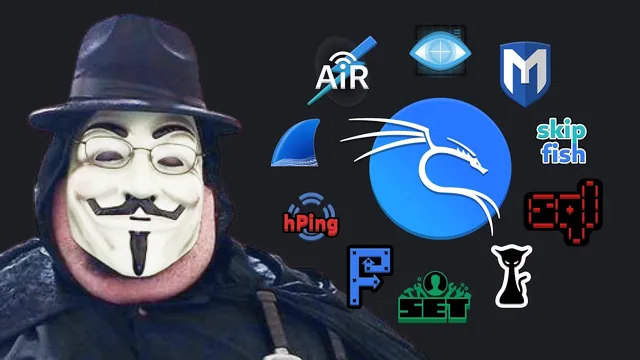
10 open source tools that feel illegal...
Based on Fireship's video on YouTube. If you like this content, support the original creators by watching, liking and subscribing to their content.
Kali Linux bundles an end-to-end set of open-source security tools that can be chained from reconnaissance to exploitation and impact, so permission and ethics are non-negotiable.
Briefing
The core takeaway is that Kali Linux bundles a set of open-source tools that can map networks, inspect traffic, test web apps, recover data, and even automate exploitation—capabilities that can be used for legitimate security work or for serious harm. The emphasis throughout is ethical hacking: scanning and penetration testing only make sense with explicit permission, because misuse can trigger criminal liability and real-world damage.
The tour starts with reconnaissance. Nmap is presented as a “peeping tom” for networks: it sends packets across an IP range, then interprets responses to identify open ports and infer operating systems—information that can later guide targeted exploitation. A more aggressive Nmap run adds OS detection and uses traceroute to reveal packet paths, helping uncover misconfigurations.
From there, the focus shifts to seeing what’s really happening on the wire. Wireshark is framed as a deep packet inspection tool that captures traffic in real time and lets analysts examine protocol payloads offline. The transcript uses the example of spotting suspicious connections to a foreign IP address and then inspecting the payload to understand what data was exposed.
Exploitation automation is then highlighted with Metasploit. The walkthrough describes using the Eternal Blue vulnerability module to target Windows systems, selecting a reverse-shell payload, configuring the local host IP, and running the exploit—resulting in remote access that can be used to manipulate files and install additional malware. The message is clear: these frameworks lower the barrier to attack, which is why defensive learning matters.
Wireless attacks are covered next via Aircrack. The workflow described—using aircrack-ng style commands to monitor a Wi‑Fi network, crack WPA keys, and capture traffic—underscores why HTTPS and encryption matter. The transcript argues that even if attackers intercept packets, HTTPS helps protect form submissions and other sensitive data.
Password security becomes the next battleground. Hashcat is used to illustrate how hashed passwords (created with one-way algorithms like SHA or BCrypt and salted) still can be cracked with the right strategy. The transcript contrasts brute force with dictionary attacks using large common-password lists (e.g., a “rockyou.txt” style file) and notes that weaker hashes like MD5 can be cracked quickly, while stronger schemes like bcrypt can take far longer.
Web vulnerability discovery and follow-on exploitation are addressed with Skipfish for recursive crawling and vulnerability scanning (including issues like cross-site scripting and SQL injection). The transcript then connects findings to tools such as sqlmap for database enumeration and schema mapping, and to SQL injection as a method of tricking servers into executing raw SQL.
Finally, the list expands into forensics and disruption. Foremost is described as file carving for recovering data from disk images by scanning for file signatures (like JPEG headers/footers). For denial of service, hping3 is presented as a way to flood an IP with packets; distributed across compromised machines, that becomes a DDoS. Social engineering is treated as another major risk area, with Kali’s social engineering toolkit enabling phishing-style attacks using email, QR codes, SMS, and even cloned websites.
Taken together, the set of tools forms a pipeline—from discovery to exploitation to persistence and impact—making the ethical boundary and permission requirement the central guardrail for anyone learning these techniques for defense.
Cornell Notes
Kali Linux includes open-source tools that support the full lifecycle of security testing: reconnaissance (Nmap), traffic analysis (Wireshark), exploitation automation (Metasploit), wireless auditing (Aircrack), password cracking (Hashcat), web vulnerability discovery (Skipfish), database mapping and SQL injection testing (sqlmap), forensic recovery (Foremost), denial-of-service testing (hping3), and social engineering (Social Engineering Toolkit). The transcript stresses that these capabilities can be used legally only with explicit permission, because misuse can cause real harm and criminal consequences. The practical throughline is that each tool feeds the next stage: scanning reveals targets, inspection confirms exposure, exploitation attempts compromise, and follow-on actions can extract data or disrupt services. Learning the workflow matters because it helps defenders anticipate how attacks unfold.
How does Nmap turn network “visibility” into actionable attack intelligence?
Why does Wireshark matter even when attackers don’t “break in” directly?
What makes Metasploit dangerous from a capability standpoint?
How do Hashcat and password hashing interact—why aren’t hashes “safe forever”?
What’s the relationship between Skipfish findings and sqlmap-style database attacks?
How do hping3 and the social engineering toolkit differ in impact?
Review Questions
- Which stage of an attack chain does each tool primarily support (recon, inspection, exploitation, credential recovery, web/database testing, forensics, disruption, or social engineering)?
- What specific evidence does Wireshark provide that can’t be inferred from port scanning alone?
- Why does the transcript emphasize HTTPS and 2FA in the context of Aircrack and password cracking?
Key Points
- 1
Kali Linux bundles an end-to-end set of open-source security tools that can be chained from reconnaissance to exploitation and impact, so permission and ethics are non-negotiable.
- 2
Nmap identifies open ports and can infer operating systems; adding traceroute-style path analysis can reveal misconfigurations worth investigating.
- 3
Wireshark’s packet capture and protocol-level inspection helps confirm what data was actually transmitted and whether sensitive payloads were exposed.
- 4
Metasploit’s exploit modules (e.g., Eternal Blue) and payload automation can turn known vulnerabilities into remote access quickly, lowering the barrier to harm.
- 5
Hashcat demonstrates that salted password hashes are still crackable via brute force or dictionary attacks, with speed depending heavily on the hashing algorithm (e.g., MD5 vs bcrypt).
- 6
Skipfish and sqlmap form a common web attack workflow: crawl and find injection surfaces, then enumerate databases and schemas to target specific weaknesses.
- 7
hping3 can drive denial-of-service by flooding traffic, while social engineering tooling targets users through phishing and credential capture, including via cloned sites.