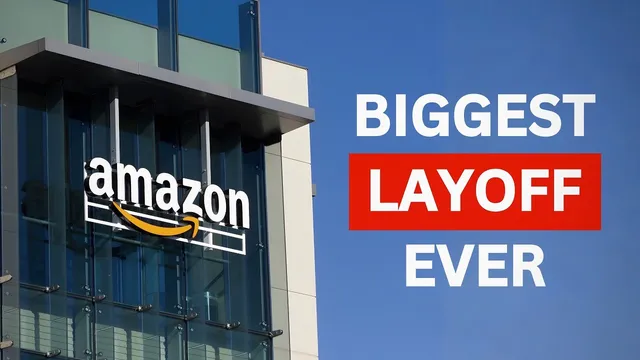
14,000 Jobs loss at Amazon
Based on The PrimeTime's video on YouTube. If you like this content, support the original creators by watching, liking and subscribing to their content.
Amazon’s estimated 14,000 layoffs are portrayed as concentrated in corporate (desk-based) roles rather than warehouse and delivery positions.
Briefing
Amazon laid off about 14,000 workers, a cut framed as hitting primarily corporate roles rather than warehouse or delivery staff. With Amazon employing roughly 1.55 million people overall, the layoffs are estimated to come from the company’s corporate workforce of about 350,000—meaning roughly 4% of that office-based group is being reduced. The scale is also compared to the entire headcount of Netflix, underscoring how large Amazon is even when the company targets a specific segment of employees.
Rather than attributing the job losses to the usual headlines—AI-driven restructuring or broader economic factors like “zero interest rate phenomenon” and COVID—the discussion points to internal management changes set in motion by Amazon CEO Andy Jasse. On September 16, 2024, Jasse released a letter calling for a fundamental shift in how Amazon operates, arguing that the company’s decision-making is bogged down by process and excessive approvals. A key directive asked each “S team organization” to increase the ratio of individual contributors to managers by at least 15% by the end of Q1 2025. In practice, that means either reducing managerial layers, hiring more individual contributors, or both—an attempt to strip away process and increase autonomy.
That management push is presented as a likely driver of the layoffs. Amazon has long been described as a workplace where process dominates and approvals pile up, leaving engineers spending more time on sign-offs than on building. About a year after the directive, the layoffs are characterized as aligning with that goal: Business Insider’s reported internal breakdown of the first 7,500 cuts is cited as showing 78% of those roles tied to managers. The implication is that the company is executing a managerial downsizing consistent with the “more ICs, fewer managers” mandate.
The account also stresses that the layoffs remain harmful for the people affected, even if the organizational logic is clear. It questions whether Amazon can truly become the “world’s largest startup” it claims to want to be, noting that removing process is difficult in a company historically built around it. Still, the discussion draws a parallel to Netflix’s earlier restructuring after the dot-com bubble, when roughly 33% of staff were cut and productivity reportedly rose—fueling a long-running emphasis on freedom and responsibility.
Finally, the transcript shifts from workforce strategy to career advice, arguing that expertise built through sustained learning is likely to remain valuable even as AI changes entry-level hiring. It also includes a claim—sourced to an internal leak—that Amazon is testing a new internal AWS service called “AWS HRC,” described as a “human resource and communication service,” alongside familiar AWS offerings like SNS, SQS, S3, IoT, and VPC.
Cornell Notes
Amazon’s reported layoffs of about 14,000 people are framed as largely targeting corporate roles rather than warehouse or delivery workers. With roughly 350,000 employees in the corporate workforce, the cut is estimated at about 4% of that segment. The discussion links the layoffs to CEO Andy Jasse’s September 16, 2024 directive to increase the individual-contributor-to-manager ratio by at least 15% by Q1 2025, aiming to reduce process and expand autonomy. A cited internal breakdown suggests a manager-heavy impact (78% of the first 7,500 cuts). The broader takeaway is that organizational restructuring—especially managerial layer reduction—may be a more direct cause than AI panic or macroeconomic explanations.
Why does the transcript argue the layoffs are mostly corporate rather than frontline?
What internal change is presented as the likely driver of the layoffs?
How does the transcript support the claim that managers are hit harder than individual contributors?
What historical example is used to suggest productivity can rise after layoffs?
What career message is offered in response to AI-related job fears?
What additional claim is made about Amazon’s internal technology?
Review Questions
- What specific ratio change did Andy Jasse request by Q1 2025, and how does that connect to the layoffs described?
- According to the transcript’s estimates, what percentage of Amazon’s corporate workforce is affected by the 14,000 job cuts?
- How does the transcript use Netflix’s 2001 layoffs to support its view of what can happen to productivity after workforce reductions?
Key Points
- 1
Amazon’s estimated 14,000 layoffs are portrayed as concentrated in corporate (desk-based) roles rather than warehouse and delivery positions.
- 2
With about 350,000 corporate employees out of roughly 1.55 million total, the cuts are estimated at around 4% of the corporate workforce.
- 3
CEO Andy Jasse’s September 16, 2024 directive to raise the individual-contributor-to-manager ratio by at least 15% by Q1 2025 is presented as the main internal cause.
- 4
A cited internal breakdown claims 78% of the first 7,500 layoffs were manager roles, supporting a managerial-heavy impact.
- 5
The transcript argues that AI panic and macro explanations are distractions compared with internal process and organizational restructuring.
- 6
Netflix’s 2001 experience—about a 33% staff reduction followed by reported productivity gains—is used as a precedent for “freedom and responsibility.”
- 7
The transcript encourages engineers to build expertise through sustained learning, positioning senior engineering as still in demand even amid AI disruption.