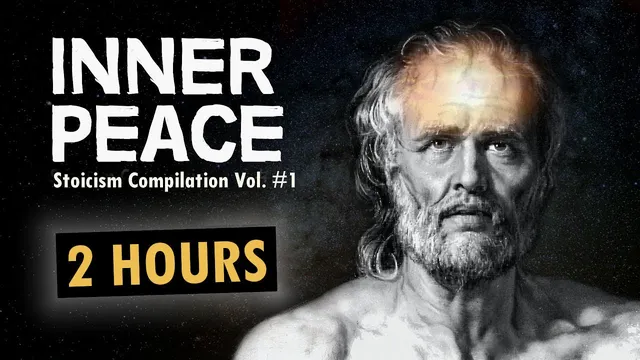
2 Hours of Stoic Wisdom | A Journey to Inner Peace and Tranquility
Based on Einzelgänger's video on YouTube. If you like this content, support the original creators by watching, liking and subscribing to their content.
Stoic inner peace depends on virtue and rational judgment, not on externals like wealth, reputation, or possessions.
Briefing
Stoic philosophy’s core message is that lasting peace comes from loosening attachment to anything outside personal control—especially “preferred indifference” like wealth, reputation, and status—because those things are unreliable, temporary, and ultimately unable to deliver happiness. The transcript frames modern stress as a predictable result of overthinking and clinging to illusions of control. When people chase externals, joy becomes brief and frustration becomes common; when they accept that virtue is the only stable good, happiness no longer depends on Fortune’s swings.
Seneca’s warning captures the trap: surrendering oneself to Fortune creates a “web of disquietude” that cannot be escaped. The proposed remedy is not indifference in the sense of caring about nothing, but a disciplined ranking of values: virtue and rational action matter, while externals—money, health, fame, even social standing—are “indifferent” to happiness in the strict sense. The transcript adds a second pillar: impermanence. Life is portrayed as constant flux—empires rise and fall, bodies decay, and even Earth itself is destined to vanish. Marcus Aurelius’s imagery of being in a river, like a sparrow glimpsed and gone, is used to argue that clinging to what constantly changes is irrational and painful.
From there, the transcript builds a practical mental routine: live in the present, because the past and future can’t be possessed. Thoughts are treated as mental fabrications rather than the world itself, so the mind’s job is to use reason as a tool rather than let it run the show. A related exercise—“view from above”—turns daily worries into something small by imagining a telescope zooming out from one’s room to the neighborhood, the planet, the galaxy, and beyond. The effect is emotional recalibration: changing perspective changes feeling, which then changes behavior.
The transcript then shifts from inner reframing to daily discipline. “Do less” is presented as a stoic strategy: eliminate unnecessary actions and conversations, focus on essentials, and plan tasks the night before to reduce mental churn. It also recommends brief “escapes” inward rather than travel as a cure, arguing that wherever one goes, one carries the mind. Another recurring practice is negative visualization—preparing for loss and hardship by imagining them in advance—paired with memento mori, remembering death to fight procrastination and shrink the power of fear.
When crises hit—whether personal illness, economic instability, war, or mass panic—the transcript emphasizes the Stoic dichotomy of control: focus on one’s own actions, not on outcomes. It argues that panic is irrational turmoil that throws rationality away, and it warns against media-driven amplification of disaster. In a crisis, Stoicism becomes social as well as personal: work together, play one’s part, forgive, and adapt to new rules.
Finally, the transcript extends these ideas to relationships and emotions. Jealousy and envy are treated as products of fear, entitlement, and the illusion of permanence; love is distinguished from lust, and attachment is reframed as “preferred indifference”—valuable but not owned. Even grief is handled through preparation: mourn, but do so with the Stoic understanding that separation is built into life’s impermanence. The overall takeaway is consistent: inner peace is achieved by strengthening the faculty of judgment—so that virtue, not Fortune, determines how one meets change.
Cornell Notes
Stoic wisdom in the transcript centers on one practical claim: happiness and inner peace depend on what’s within personal control—judgment and virtuous action—not on externals like wealth, reputation, or even loved ones. Because everything outside the self is impermanent and vulnerable to change, clinging to it creates stress, anxiety, and frustration. The transcript links this to several methods: live in the present, remember impermanence, use perspective exercises like “view from above,” and practice negative visualization and memento mori to reduce fear. In crises, Stoicism becomes a discipline of action—work together, adapt, and avoid panic by focusing on rational choices rather than outcomes. The result is equanimity: a calm mind that can flourish even when circumstances collapse.
Why does “preferred indifference” (wealth, reputation, possessions) fail to deliver lasting happiness?
How does impermanence change the way a person should value life’s attachments?
What does it mean to “live in the present,” and why does the transcript treat past and future as unavailable?
How do “view from above,” negative visualization, and memento mori work together as mental training?
What is the Stoic approach to panic during widespread crises?
How does Stoicism reinterpret jealousy and envy in relationships?
Review Questions
- Which category of things does Stoicism treat as truly foundational for happiness, and why are externals considered unreliable?
- How do impermanence and the “present moment” argument undermine rumination about past and future?
- What practical steps does the transcript recommend for staying calm during crises, and how do they relate to the dichotomy of control?
Key Points
- 1
Stoic inner peace depends on virtue and rational judgment, not on externals like wealth, reputation, or possessions.
- 2
“Preferred indifference” can be useful for living well, but it cannot be the foundation of lasting happiness because it’s temporary and uncontrollable.
- 3
Impermanence is not just a concept; it’s used to re-rank priorities and reduce emotional investment in what constantly changes.
- 4
Several mental practices—view from above, negative visualization, and memento mori—are designed to shrink fear and recalibrate perspective.
- 5
In crises, panic is treated as irrational turmoil; calm comes from focusing on controllable actions and adapting to new conditions.
- 6
Stoic ethics extends to relationships by reframing love and attachment as valuable but not owned, which reduces jealousy and entitlement.
- 7
The transcript repeatedly links tranquility to disciplined attention: live in the present, do less, and avoid media-driven amplification of disaster.