#3 Collaboration, or what? (Plus 2 BREATHTAKING LIVE Demos!) • Zettelkasten Live
Based on Zettelkasten's video on YouTube. If you like this content, support the original creators by watching, liking and subscribing to their content.
Collaboration in a Zettelkasten workflow succeeds when it’s grounded in shared method and compatible thinking, not when multiple authors try to merge drafts immediately.
Briefing
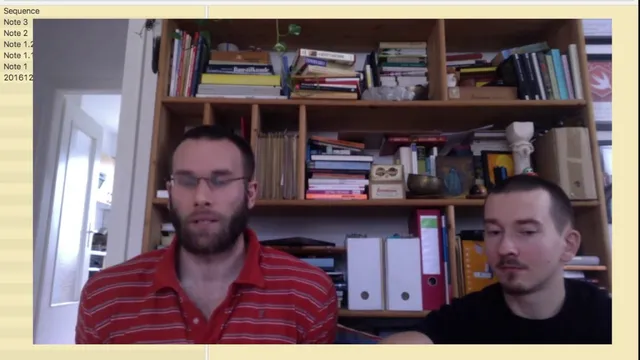
Collaboration in the Zettelkasten world works best when it’s designed around shared method—not shared authorship. Two writers describe how a German book on the “Selle custom” (Zettelkasten) method started as a joint manuscript idea, but the practical outcome became mostly one person’s notes with the other adding selective “spicing.” The key lesson: collaboration only stays smooth when the collaborators think in compatible ways and can interpret each other’s notes without constant translation.
Their process began with archives already built from using the method for about one or two years. Each person had dozens of notes (one archive reportedly had 144 notes; the combined project ended up around 100 note files after filtering and discarding confusing or unhelpful material). Instead of trying to merge everything immediately, they created a list of note titles, organized chapters from those titles, and brainstormed outlines. The original plan—each person producing their own outline and then merging—fell apart, largely because integrating drafts was painful and time-consuming. In practice, the manuscript writing became a single voice, with the other collaborator contributing expansions and additions when the timing and structure allowed.
Beyond logistics, the discussion puts heavy weight on note craftsmanship, especially titles. Notes are treated like blog posts: readers (including future readers) have little patience for cleverness or word games. Titles should be plain, direct, and specific enough that the note can be found and understood years later. The writers argue that “meticulous” naming is not aesthetic fussiness; it’s a survival strategy because memory fades and even the author won’t reliably recall what a note meant.
When the conversation turns to what collaboration means, two distinct questions emerge. First: does the Zettelkasten method itself play a role in collaboration? The answer is yes, but only in certain collaboration styles—like sharing finished text or using outlines as a shared structure. If collaboration is split into independent sections (common in academic papers), the method doesn’t automatically unify the work; it mainly helps with organization and later retrieval.
Second: how can people collaborate with “set of customers” (read: other contributors or collaborators) using the method? Their approach relied on sharing a Dropbox folder containing each person’s notes and then writing separately while still being able to understand what the other was doing. They emphasize that this works when backgrounds are similar enough that notes remain interpretable. Cross-disciplinary collaboration—like a physician collaborating with a physicist and then adding a biologist—can create friction if notes are mixed in one repository without a shared interpretive frame.
The episode also broadens into open-science and tool strategy. Plain text is presented as the backbone of software-agnostic note-taking: it makes multi-author editing feasible and reduces lock-in. The discussion contrasts plain-text workflows (where diffs can be merged line-by-line) with Word-style collaboration that often forces file splitting and comment-based review. Finally, the live demo explains how notes “communicate” through links: start with a concept note, branch into structured “processing” notes, and later refine by replacing broader links with more specific ones during maintenance. The overall message is pragmatic: collaboration is less about merging everything at once and more about building interoperable archives, disciplined titles, and a shared method that survives time, tools, and authorship changes.
Cornell Notes
Collaboration works best in a Zettelkasten workflow when it’s built on shared method and compatible thinking, not when multiple authors try to co-write everything in one blended draft. The book project described began with both collaborators’ archives and a title-based outline strategy, but integration proved difficult; the final manuscript largely reflected one author’s notes with targeted additions from the other. A central takeaway is that note titles must be meticulous—plain, direct, and specific—because future understanding depends on them. The discussion also distinguishes collaboration styles: splitting academic writing into independent sections doesn’t automatically benefit from the method, while shared archives and structured outlines can. Plain text and stable linking conventions help multiple people work without tool lock-in and keep the system usable over years.
Why did the co-authored book plan shift from “merge outlines” to mostly one author’s manuscript?
What’s the most important rule about note titles, and why?
How does the method relate to collaboration in academic-style writing?
What makes shared archives workable, and what breaks it?
Why is plain text emphasized for multi-author writing and long-term usability?
How do notes “communicate” in the demo workflow?
Review Questions
- What specific title practices does the discussion recommend, and how do they affect retrieval years later?
- In what collaboration scenarios does the Zettelkasten method help most, and why does it matter that writing becomes the bottleneck?
- How does plain text reduce friction in collaborative editing compared with Word-style workflows?
Key Points
- 1
Collaboration in a Zettelkasten workflow succeeds when it’s grounded in shared method and compatible thinking, not when multiple authors try to merge drafts immediately.
- 2
Title discipline is central: notes should use plain, direct, specific titles so future readers can find and understand them without decoding cleverness.
- 3
Multi-author writing often fails at the “unified voice” stage; notes can be shared, but producing a coherent long manuscript is the real bottleneck.
- 4
Shared archives (e.g., via a common folder) can work when collaborators can interpret each other’s notes; mixed repositories become harder when backgrounds diverge.
- 5
Plain text supports both software-agnostic longevity and collaborative editing through diff/merge workflows rather than comment-based review.
- 6
Linking plus maintenance is how notes “communicate”: start with concept nodes, branch into structured and processing nodes, then replace broad links with more specific ones as understanding deepens.
- 7
Productivity isn’t guaranteed by taking lots of notes; finished writing and compiling into text are what make the system produce measurable output.