4 Months Left. How To Make 2025 Your Best Year Yet
Based on Ali Alqaraghuli, PhD's video on YouTube. If you like this content, support the original creators by watching, liking and subscribing to their content.
Use a four-pillar sequence—clarity, identity, prioritization, execution—rather than starting with tactics for action.
Briefing
The core message is that the remaining months of the year can be used to “turn your life around” by focusing on four pillars—clarity, identity, prioritization, and execution—rather than jumping straight to productivity tactics. The approach matters because most people drift into reactive busyness, especially when deadlines loom, and they often lack a heart-and-mind match for what they truly want. Without that alignment, goals either don’t stick or they collapse under procrastination, overwhelm, or emotional avoidance.
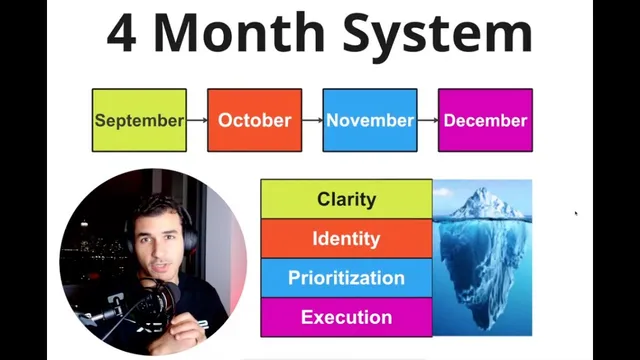
The plan is built as a four-month system starting at the end of August (with September as month one). Each month targets one pillar, though the steps can also be compressed into a shorter sprint. The first month is clarity: write down a single question—“What do I want?”—and treat the answer as something that must be revisited repeatedly. The emphasis is on iterative discovery: people may pursue a goal they think they want, only to realize later that the excitement doesn’t match what they actually want deep down. The speaker describes working with nearly 10,000 ADHD entrepreneurs and claims that about 90% don’t truly know what they want, even when they believe they do. Progress requires aligning intellectual desire (what makes sense) with emotional desire (what feels right), because either side alone can lead to sabotage or aimless follow-through.
The second month is identity, framed less as “woo” affirmations and more as behavior-backed self-concept. Identity is treated as what someone repeatedly sees themselves doing—and what the environment can provide as daily evidence. The speaker argues that external cues can “remind” the self, which is especially relevant for ADHD, where forgetting goals and intentions can be common. A key example is the speaker’s consistent professional tech-CEO aesthetic (NASA/SpaceX-themed clothing, similar desk setup, and a consistent watch), presented as engineered evidence that reinforces the identity of running world-changing companies. Identity work is described as engineered and careful, not generic, and it includes both self-talk and environmental design.
With clarity and identity in place, the third month becomes prioritization. Prioritization is presented as a decision-making system that ties daily tasks to goals and identity—so work moves the needle rather than simply feeling important. The failure mode is urgency-based reaction: emails, texts, and sudden fires pull attention by default. Without a prioritization system, even good intentions and to-do lists degrade into reactive living.
The final month is execution, defined as action and implementation—“pulling the trigger” after the direction is set. Execution is hardest when tasks are boring, unclear, or emotionally uncomfortable, because initiation can require more dopamine than low-effort distractions like checking a phone. Tactics focus on reducing friction: environment design, putting tasks in view, and using action triggers such as noise-canceling headphones, desk setup, specific songs, short workouts, showers, countdowns, or even brief “close your eyes for 5 minutes” resets. The speaker also stresses that execution problems often trace back to earlier pillars—unclear goals, mismatched identity, or weak prioritization.
Overall, the four-month structure offers a disciplined sequence: discover what’s wanted, build who must be, choose what matters, then act reliably. The speaker also points to their programs at Next Level Systems as support for building these systems, citing thousands of clients across Hyperfocus and Next Level Peak Performance.
Cornell Notes
A four-month turnaround system centers on four pillars: clarity, identity, prioritization, and execution. The process starts by repeatedly answering “What do I want?” because goals must match both emotional desire and intellectual intent to avoid self-sabotage. Next, identity is reinforced through engineered evidence—environment cues and self-talk—so the person’s actions become consistent with the self-concept. Then prioritization connects daily tasks to goals and identity, preventing urgency-driven reaction. Finally, execution turns plans into action using friction-reducing tactics like environment design and action triggers (countdowns, short resets, specific routines). The sequence matters because execution failures often reflect earlier gaps in clarity, identity, or prioritization.
Why does the system begin with clarity instead of jumping to productivity or action?
What does “identity” mean here, and how is it reinforced beyond affirmations?
How does prioritization differ from simply working on what’s urgent or important?
What makes execution difficult, and what tactics are offered to make starting easier?
Why does the speaker say execution problems often trace back to earlier pillars?
Review Questions
- What does “heart and mind alignment” mean in the clarity step, and why is it described as necessary for progress?
- Give two examples of how identity can be reinforced through external evidence rather than only self-talk.
- Explain the difference between urgency-based reaction and identity/goal-based prioritization, and how that affects daily task selection.
Key Points
- 1
Use a four-pillar sequence—clarity, identity, prioritization, execution—rather than starting with tactics for action.
- 2
Spend a full month on clarity by repeatedly answering “What do I want?” to ensure emotional and intellectual goals match.
- 3
Treat identity as behavior-backed self-concept reinforced by daily external evidence (environment cues) and engineered self-talk.
- 4
Build a prioritization system that ties day-to-day tasks to goals and identity, preventing urgency-driven reaction.
- 5
Reduce execution friction by designing the environment, making tasks visible, and using action triggers like countdowns or short routines.
- 6
When execution stalls, check earlier pillars first: unclear goals, weak identity reinforcement, or missing prioritization usually cause procrastination and overwhelm.