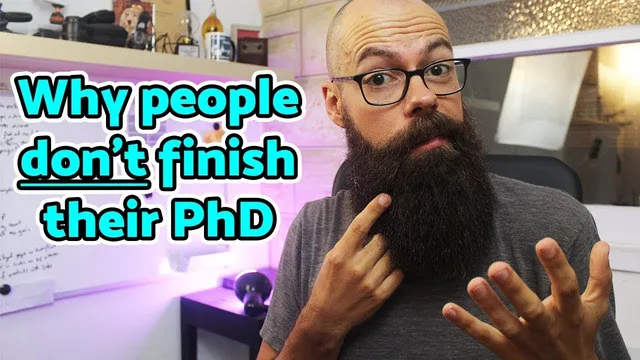
4 reasons people do not finish their PhD | The most common!
Based on Andy Stapleton's video on YouTube. If you like this content, support the original creators by watching, liking and subscribing to their content.
A common dropout trigger is a late realization of the doctorate’s true cost—financial, professional, and emotional—after students see how academia actually works.
Briefing
People don’t finish a PhD for reasons that have little to do with ability and a lot to do with cost, timing, and life disruption. The most common trigger is a late realization of the “true cost” of a doctorate—financially, professionally, and emotionally—after students spend enough time inside labs to understand what academia really demands and what it pays. Early on, many PhD candidates don’t know postdocs well or interact with professors regularly, so the academic path can look cleaner and happier from the outside. As relationships deepen with supervisors and researchers, the trade-offs become harder to ignore: the opportunity cost of delaying a career, the reality of living on a stipend that may not rise with inflation, and the sense that the academic life they admired may not be as fulfilling as it appeared. Academia also shapes researchers through trends and institutional priorities, meaning people often end up pursuing work that is “close” to what they want rather than exactly what they want—leaving many only partly satisfied.
A second major reason shows up near the finish line: students leave to write up too late—or not at all—because job pressure becomes immediate. After years of experiments, they still need to secure employment to support themselves, especially once scholarships end. The logic becomes internal and practical: “I’m 26 or 27; I need to earn money and become a real person,” and the thesis hanging over them starts to feel like an obstacle rather than a project. Many then take a job and plan to finish on evenings and weekends, but the thesis often slips into the background until the doctorate effectively stops.
Third, personal circumstances can abruptly change the priorities of a PhD student. A PhD is not just a research plan; it’s a whole life with family, friends, anxieties, and hopes. Tragic events—such as the death of a parent—can force a confrontation with mortality and a re-evaluation of what matters, pushing someone to leave a default path and pursue a different kind of life. Even when the change isn’t tragic, major “earthquakes” in personal circumstances can make the doctorate feel misaligned with what the student now wants.
The fourth reason is structural: early topic selection can be wrong. A research direction that’s too narrow, too hard, or not broad enough can make it difficult to build a coherent path through the work. Good supervision and a supportive university should allow adjustments, with progress checks typically happening around the end of the first, second, and third years. When students can’t see a clear route to completion—getting stuck “in the trees” instead of seeing the “forest”—they may lose momentum. The transcript frames this as a resilience test: PhDs involve repeated obstacles, and leaning into what isn’t working can sometimes open new pathways. But when determination and forward momentum stop, the risk of not finishing rises sharply.
Cornell Notes
The transcript identifies four common reasons PhD students don’t finish: (1) realizing the true cost of the doctorate—financially, professionally, and emotionally—after seeing what academia is really like; (2) leaving near the end to start a job before writing up, then never returning to the thesis; (3) major personal circumstance changes that force a reassessment of priorities; and (4) early topic selection that makes progress toward completion unclear. It emphasizes that these outcomes aren’t about lack of capability. Instead, they reflect opportunity costs, institutional realities, life disruptions, and planning problems. The practical takeaway is that finishing often depends on managing trade-offs early, protecting the write-up window, and keeping a flexible, trackable research plan.
Why does “true cost” become the biggest reason people stop a PhD?
What goes wrong when students leave “to write up” near the end?
How do personal circumstances change the decision to stay in a PhD?
How can early topic selection derail completion?
What mindset helps when nothing seems to work in a PhD?
Review Questions
- Which of the four reasons in the transcript is most likely to affect you, and what early warning signs would you watch for?
- What practical steps could prevent the “job before write-up” pattern described here?
- How would you redesign a PhD topic plan if the research direction became too narrow or too hard to complete on schedule?
Key Points
- 1
A common dropout trigger is a late realization of the doctorate’s true cost—financial, professional, and emotional—after students see how academia actually works.
- 2
Stipends and opportunity costs can make the delayed career payoff feel unjustified, especially when earnings don’t rise with inflation.
- 3
Many students stop near the end by leaving for employment before writing up, then never fully return to the thesis.
- 4
Major personal life changes can force a reassessment of priorities, making the PhD feel misaligned with what the student now wants.
- 5
Wrong early topic selection—too narrow, too hard, or not broad enough—can block a clear path to completion.
- 6
Regular progress checks (often around years one through three) are crucial for confirming the project is on track and allowing topic adjustments.
- 7
Resilience matters: treating obstacles as problems to tackle and maintaining forward momentum reduces the risk of not finishing.