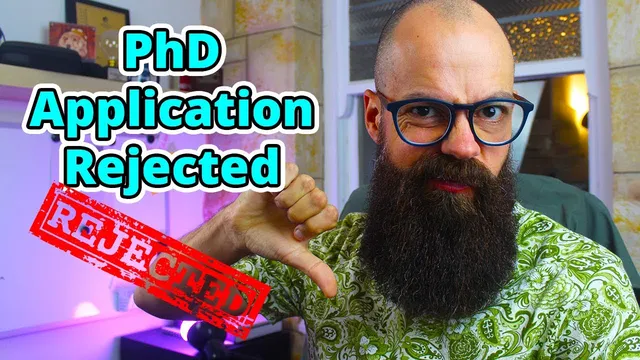
5 Common Reasons PhD Applications Are Rejected
Based on Andy Stapleton's video on YouTube. If you like this content, support the original creators by watching, liking and subscribing to their content.
Make the applicant’s value to the department and supervisor unmistakable by leading with the strongest, most relevant evidence (research experience and publishing ability).
Briefing
PhD applications get rejected most often for reasons that are less about raw talent and more about how clearly an applicant’s value lands on a specific reviewer’s desk. Competition has intensified across academia: even tenured professors say they likely wouldn’t secure their own jobs under today’s application volume. In that environment, the difference between “super amazing” and “crazy awesome” can come down to presentation—especially whether the application makes the case for fit, productivity, and timing in a way that feels unmistakably tailored.
One major rejection driver is that the application fails to make the value to the department or supervisor obvious. Reviewers operate in a subjective “gray zone,” where each examiner weighs different signals, so applicants need to understand what that particular group values. The transcript emphasizes that universities want papers and productivity, while supervisors want lab output. That means putting the strongest evidence at the top: relevant research experience, demonstrated ability to publish, and—if available—peer-reviewed papers or authorship on papers. The bar has risen sharply; where applicants once weren’t expected to have publications before starting a PhD, it’s now common to see graduates with multiple papers and even high-impact work. Alongside research output, the application should highlight skill sets, relevant connections to experts or well-known academics, and the strength of supervisor recommendations.
To sharpen that “why you” case, the transcript recommends a three-part framing that should be instantly readable: why you, why them, and why now. “Why you” should explain why the applicant is the best resource for the project—comfortably and specifically. “Why them” matters most when the PhD involves a defined project: the applicant should show they’ve targeted the application to the group’s expertise, equipment, on-site skills, and the project’s fit rather than applying broadly. “Why now” signals timing—whether the proposed area is a hot topic, growing in relevance, or experiencing increased attention (including correcting misconceptions in science communication). The goal is to make acceptance feel logical, not generic.
Another common rejection reason is the “smell of generic answers.” Copy-pasting across multiple applications can strip away persuasive power, and reviewers have developed a “sixth sense” for templates. Applicants can reuse material, but every section that can be personalized should be adjusted to match the university, project, supervisor, and instructions. Even small presentation errors—misplaced formatting, missing information, a sentence that doesn’t read cleanly, or a dot out of place—can sour reviewer impressions. With competition so high, those tiny issues become easy grounds for rejection. The transcript closes by urging applicants to use checklists, follow instructions down to the letter, and have someone else review the full package to catch mistakes before submission.
Cornell Notes
PhD rejections often come down to clarity and fit, not just credentials. With academia’s competition rising, reviewers look for applications that make value obvious—especially whether the applicant can deliver papers and productive lab work. A strong application should foreground “why you, why them, and why now” so the case for acceptance is immediate and tailored to the specific project, supervisor, and timing in the field. Generic copy-pasted responses and even minor formatting or content errors can trigger rejection because reviewers have little patience for anything that looks lukewarm. Targeting, precision, and a final checklist-style review are presented as practical defenses against common rejection reasons.
Why does “value” need to be obvious at the top of a PhD application?
What does a “why you, why them, why now” structure accomplish?
How should applicants handle applying to multiple PhD programs without sounding generic?
Why do small formatting or instruction-following errors matter so much?
What role does external review play in preventing rejection?
Review Questions
- What specific evidence should be placed at the top of a PhD application to make the “value” case immediately clear?
- How would you demonstrate “why them” for a PhD with a defined project rather than a general research area?
- What kinds of generic mistakes (content and formatting) are most likely to trigger rejection under high competition?
Key Points
- 1
Make the applicant’s value to the department and supervisor unmistakable by leading with the strongest, most relevant evidence (research experience and publishing ability).
- 2
Use a clear “why you, why them, why now” structure so reviewers can quickly see why acceptance makes sense for that specific project and timing.
- 3
Target each application to the specific university, supervisor, and project details; avoid leaving any section that can be personalized in a generic form.
- 4
Treat copy-paste as a starting point, not a finished product—templates lose persuasive power when they aren’t customized.
- 5
Follow application instructions down to the letter; missing fields or incorrect formatting can become easy rejection grounds.
- 6
Do a final checklist-style pass and have someone else review the full submission to catch small errors that can sour reviewer impressions.