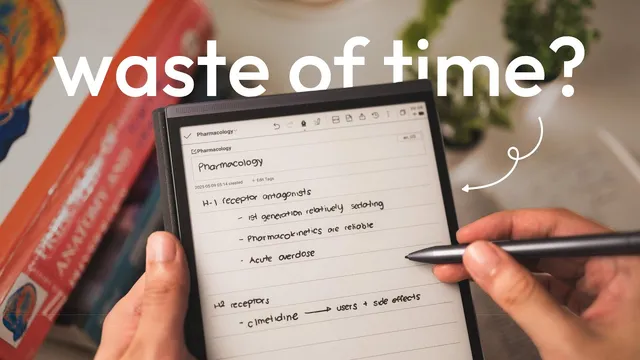
5 study habits you need to QUIT NOW before it's TOO LATE | based on science
Based on Kai Notebook's video on YouTube. If you like this content, support the original creators by watching, liking and subscribing to their content.
Prioritize sleep after studying; late-night sessions can reduce focus and increase forgetting as circadian rhythms decline.
Briefing
Studying ineffectively usually isn’t about effort—it’s about habits that quietly sabotage attention, memory, and feedback. The clearest warning sign is poor sleep: late-night studying may feel productive, but tired brains struggle to focus and encode information correctly. As circadian rhythms wind down, working memory, attention span, and cognitive flexibility drop, making it easier to forget what was “learned” the night before. Instead of pushing through the night, the advice is to sleep after studying a bit so information can consolidate in the brain.
A second major trap is cramming. Pulling all studying into the night before a quiz or test overloads the brain with too much material too quickly, and stress makes retention worse. Spacing study sessions—ideally starting right after class—gives the brain time to organize and store information. The transcript ties this to forgetting-curve research: after about an hour, people may forget roughly half of what they learned; by 24 hours, forgetting can rise to around 70%. Without reinforcement, forgetting can reach about 90% over a month. The practical takeaway is to replace one-time studying with spaced repetition over weeks or months, using methods like reviewing and practice questions rather than rereading.
Even when students study “hard,” multitasking can blunt learning. Listening to music with lyrics, checking a phone, or flipping between tabs divides attention at the exact moment new information needs full cognitive resources. Stanford University research is cited to claim multitasking can reduce productivity by up to 40%, and it also reduces what gets remembered.
Another common failure mode is reviewing without self-testing. Reading notes or feeling familiar with the material doesn’t guarantee recall under pressure. Self-testing improves long-term retention compared with passive strategies like rereading, because it builds retrieval practice—the ability to pull information from memory when it matters. The transcript recommends mock tests using books, old exams, or apps such as Quizlet, then reviewing mistakes after each test so errors become learning signals rather than repeated weaknesses.
Finally, passive note-taking is framed as a form of non-studying. Copying slides word-for-word or transcribing lectures can produce pages of notes without understanding. Better note work involves active engagement: using the “blur” technique to look away and recall in one’s own words, applying Cornell notes, trying concept mapping, or writing in personal language rather than copying left-to-right. Notes should function as a database for later retrieval, not a substitute for thinking.
Cornell Notes
The transcript lists five signs of ineffective studying: not getting enough sleep, cramming instead of spacing, multitasking during study, relying on review without self-testing, and using passive note-taking. Late-night work can feel energetic but harms focus and memory encoding as circadian rhythms decline, and sleep helps consolidate learning. Cramming overloads the brain; spaced repetition strengthens memory over time, aligning with forgetting-curve findings (about half forgotten after an hour, around 70% after 24 hours, and up to 90% after a month without reinforcement). Multitasking can cut productivity and reduces what gets remembered. Self-testing and active note strategies improve long-term retention by forcing retrieval and building understanding, not just familiarity.
Why is studying late at night portrayed as a poor strategy even when it feels productive?
How does cramming interfere with learning, and what replaces it?
What evidence is used to justify spacing versus rereading?
What makes multitasking during study especially harmful?
Why does self-testing beat passive review for exam performance?
What counts as passive note-taking, and what active alternatives are suggested?
Review Questions
- Which of the five signs is most likely to affect your results right now, and what specific change would you make first?
- How would you redesign a one-night cramming plan into a spaced repetition schedule using the forgetting-curve logic?
- What would a realistic self-testing routine look like for your next quiz, including how you’d review mistakes afterward?
Key Points
- 1
Prioritize sleep after studying; late-night sessions can reduce focus and increase forgetting as circadian rhythms decline.
- 2
Replace cramming with spaced repetition by studying throughout the semester and revisiting material over weeks or months.
- 3
Study in a low-distraction environment; multitasking (phone, lyrical music, tab switching) can sharply reduce productivity and memory.
- 4
Use self-testing (mock quizzes, old exams, practice questions) to build retrieval practice and get feedback on what you don’t know.
- 5
Treat notes as an active learning tool: write in your own words, use recall-based methods like the blur technique, and avoid copying slides verbatim.
- 6
After each practice test, review mistakes immediately so errors turn into targeted learning rather than repeated gaps.