A Big Nuclear Bomb Could Fix Climate Change, Physicist Says
Based on Sabine Hossenfelder's video on YouTube. If you like this content, support the original creators by watching, liking and subscribing to their content.
The proposed CO2 removal method is enhanced weathering accelerated by underwater basalt fragmentation from a nuclear detonation.
Briefing
A single, high-yield underwater nuclear blast has been proposed as a way to slow climate change by accelerating carbon dioxide removal—by turning the ocean into a more efficient carbon sink. The core idea is enhanced weathering: certain rocks naturally absorb CO2 over time, but doing it at meaningful scale is expensive and logistically difficult because it requires producing and distributing vast quantities of mineral material. The proposal instead places a nuclear bomb several kilometers underwater in an area rich in basalt, a rock type that can bind CO2, using the explosion to fracture and disperse basalt so that seawater and finely broken mineral surfaces can capture CO2 far more effectively.
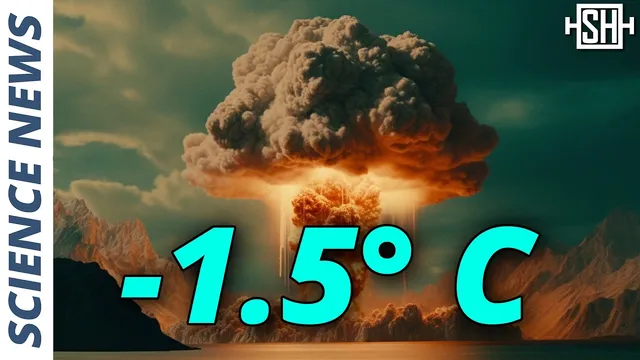
Enhanced weathering works in nature, but the bottleneck is scale. By detonating a bomb beneath the sea, the plan aims to create a sudden, large increase in reactive mineral surface area. Ocean currents would then spread the fragmented basalt, while the ocean—already a major reservoir for atmospheric carbon—would transport CO2 into the water and into the mineral particles, where it would remain bound. The author estimates that an explosion with a yield around 81 gigatons of TNT equivalent could “undo” roughly 30 years of CO2 emissions, producing an estimated temperature decrease of about 1.5°C.
Cost is presented as comparatively modest for a climate intervention: about $1 billion. A specific location is also suggested—an area in the central Indian Ocean near the Kerguelen Plateau, close to the uninhabited Desolation Islands (with only limited military presence). The pitch is essentially a “bang-for-the-buck” argument: if the physics and chemistry behave as expected, a one-time event could deliver large climate benefits.
The proposal faces major obstacles. The required bomb is far beyond anything previously detonated: 81 gigatons is about 1,000 times larger than the largest nuclear test ever conducted (a 1961 Soviet hydrogen bomb test with a yield around 50 megatons). Scaling up again implies a device on the order of millions of Hiroshima-class bombs. Safety and environmental risks also loom. A blast underwater could contaminate the seafloor with radioactivity, inject large amounts of water vapor into the upper atmosphere (a greenhouse effect concern), and disrupt ocean chemistry and ecosystems—basalt may be relatively inert, but the ocean’s response to such an event is uncertain.
The transcript also contrasts this nuclear approach with other “planet-scale” geoengineering concepts—giant heat-trapping chimneys, balloon-based high-altitude release, and space-based sun-reflecting mirrors. Those alternatives share a common weakness: they require broad international cooperation, and coordination failures are precisely why fossil-fuel transitions have been so difficult. Even so, the nuclear-bomb plan remains controversial because it trades cooperation challenges for extreme technical, logistical, and safety uncertainties.
In the end, the discussion frames the proposal as a provocative attempt to solve climate change with a mechanism that could, in theory, remove CO2 quickly—while acknowledging that the magnitude of the required nuclear event and the potential collateral impacts are the central reasons the idea is hard to take from calculation to action.
Cornell Notes
Enhanced weathering is a natural process where minerals absorb CO2, but doing it at climate-relevant scale is costly because it requires producing and spreading huge amounts of mineral material. A proposed workaround uses an underwater nuclear detonation to fracture basalt and distribute it through the ocean, increasing the reactive surface area so seawater can capture and store CO2 in mineral form. The estimate given is that an ~81 gigaton TNT-equivalent explosion could offset about 30 years of CO2 emissions and lower temperatures by roughly 1.5°C, at an estimated cost of about $1 billion. The plan targets basalt-rich regions in the central Indian Ocean near the Kerguelen Plateau/Desolation Islands. Major concerns include the unprecedented bomb size, radioactive contamination, and uncertain impacts from water vapor and ocean disruption.
What mechanism is supposed to remove CO2 faster in the proposed plan?
Why does the proposal use a nuclear bomb instead of conventional mineral grinding and spreading?
How large would the nuclear device need to be, and how does that compare to historical tests?
What safety and environmental risks are highlighted?
How do other geoengineering ideas compare, and what common problem do they share?
Why does the discussion still treat the nuclear-bomb concept as “cost-effective” despite the risks?
Review Questions
- What is enhanced weathering, and what role does basalt play in the proposed CO2 removal method?
- Why does the transcript treat the required nuclear yield as a central feasibility barrier?
- Which risks are most emphasized for an underwater nuclear detonation, and how might they affect oceans or the atmosphere?
Key Points
- 1
The proposed CO2 removal method is enhanced weathering accelerated by underwater basalt fragmentation from a nuclear detonation.
- 2
Ocean absorption of atmospheric CO2 is central to the plan: CO2 would move into seawater and then into mineral particles.
- 3
The estimate given is ~81 gigatons TNT equivalent to offset about 30 years of emissions and reduce temperatures by roughly 1.5°C.
- 4
The required bomb size is far beyond historical nuclear tests, with the comparison anchored to a 1961 Soviet hydrogen bomb test at about 50 megatons.
- 5
Major risks include radioactive seafloor contamination, potential greenhouse warming from water vapor injected into the upper atmosphere, and uncertain ocean/ecosystem impacts.
- 6
Other geoengineering concepts (chimneys, balloons, sun-reflecting mirrors) face a common constraint: they depend on international cooperation that has been difficult to achieve.