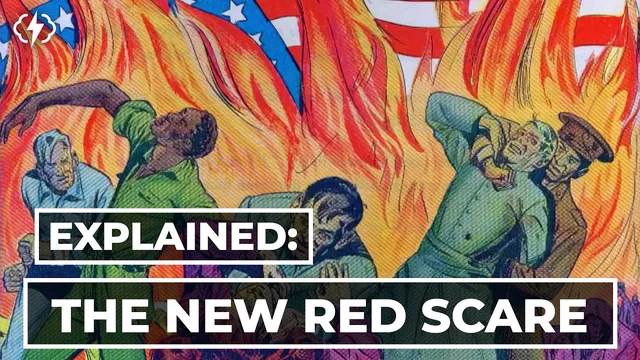
A New Red Scare Is Coming
Based on Second Thought's video on YouTube. If you like this content, support the original creators by watching, liking and subscribing to their content.
House Bill 5 expands Florida high school civics so students must be taught about “the evils of communism and totalitarian ideologies.”
Briefing
Florida is moving to mandate anti-communist instruction in public schools and to require colleges to measure “intellectual freedom” and “viewpoint diversity,” a push that critics say revives Cold War-style red-scare tactics while rewriting history in the name of patriotism.
The centerpiece is House Bill 5, signed by Gov. Ron DeSantis, which expands civics requirements so high school students receive instruction on “the evils of communism and totalitarian ideologies.” DeSantis frames the curriculum around people fleeing communist regimes—citing Cuba and Vietnam—and argues students should understand why individuals risk their lives to escape. Critics counter that the framing is selective and misleading: Cuba’s hardships are attributed to decades of U.S. sanctions, which the UN has denounced as illegal and inhumane, and which supporters say have harmed the Cuban economy. On Vietnam, the argument is that there is no comparable mass exodus to the U.S; instead, Vietnam is described as having high satisfaction with its government’s COVID response and as a common retirement destination for Americans, suggesting migration patterns that don’t match DeSantis’s implied narrative.
The legislation also creates a “portraits in patriotism library,” intended to highlight “real patriots” who came to the U.S. after escaping communist regimes. A featured example is Anna Abauza, described as fleeing Nicaragua as a teenager when the Sandinistas brought socialism. Critics argue that this kind of storytelling sanitizes U.S. involvement in Central America during the 1980s, including support for right-wing forces and CIA-linked actions during the “dirty wars,” such as mining around Nicaraguan harbors. In that view, the curriculum turns complex geopolitical history into a morality tale that treats socialism as the cause of suffering while downplaying U.S. interventions.
A second measure, House Bill 233, requires public colleges and universities to conduct annual assessments of intellectual freedom and viewpoint diversity. DeSantis presents the policy as protecting First Amendment speech and ensuring students encounter dissenting opinions. Critics respond that the same political agenda has targeted topics and frameworks on campuses—citing bans on critical race theory and restrictions on certain approaches to teaching slavery history—so the “freedom” language functions as a justification for narrowing what can be taught.
The broader concern is that these policies will import McCarthy-era rhetoric into classrooms through guest lecturers from anti-communist front groups, producing state-mandated propaganda rather than genuine historical inquiry. The argument extends beyond curriculum: it’s portrayed as part of a wider rightward shift in U.S. politics, driven by fear of capitalism’s decline and by attempts to re-legitimize the red scare. Supporters of the opposing view say the alternative should be an honest reckoning with America’s role in world history—acknowledging both failures and achievements—along with openness to economic ideas that can be debated without turning students into “obedient” recipients of a single political line.
Cornell Notes
Florida’s DeSantis-backed education bills would require anti-communist instruction in high school civics and impose annual “intellectual freedom” and “viewpoint diversity” assessments on colleges. House Bill 5 mandates teaching “the evils of communism and totalitarian ideologies” and builds a “portraits in patriotism library” featuring people who fled communist regimes. Critics argue the curriculum selectively frames migration and suffering while omitting U.S. actions in places like Cuba and Nicaragua, including support for right-wing forces and CIA-linked operations during the “dirty wars.” House Bill 233 is presented as protecting First Amendment speech, but critics say parallel restrictions on campus topics undermine that claim. The stakes, in this account, are whether schools teach history and debate or revive Cold War-style propaganda.
What does House Bill 5 require students to learn, and how is it justified?
How do critics challenge the Cuba and Vietnam examples used to sell the curriculum?
What is the “portraits in patriotism library,” and why is it controversial?
What does House Bill 233 do, and how do supporters and critics interpret it differently?
Why does the argument connect these bills to McCarthyism and a “new red scare”?
Review Questions
- Which specific curriculum requirements are introduced by House Bill 5, and what examples are used to justify them?
- What evidence do critics cite to argue that the “fleeing communism” narrative is selective or misleading?
- How does House Bill 233’s “intellectual freedom” assessment requirement get reframed as either speech protection or viewpoint restriction?
Key Points
- 1
House Bill 5 expands Florida high school civics so students must be taught about “the evils of communism and totalitarian ideologies.”
- 2
The bill’s messaging relies on migration stories (including Cuba and Vietnam) that critics say omit U.S. policy impacts and distort migration patterns.
- 3
House Bill 5 also creates a “portraits in patriotism library” featuring anti-communist “patriots,” which critics argue can sanitize U.S. intervention in countries like Nicaragua.
- 4
House Bill 233 requires annual assessments of “intellectual freedom” and “viewpoint diversity” at public colleges and universities.
- 5
Supporters frame House Bill 233 as protecting First Amendment speech, while critics argue related campus restrictions undermine that claim.
- 6
The overall critique is that these measures revive red-scare logic by replacing open historical debate with state-aligned anti-communist propaganda.
- 7
The dispute is ultimately about whether education should encourage challenging economic and political ideas or enforce a single anti-communist narrative.