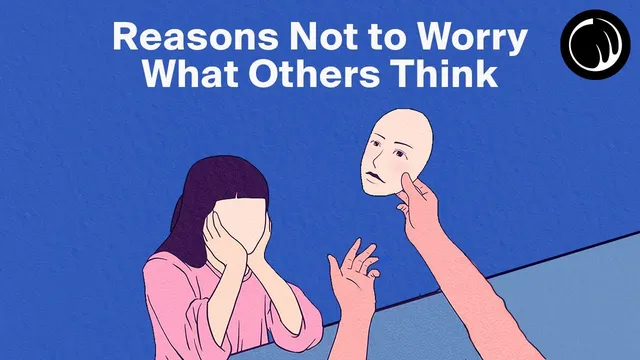
A Reason to Stop Worrying What Others Think
Based on Pursuit of Wonder's video on YouTube. If you like this content, support the original creators by watching, liking and subscribing to their content.
The desire to be liked can support belonging and cooperation, but it becomes harmful when it turns into compulsive monitoring of imagined judgment.
Briefing
Needing other people’s approval can start as a normal social instinct but often mutates into a self-defeating anxiety loop—one that makes people contort themselves for imagined judgment while missing what actually matters. The core claim is that most of the time, other people are too busy worrying about their own missteps, so the mental energy spent scanning for rejection is largely misallocated. That mismatch between perceived scrutiny and real-world attention creates a path to “existential hell”: a life organized around the “look” of others rather than one’s own values and lived experience.
The transcript frames the desire to be liked as evolutionarily and sociologically useful. Social approval helps people cooperate, build belonging, and maintain healthy relationships. The problem begins when that impulse becomes excessive—turning everyday, low-stakes interactions into rehearsals for embarrassment, and past harmless mistakes into ongoing mental punishments. It also points to early conditioning: children are often treated as the center of attention, so later social reality—where most people rarely care about most things—can feel like a shock. Over time, the world’s indifference becomes clearer: people are not the main character of everyone else’s mind, not even of their own mind in the grand sense.
A key pivot comes from comparing two perspectives on selfhood. Sartre’s famous line, “Hell is other people,” is interpreted not as a claim that others are inherently cruel, but as a description of how selfhood can become dependent on others’ perceptions. Sartre’s “look” suggests that people internalize being watched, then modify themselves to match what they believe others see. That process can erode freedom—replacing an authentic self with a performance tuned to approval. The transcript adds a darker edge: pretending to like what one doesn’t like can create a false impression that may eventually “explode,” harming both the performer and those misled.
Still, the argument doesn’t end with nihilism. It insists that unliking is universal—everyone dislikes some people, and everyone will be disliked by some. The practical takeaway is not that anxiety can be erased by logic, but that perspective can reduce its grip. When fear spikes during real interactions, rational knowledge often fails to calm it, similar to how people can’t reason away a fear of a harmless spider. The suggested antidote is repeated reminders: other people care far less than imagined, the world cares even less, and moments of clarity or success are rare “transcendences” against the usual human tendency to overfocus on judgment.
The transcript closes by urging a more generous, careful attention to how others see—without surrendering one’s agency to it. If selfhood is partly shaped by others’ perceptions, then the best response may be to look outward thoughtfully while still choosing to live from one’s own mind. (It also includes a sponsorship for Brilliant, a learning platform for math and science.)
Cornell Notes
The transcript argues that the urge to be liked is normal, but it often grows into anxiety because people overestimate how much others notice and judge them. Most social moments are shaped by others’ self-focus, not by constant scrutiny of someone else’s flaws. Sartre’s idea of “the look” is used to explain how chasing approval can turn into an “existential hell,” where identity becomes dependent on others’ perceptions rather than personal freedom. Since everyone will be disliked by some people and everyone dislikes others, the goal isn’t to eliminate unlikability but to regain perspective and reduce the mental cost of imagined rejection.
Why does the transcript treat “wanting to be liked” as both healthy and dangerous?
What role does early conditioning play in later anxiety about judgment?
How does the transcript interpret Sartre’s “Hell is other people”?
What is the transcript’s practical stance on stopping worry—can it be rationalized away?
What does the transcript suggest about unlikability and authenticity?
Review Questions
- What specific mechanism does the transcript attribute to anxiety about judgment—overestimation of attention, dependence on approval, or something else? Explain using the “look” concept.
- Why does the transcript claim rational knowledge often fails during moments of social anxiety? Provide an analogy it uses.
- How does the transcript reconcile the need for social belonging with the recommendation to worry less about what others think?
Key Points
- 1
The desire to be liked can support belonging and cooperation, but it becomes harmful when it turns into compulsive monitoring of imagined judgment.
- 2
People tend to overestimate how much others notice and care, because most individuals are preoccupied with their own mistakes and self-image.
- 3
Early social conditioning can teach children they are the center of attention, making later reality—where most people don’t care—feel destabilizing.
- 4
Sartre’s “look” is used to describe how identity can become dependent on others’ perceptions, reducing freedom and authenticity.
- 5
Chasing approval can lead to performative behavior, including pretending to like what one doesn’t, which can create long-term harm.
- 6
Since everyone is disliked by some people and dislikes some people, the goal should shift from eliminating unlikability to living with perspective and agency.
- 7
Anxiety often resists rational correction in the moment, so repeated reminders and perspective are framed as the more realistic intervention.