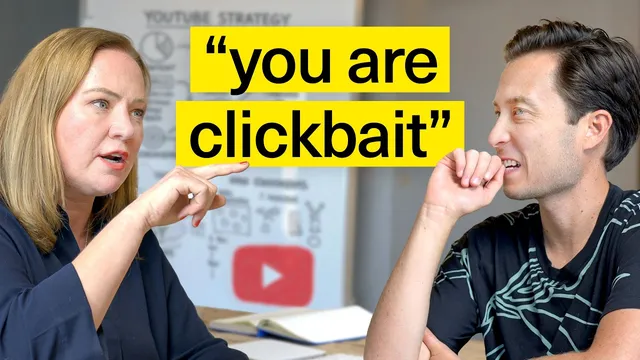
A YouTube Expert Exposed My Mistakes – Here's What I Learned
Based on Tiago Forte's video on YouTube. If you like this content, support the original creators by watching, liking and subscribing to their content.
A large early drop (around 60% in the first 30 seconds) can reduce recommendations because it signals low value and can occur before a view is fully counted.
Briefing
A sharp mismatch between what a thumbnail promises and what the first seconds of a YouTube video delivers can quietly sabotage growth—costing creators a large share of viewers before YouTube counts a view, and sending negative signals that reduce recommendations. In a consultation with YouTube expert Eloisea Wolf, the core diagnosis is blunt: when analytics show roughly 40–50% of viewers dropping within the first 30 seconds (and even before a view is fully registered), the algorithm interprets the experience as low value. That drop can also make YouTube treat the thumbnail as “clickbait,” even when the creator believes the messaging is accurate.
The fix starts with treating thumbnails and hooks as a system, not separate tasks. Thumbnails are described as the first presentation—effectively the cover that determines whether people click at all. But clicking is only half the job; the intro must match the promise embedded in the thumbnail and title. Wolf argues that creators often plan the video first and only then retrofit the intro and thumbnail, which leads to confusion for viewers and “health life hell” for the audience’s understanding. Instead, the idea should be set first: decide what the audience will find interesting, what outcome the viewer should get, and then build enough concrete clips and visuals to support that promise during editing.
Practical tactics follow from that principle. Wolf recommends controlled thumbnail testing: try the most distinct variations first, then iterate with smaller changes like faces or text. A case study illustrates the impact—an average-performing recipe video became a top-ranked performer after changing the thumbnail globally in Spanish, driving tens of millions of impressions. The consultation also pushes creators to repurpose older assets by testing thumbnails on previously published videos, not just new uploads, arguing that this can yield meaningful additional views.
Beyond thumbnails, Wolf targets channel structure for binge behavior. Viewers often watch in sessions, so playlists and “start here” pathways should guide them from one video to the next. If the channel’s early sequence feels like disconnected topics rather than a journey, viewers may leave to find learning elsewhere. Updating titles, adding end screens, and linking videos into a coherent learning path can keep attention inside the channel.
For creators who monetize through digital products or higher-ticket offers, Wolf emphasizes audience quality over raw views. Discovery content brings new people into the funnel; later videos should speak to buyers ready to purchase, supporting higher lifetime value. She also suggests using YouTube Studio analytics more deliberately—especially after launch—by checking performance in the first 48 hours to a week to learn whether the hook and thumbnail alignment are working.
The consultation ends with growth mechanics and research workflows: using pinned comments, description links, and even QR codes for large-screen viewers; launching premieres at a coordinated time to generate fast early signals; and maintaining a “research channel” (a ghost channel using another Gmail account) that watches competitor content to surface ideas and thumbnail patterns through the YouTube homepage. The overarching message is that YouTube rewards small, measurable improvements—1% changes in the funnel can shift a channel’s trajectory—when creators align creative decisions with audience intent and data feedback.
Cornell Notes
The consultation centers on a single growth lever: alignment. When thumbnails promise one thing but the first 30 seconds deliver something else, viewers drop early—sometimes around 60%—before YouTube fully counts a view, which then reduces recommendations. The remedy is to plan the video’s core idea for the audience first, then build the intro and thumbnail to match that promise, and to test thumbnails in a controlled sequence (distinct first, then small iterations). Wolf also recommends repurposing older videos by testing new thumbnails, fixing playlists to support binge viewing, and using analytics in the first 48 hours to a week to diagnose hook and mismatch problems. For business channels, she stresses quality of audience and funnel role over vanity metrics.
Why does early audience drop (like losing ~60% in the first 30 seconds) matter even if the video eventually gets views?
How should creators approach thumbnails and intros so they don’t trigger a mismatch?
What does “controlled thumbnail testing” look like in practice?
How do playlists and “start here” sequences affect performance?
Why does Wolf emphasize audience quality over total views for monetization?
What is the purpose of a “research channel” or “ghost channel”?
Review Questions
- What specific signals does an early audience drop send to YouTube, and how might that relate to thumbnail accuracy?
- How would you redesign a channel’s “start here” playlist to support binge viewing and reduce viewer drop-off?
- What steps would you take in the first 48 hours after publishing to determine whether the hook matches the thumbnail promise?
Key Points
- 1
A large early drop (around 60% in the first 30 seconds) can reduce recommendations because it signals low value and can occur before a view is fully counted.
- 2
Thumbnail promises and intro delivery must match; misalignment can make YouTube treat thumbnails as clickbait even when creators believe they’re accurate.
- 3
Plan the core idea and audience outcome first, then build the intro and editing assets to support that promise—rather than retrofitting later.
- 4
Run controlled thumbnail tests: start with the most distinct variations, then iterate with smaller changes like faces and text.
- 5
Test thumbnails on older videos too, not just new uploads, to repurpose existing assets and potentially add significant incremental views.
- 6
Use playlists, end screens, and “start here” pathways to create a coherent learning journey that supports binge sessions.
- 7
For monetization, prioritize audience quality and funnel role (discovery vs. purchase intent) over vanity metrics like total views.