Academia’s Scam Problem is Getting Worse
Based on Sabine Hossenfelder's video on YouTube. If you like this content, support the original creators by watching, liking and subscribing to their content.
Papermills are broker networks that sell authorships and citations for fraudulent papers, increasingly using AI-written content.
Briefing
Academic research fraud is accelerating across countries, fueled by payoffs for publication metrics and a low likelihood of punishment. A striking example comes from CERN’s ATLAS collaboration: a particle physicist at the University of Tarapacá in Chile earned roughly $319,000 in publication bonuses over eight months because ATLAS papers routinely land in high-impact journals—illustrating how incentive structures can reward volume and prestige even when the underlying system is vulnerable to manipulation.
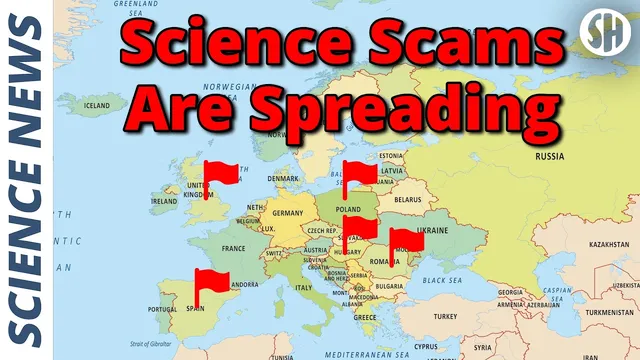
At the center of the worsening problem are “papermills”: broker networks that sell authorships on fraudulent papers and, increasingly, on citation schemes. These operations first gained traction in China and India, then spread westward. Recent busts point to large, organized networks. One major European papermill network operating out of Ukraine reportedly sold more than 1,500 papers between 2017 and 2025, involving over 4,500 authors. Similar cases have surfaced in multiple countries, including a papermill run by a former University of Manchester student and alleged papermill-linked publications by two Hungarian postdocs—claims they say were accidental.
The geographic spread is also visible in high-level academic leadership involvement. In Poland, an accused papermill collaborator previously served as Vice-Rector for Science at a Polish university and led Poland’s top science policy council. At least three of his papers were later retracted, and he resigned from the vice-rector role, while denying wrongdoing. In Spain, the scale was even larger: the rector of the University of Salamanca faced retraction of 75 papers after an investigation described a “publication and citation factory.” Allegations included pressuring collaborators to cite him excessively, organizing conferences whose proceedings he controlled, and using those outputs to inflate citation counts so he appeared among the world’s most cited researchers. He also denied wrongdoing.
These practices persist because they can be profitable and often sit in a legal gray zone. Selling or buying authorship itself is not necessarily illegal, and the activity is frequently funded privately rather than through public money. The main practical risk is reputational damage if others discover someone’s name appears on fraudulent work—but as the volume of misconduct grows, accountability can blur over time.
Beyond authorship and citation factories, funding fraud also appears to be expanding. An investigation by Digital Science found about $6.5 million in research funding across the US, Japan, Ireland, and France tied to a non-existent research network. The scheme reportedly involved attaching the network’s name as an affiliation on papers and then applying for grants based on those supposed publications. In Romania, four university staff members were accused of funneling €2.5 million of EU money into personal pockets, including through fake travel claims.
Taken together, the pattern suggests a slow unravelling of academic research: a globally built incentive system from the past half-century is increasingly gameable as researchers become more interconnected and as output measurement becomes more quantifiable. The result is a research ecosystem where fraud can scale faster than oversight, making misconduct harder to remember, harder to trace, and—until enforcement catches up—harder to stop.
Cornell Notes
Fraud in academic publishing is spreading internationally, driven by incentives tied to high-impact journals, citation counts, and measurable research output. “Papermills” sell authorships and citations for scam papers, and the practice has moved from Asia into Europe, with large networks reportedly selling thousands of papers. High-ranking officials have been implicated in multiple countries, including cases involving retractions and resignations, while denials of wrongdoing are common. The legal risk is often low because authorship transactions may not be clearly illegal and are frequently paid privately. Separate investigations also point to grant fraud, including funding tied to non-existent research networks and EU money allegedly diverted through fake claims.
What are papermills, and why are they so effective at scaling misconduct?
How do recent European cases illustrate the geographic spread and institutional reach of publication fraud?
Why does the CERN ATLAS bonus example matter for understanding incentives?
What kinds of fraud go beyond authorship and citations?
What structural forces make the problem worse over time?
Review Questions
- How do papermills reduce the personal risk for participants, and what consequence still threatens them?
- Compare the mechanisms of publication/citation fraud with the mechanisms of grant fraud described in the transcript.
- Why might retractions and resignations fail to deter misconduct when the system rewards measurable output?
Key Points
- 1
Papermills are broker networks that sell authorships and citations for fraudulent papers, increasingly using AI-written content.
- 2
A large Ukraine-based papermill network reportedly sold over 1,500 papers from 2017 to 2025 involving more than 4,500 authors.
- 3
High-level academic leadership has been implicated in multiple countries, including Poland and Spain, with retractions and resignations following investigations.
- 4
Authorship-selling can remain a low-risk activity because it may not be clearly illegal and is often paid privately rather than using public funds.
- 5
Grant fraud can involve non-existent research networks by using affiliations on papers to justify funding applications.
- 6
The incentive system built around measurable research output is becoming more gameable as global connectivity and quantification increase.