Academic Authorship Wars: The Battle for First Author vs Corresponding Author
Based on Andy Stapleton's video on YouTube. If you like this content, support the original creators by watching, liking and subscribing to their content.
First author status is treated as a proxy for leading experiments, controlling results, and writing most of the manuscript, which directly affects citations and career evaluations.
Briefing
Academic author order—especially first author and corresponding (often last) author—functions like a high-stakes currency inside research careers, even though it looks trivial outside academia. First author typically signals who drove the work: leading the experiments, controlling the results, and writing most of the manuscript. In one author list breakdown, the first author describes doing the majority of lab work and producing the figures, while supervisors and other senior collaborators appear in middle positions largely because they helped shape early ideas or secured funding for the project rather than because they performed the core day-to-day research.
That prestige is why alphabetical ordering rarely solves anything. In many fields, name order follows contribution norms that are hard to quantify, and large collaborations can create extreme name lists—one Nature paper cited as having more than 5,000 authors—where everyone wants visibility on a top-tier publication. First author also carries a psychological and practical payoff: citations foreground the first name (e.g., “Stapleton et al.”), and that association can feel like personal ownership of the paper. For early-career researchers, the metric matters in hiring and grant decisions, where application reviewers often ask how many first-author papers someone has.
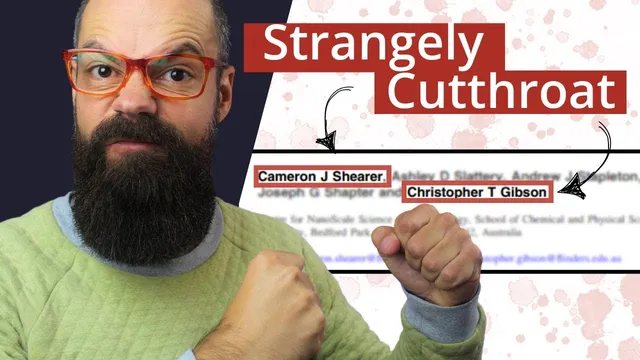
Corresponding author, frequently the last name, adds a different kind of power. It usually marks the person responsible for the project at an overarching level—often the principal investigator who secured funding and sets the research direction. Corresponding author status also has a concrete mechanism: it determines where questions, amendments, and correspondence about the paper go, usually via the email address attached to that person’s name. In the example given, the principal investigator’s email is explicitly tied to the corresponding-author designation, and the same pattern appears across multiple papers from the author’s PhD.
Because corresponding author status can be negotiated, some teams aim for dual corresponding authorship when both parties contributed meaningfully. The transcript also highlights how author order disputes can derail publication entirely, with collaborations breaking up when names aren’t placed as expected.
Middle positions are treated as the “cheese in the academic sandwich”: often acknowledged as real but rarely celebrated. Even so, middle authorship can still yield outsized impact—one middle-position paper becomes among the most cited, despite the author describing limited direct experimental contribution.
Finally, the transcript describes ways people game or exploit the system. Authorship theft is portrayed as common, with supervisors taking first-author credit from PhD students despite the student doing the lab work and manuscript drafting. “Gift authorship” involves reciprocal favors—small contributions traded for name placement—while more overt misconduct includes buying authorship through online groups, sometimes for peer-reviewed publications. The overall message is that author order is not just a label; it can determine funding, prestige, and whether research reaches the literature at all.
Cornell Notes
Author order in academia—especially first author and corresponding author—acts as a career-defining signal tied to grants, prestige, and hiring. First author usually reflects who led the experiments, controlled results, and wrote most of the manuscript, while corresponding author (often last) typically marks the principal investigator who steered the project and serves as the contact email for questions. Middle authorship may indicate limited contribution but can still appear on highly cited work. The transcript also details common conflicts and misconduct: disputes can even stop publication, supervisors may take first-author credit from PhD students, “gift authorship” trades name placement for small favors, and some people reportedly buy authorship through online groups.
Why does first author status carry so much weight in academia?
What does corresponding author usually mean, and why is it often the last name?
How can author order negotiations lead to unusual outcomes like multiple corresponding authors?
What kinds of conflicts can arise from author order disputes?
What are the main ways the transcript says people game or misuse authorship?
Review Questions
- How do first author and corresponding author roles differ in what they signal about contribution and responsibility?
- Why might alphabetical author ordering fail to resolve disputes in large collaborations?
- What incentives described in the transcript make authorship theft or gift authorship more likely?
Key Points
- 1
First author status is treated as a proxy for leading experiments, controlling results, and writing most of the manuscript, which directly affects citations and career evaluations.
- 2
Corresponding author status often maps to the principal investigator who secured funding and steers the project, and it also determines the email contact for questions about the paper.
- 3
Author order disputes can be severe enough to break collaborations or stop publication entirely, turning name placement into a gatekeeping mechanism for research visibility.
- 4
Middle authorship may reflect limited direct contribution but can still appear on highly cited papers, showing that impact does not always track contribution level.
- 5
Authorship theft is described as a recurring problem where supervisors take first-author credit from PhD students who did the core work.
- 6
Gift authorship operates as reciprocal name placement for small contributions, helping people accumulate publication counts even when contributions are modest.
- 7
Buying authorship is presented as an existing but unethical shortcut that replaces years of research with payment for name placement.