All The Ghosts You Will Be
Based on Vsauce's video on YouTube. If you like this content, support the original creators by watching, liking and subscribing to their content.
A person’s “ghosts” persist in multiple forms—name, likeness, genes, physical remains, and ripple effects—each fading on a different schedule.
Briefing
A person can be pinpointed among all humans alive today with roughly 33 yes-or-no questions—but the bigger question is what survives afterward. The central claim is that “ghosts” of a life persist in layers: a name that fades, an image that lingers, genetic traces passed down, and physical remnants that are far rarer than people assume. The result is a sobering timeline of disappearance—followed by a twist: even if remembrance is fleeting, the self is defined by what one carries into death, not by what survives.
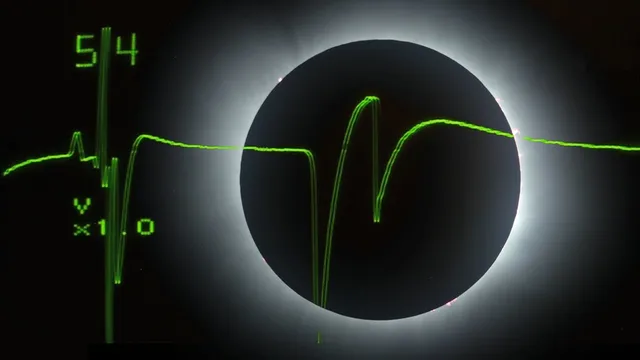
The countdown begins with scale and identity. A single refined flour particle is about 82.67 microns wide, and a 5 lb bag contains billions of specks—used as a metaphor for how many tiny “things” make up humanity. From there, the video pivots to mortality math: each year sees more deaths than births, and across all of human history about 117 billion people have been born. Yet any one person will meet only a small fraction of that total, making strangers to one’s own species. The “ghosts” theme then becomes literal and personal through a “solar corona” analogy: memories, records, and appearances shine while someone is alive and can continue long after they’re gone.
The next layer is the “nominal ghost”—a name. Names can outlast individuals for millennia, as shown by ancient inscriptions such as a 5,000-year-old tablet bearing the oldest written name found so far, associated with Kusham. But “second death” still arrives when a name is spoken for the last time. Even modern archival tools can extend that window, though the video suggests that bending facts might prolong a nominal ghost.
Then comes the “likeness ghost”: figurative portrayals that survive when records do not. The earliest widely known realistic depictions are linked to Gudea, an ancient Sumerian ruler represented in hundreds of statues across southern Iraq. After that, the “genetic ghost” is framed as inheritance with diminishing returns: descendants carry only a fraction of unique DNA—roughly 23–27% in grandchildren, 9–14% in great-grandchildren—until, after many generations, genetic similarity can drop to the level of strangers.
Physical fossils are treated as the most extreme form of persistence—and the least likely. Fossilization is described as exceedingly rare: less than one-tenth of 1% of a species becomes fossilized. Even with ideal burial conditions (rapid, deep burial in low-oxygen, sediment-rich environments such as parts of the Black Sea or Gulf of Mexico), erosion and geological recycling threaten survival. Longer-term “storage” is imagined off-world: monoliths on the Moon would face the Sun’s red-giant expansion in 5–10 billion years, while durable artifacts like Voyager’s golden records could outlast the last star.
Finally, the “ripple ghost” is the diffuse aftereffect of actions—like a tree’s shade enjoyed by someone a century later without knowing who planted it. The video argues that even in a universe that eventually reaches heat death, matter’s arrangement remains shaped by having existed. Yet it ends by separating legacy from selfhood: fame and memory are temporary, but meaning is tied to what a person carries into death—secrets, unspoken possibilities, and choices—while modern life increasingly turns experiences into persistent “documents,” making people both recorders and recorded.
Cornell Notes
The video frames human disappearance as a sequence of “ghosts” that persist in different forms: a name, a likeness, genes, physical remains, and the ripple effects of actions. Names can last millennia, but “second death” arrives when a name is spoken no more. Likeness survives only when images exist; genetics fades predictably across generations (grandchildren may carry ~23–27% of unique DNA, great-grandchildren ~9–14%). Fossilization is extremely rare (less than one-tenth of 1% of a species), so long-term physical traces are unlikely even under favorable conditions. The final twist is that meaning doesn’t depend on being remembered—selfhood is defined by what one carries into death, even as modern documentation makes “ghosts” feel closer than ever.
How does the “33 yes-or-no questions” idea connect to the video’s larger theme of forgetting?
What are the main “ghosts” of a person, and how does each one fade?
Why does the video treat fossilization as a long-shot, even for people who want to become fossils?
What examples are used to show how long names and likenesses can survive?
How does modern documentation change the “ghost” experience compared with earlier eras?
What is the video’s final stance on meaning versus legacy?
Review Questions
- Which “ghost” type is most dependent on cultural memory, and what event marks its end?
- What percentages of unique genetic code does the video give for grandchildren and great-grandchildren, and what trend do they illustrate?
- Why does the video claim fossilization is unlikely even with burial strategies, and what natural processes threaten remains?
Key Points
- 1
A person’s “ghosts” persist in multiple forms—name, likeness, genes, physical remains, and ripple effects—each fading on a different schedule.
- 2
Names can survive for thousands of years, but “second death” arrives when a name is spoken for the last time.
- 3
Likeness depends on whether realistic depictions were made and preserved; Gudea is used as an example of unusually consistent early portraiture.
- 4
Genetic inheritance shrinks across generations: grandchildren may carry ~23–27% of unique DNA, great-grandchildren ~9–14%, and after many generations similarity can drop to stranger-level.
- 5
Becoming a fossil is extremely unlikely because fossilization affects far less than 1% of species, even under favorable burial conditions.
- 6
Modern “high documentality” turns everyday life into persistent, timestamped traces, making forgetting feel less natural while still leaving gaps in what’s actually recorded.
- 7
Meaning is framed as separate from remembrance: legacy may fade, but the self is defined by what one carries into death, including unspoken possibilities.