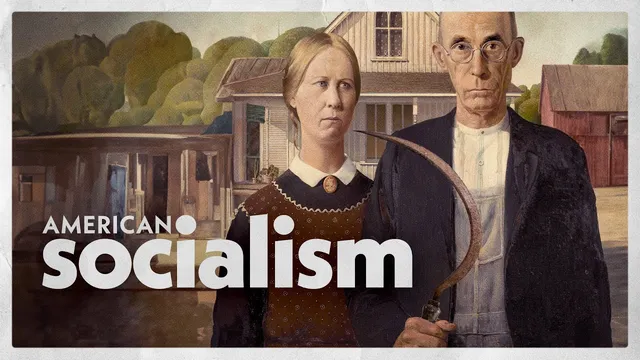
America's Forgotten Socialist History
Based on Second Thought's video on YouTube. If you like this content, support the original creators by watching, liking and subscribing to their content.
The transcript argues that socialism has repeatedly shaped U.S. life through labor organizing, political campaigns, and community activism, not just through foreign influence.
Briefing
The United States has a long, homegrown socialist and labor history—marked by mass organizing, policy wins, and repeated state repression—despite the common claim that socialism is “un-American.” The core point is that socialism has repeatedly shaped American life from Indigenous governance systems and 19th-century utopian experiments to major labor upsurges and 20th-century civil-rights-era activism. That influence matters because it reframes today’s political debate: progressive ideas weren’t imported from abroad so much as fought for domestically, then pushed back against through propaganda and coercion.
Before European settlement, many Indigenous societies in North America operated with collective ownership and shared management of resources, along with inter-clan democratic federations. The transcript argues that this “Indigenous socialism” helps explain why European property concepts didn’t map neatly onto Native landholding. It also claims that the Haudenosaunee (Iroquois) political system influenced parts of the U.S. Constitution, citing historian and author Roxanne Dunbar-Ortiz and her work on Indigenous governance.
In the 1800s, socialist politics in the U.S took multiple forms. Utopian communities—such as Robert Owen’s New Harmony, George and Sophia Ripley’s Brook Farm, and the North American Phalanx—attempted to build socialist life without overthrowing capitalism. At the same time, labor organizing expanded dramatically. Union federations grew into national structures, including the American Federation of Labor (AFL), which the transcript notes still exists today (and later references the AFL-CIO as the largest union federation). Large worker movements also drew the attention of industrial capitalists and the state.
A turning point highlighted is the Haymarket affair in 1886, when strikes demanding an eight-hour workday met police violence in Chicago. The transcript describes how an explosive thrown during a protest led to a shootout, followed by trials and the execution of eight anarchists—events it links to the origins of International Workers’ Day on May 1. The broader pattern is that repression intensified as socialist and anarchist politics became more visible within labor movements.
The narrative then moves through the early 20th century, centering Eugene V. Debs, a Socialist Party presidential candidate and IWW founder whose support surged after World War I-era opposition. It credits socialist and worker pressure with concrete gains: ending child labor, securing the right to unionize and strike, and establishing a federal minimum wage, while also arguing that parts of FDR’s New Deal—like Social Security and the 40-hour work week—were shaped by the threat of unrest rather than benevolence alone.
Finally, the transcript argues that the Red Scares and later FBI-led campaigns targeted popular left movements, from IWW members to artists, academics, unionists, and political organizers. It connects socialist organizing to civil-rights-era activism, naming the Black Panthers and describing their community programs and anti-police-brutality work, alongside references to broader feminist and LGBTQ organizing. The closing message is a call to reclaim this history—because socialism is portrayed as a recurring American force that pushed the country toward reforms, and then faced systematic efforts to erase or criminalize it.
Cornell Notes
The transcript argues that socialism is deeply embedded in U.S. history, not an “un-American” import. It traces socialist-like practices from Indigenous collective governance to 19th-century utopian communities and large labor organizing. As worker movements grew, industrial capitalists and the state responded with escalating repression, highlighted by events like the Haymarket affair and later Red Scares. The account credits socialist and labor pressure with major reforms—such as child labor restrictions, union rights, and federal minimum wage—and links New Deal concessions to fear of unrest. The takeaway is that progressive change in the U.S often came through mass left organizing, followed by propaganda and coercion to limit it.
How does the transcript redefine “socialism” before European settlement?
What role do 19th-century labor movements play in the argument?
Why is Haymarket presented as a key socialist-labor moment?
How does the transcript connect socialist pressure to New Deal reforms?
What does the transcript say about the Red Scares and later FBI repression?
How does the transcript connect socialism to civil-rights and other social movements?
Review Questions
- Which historical periods in the transcript are used to show that socialism was “homegrown” rather than foreign, and what evidence is offered for each?
- How does the transcript explain the relationship between rising labor militancy and state repression?
- What reforms does the transcript attribute to socialist and worker pressure, and how does it connect those reforms to political compromise rather than revolution?
Key Points
- 1
The transcript argues that socialism has repeatedly shaped U.S. life through labor organizing, political campaigns, and community activism, not just through foreign influence.
- 2
Indigenous governance systems are presented as operating with collective resource management and democratic federations, framed as “socialistic” in function.
- 3
19th-century utopian socialist communities existed alongside rapidly expanding labor unions that grew into national federations such as the AFL.
- 4
Haymarket is used as a case study of how demands for an eight-hour workday triggered industrialist-backed police violence, followed by trials and executions.
- 5
The account links major early 20th-century reforms and parts of the New Deal to pressure from socialist and worker unrest, not only to mainstream political goodwill.
- 6
Red Scares and later FBI campaigns are portrayed as tools for suppressing popular left movements through imprisonment, blacklisting, and show trials.
- 7
Civil-rights-era activism—including the Black Panthers and broader feminist and LGBTQ organizing—is framed as continuing socialist anti-capitalist and anti-oppression traditions.