America's Looming Eviction Crisis
Based on Second Thought's video on YouTube. If you like this content, support the original creators by watching, liking and subscribing to their content.
Eviction during a respiratory pandemic is framed as a public-health risk, with cited links between eviction and worse health outcomes.
Briefing
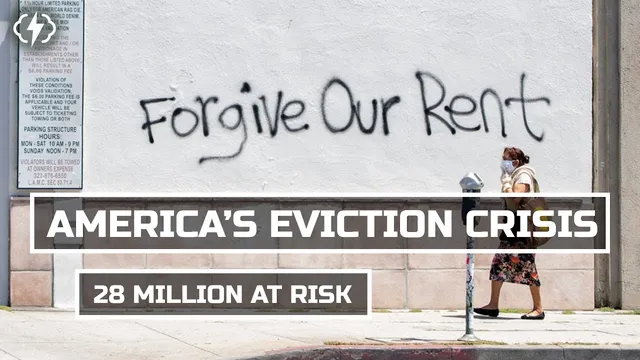
A looming eviction and homelessness surge threatens to dwarf the displacement seen after the 2008 financial crash, with tens of millions of renters facing removal from their homes in a matter of months—at the same time the country is struggling to contain COVID-19. The core warning is straightforward: eviction is not just a housing crisis, it’s a public-health accelerant. Removing people from their homes during a respiratory pandemic increases their risk of infection and adds severe physical and mental strain, including documented links to higher mortality and respiratory distress after eviction.
The forecast is built on two overlapping pressures. First, the rental market is already stretched: roughly 110 million Americans live in rental housing, and at least 20% are considered at risk of eviction. Second, the economic shock has been abrupt and job losses have been massive—over 40 million people have lost jobs, and with employment tied to health insurance, many households are losing more than income. When eviction protections expire, the transcript argues, many tenants will be unable to pay rent not because they refuse, but because they cannot. Projections cited in the discussion suggest 20 to 28 million people could be displaced between now and September, potentially two to three times the scale of the Great Recession’s displacement of about 10 million people.
The Great Recession is used as a cautionary baseline for how quickly housing instability can become a broader wealth transfer. After Lehman Brothers collapsed and mortgage losses spread, foreclosures and evictions displaced more than 10 million people. The aftermath, the account says, did not merely end in hardship; it redistributed housing assets upward as repossessed homes were snapped up by wealthy individuals and corporations. Blackstone is singled out for spending $4.5 billion to acquire more than 30,000 homes, which then became rental inventory for profit.
During the COVID-19 downturn, the transcript argues that the federal response failed to match the scale of the emergency. Instead of a nationwide mandate halting evictions for the duration of the pandemic, protections were left to state and local governments, producing a patchwork of rules and exemptions. Even where moratoriums exist, the lack of financial assistance means tenants can still fall deeper into debt. In some states, landlords can move through the eviction process up to the court’s execution stage, leaving a backlog ready to be enforced as soon as restrictions lift.
A further complication is access to justice. With courts closed, eviction hearings shift online, but tenants facing eviction often lack stable internet, devices, or the time and ability to navigate digital procedures—especially older renters or those who miss notices due to technical errors. If a tenant fails to appear, the judge can rule for the landlord, turning procedural barriers into eviction outcomes.
The proposed fixes are concrete and policy-heavy: a federally mandated eviction and foreclosure moratorium; scrapping pending eviction orders and forgiving past-due rent; a rent and mortgage freeze for the remainder of the pandemic; and broader nonpharmaceutical measures such as a real nationwide lockdown paired with continued testing. The transcript also calls for direct federal payments to people to stay home—citing proposals like $2,000 per person per month—so households can cover essentials without reopening the economy as the primary incentive. Underneath the policy list is a single thesis: without decisive federal action, eviction will surge, worsen COVID-19 spread, and repeat the Great Recession’s pattern of hardship concentrated among renters while wealth consolidates elsewhere.
Cornell Notes
The transcript warns that eviction and homelessness could surge on a scale far larger than after 2008, driven by job losses and expiring COVID-era protections. With about 110 million Americans renting and at least 20% at risk, projections cited estimate 20 to 28 million people displaced between now and September. The crisis is intensified by a patchwork of state-by-state moratoriums, limited financial assistance, and eviction backlogs that can be executed as soon as restrictions end. Shifting eviction hearings online can also disadvantage tenants who lack internet access, devices, or reliable notice. The proposed remedy centers on federal action: a nationwide eviction/foreclosure halt, rent and mortgage freezes, and direct payments to enable people to stay home safely.
Why does eviction during COVID-19 become a public-health problem, not just a housing issue?
What makes the eviction outlook worse than the 2008 foreclosure crisis?
How does the lack of a federal eviction mandate create a “patchwork” crisis?
What role do court closures and online hearings play in eviction outcomes?
What policy package is proposed to prevent the surge?
Review Questions
- What mechanisms in the transcript connect eviction to higher COVID-19 risk (medical and logistical)?
- How do patchwork state moratoriums and lack of financial assistance interact to increase eviction pressure when restrictions end?
- Why might online eviction hearings disproportionately disadvantage tenants, according to the transcript?
Key Points
- 1
Eviction during a respiratory pandemic is framed as a public-health risk, with cited links between eviction and worse health outcomes.
- 2
Projected displacement of 20 to 28 million people between now and September could exceed the Great Recession’s scale and occur much faster.
- 3
About 110 million Americans live in rental housing, and at least 20% are described as at risk of eviction.
- 4
State-by-state eviction moratoriums create uneven protections, while limited or absent financial assistance leaves tenants accumulating rent debt.
- 5
Some jurisdictions allow eviction processes to advance up to the execution stage, creating backlogs ready to be enforced when bans end.
- 6
Online court hearings can function as a barrier for tenants lacking internet access, devices, or reliable notice, increasing the chance of default rulings.
- 7
The proposed response centers on federal action: a nationwide eviction/foreclosure halt, rent and mortgage freezes, and direct payments to sustain households during lockdown.