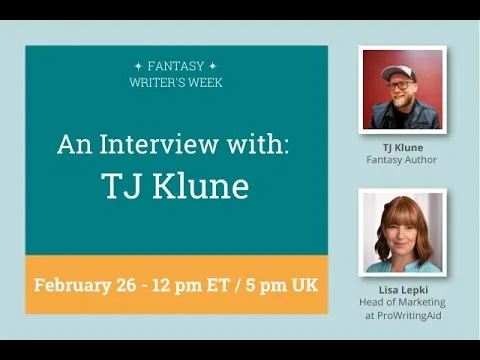
An Interview with Bestselling Fantasy Author, TJ Klune
Based on ProWritingAid's video on YouTube. If you like this content, support the original creators by watching, liking and subscribing to their content.
Klune’s writing confidence began with seventh-grade teachers who responded to his story with laughter and a direct prediction that he’d be published.
Briefing
TJ Klune’s path to bestseller status traces back to two early forces: a childhood habit of writing and the life-changing confidence boost from teachers who treated his work as publishable. As a kid in a poor rural area, Klune carried a notebook and wrote “nonsense” stories in secret, then learned the power of the written word in seventh grade when two English teachers assigned students to turn a memory into a story. His classmates laughed and then told him—directly—that they would see his name in a bookstore. That moment became a lasting proof that writing could travel beyond his own head.
Klune credits reading as the main craft education that followed. With limited access to books, he relied on a library card and biked to town every summer to read widely, including material above his reading level. He didn’t treat reading as copying; instead, he collected “little bits and pieces” from many authors to build a personal voice. He also emphasizes that formal education wasn’t part of his route—he didn’t go to college and describes himself as a community college dropout—so his progress came from persistence and the belief that he wanted to tell stories from the earliest days.
Across his career, Klune says the through-line is queer characters, and he has found his “home” in fantasy because it matched what he loved reading as a child. He also frames his work as an attempt to widen fantasy’s age range and emotional palette: he wants to see portly queer men in their 40s as protagonists, not just teenagers or young adults, and not only in grim settings. In his view, characters often arrive first as distinct voices; for The House in the Cerulean Sea, Linus was the loudest presence in his head, and the surrounding cast emerged as he listened for how other voices would interact with a rule-following, proper man.
Klune’s process blends structure with flexibility. He has ADHD, so he can end up with “weird” books if he only free-writes, but he uses outlines—especially for fantasy where world-building demands careful continuity. Even then, outlines are “bones,” not a contract: the finished book often diverges substantially. He typically knows the beginning and ending, while the middle evolves during drafting.
Editing is where he draws a clear line between attachment and improvement. He loves editing because it forces distance from words that feel personal. A strong editor, he says, helps the story shine by offering perspectives the writer can’t see while immersed. He describes his editor, Ali, as especially valuable—someone who warns that edits may hurt unintentionally, then helps the writer treat feedback as collaboration rather than rejection. Klune also recommends stepping away from drafts for weeks, rereading with fresh eyes, and running multiple rewrite passes supported by beta readers and agent notes.
On publishing, Klune shares a cautionary lesson from his early indie experience: a publisher accepted his work but later defaulted on royalty payments. When an agent later approached him, he initially declined—then regretted it—before signing and landing a multi-book deal with Macmillan and Tor. He contrasts indie speed with traditional publishing’s slower timelines and heavier marketing budgets, and he describes how the pandemic shifted the release moment for The House in the Cerulean Sea.
Ultimately, Klune’s recurring message is practical and emotional: keep writing through uncertainty, find champions, and don’t treat feedback as a verdict. Distance, revision, and the right support system turn self-doubt into momentum—whether the work is a first draft or a 25th book.
Cornell Notes
TJ Klune’s rise is rooted in early encouragement and a self-taught craft path: secret notebook writing as a child, then a seventh-grade assignment that led teachers to predict he’d be published. He learned to write largely through reading widely via a library card, building a personal voice from many influences rather than copying any one author. His fantasy method starts with character voices (Linus arrived first), then uses outlines as flexible “bones,” especially for world-building, while allowing the middle to change. Klune treats editing as essential and personal—he steps away from drafts, rewrites multiple times with beta readers and agent input, and works with an editor who pushes the story to decentralize the main character. His publishing story also includes a warning about indie royalty problems and a later decision to accept representation, leading to a Macmillan/Tor deal.
What early experiences shaped Klune’s confidence that writing could lead to publication?
How did Klune learn craft without college, and what role did reading play?
What does Klune’s character-first process look like in practice?
How does Klune balance outlining with creative flexibility, especially with ADHD?
Why does Klune love editing, and what does he do to make it effective?
What publishing lesson does Klune share from his indie-to-traditional journey?
Review Questions
- How does Klune’s “character voice first” method influence the way he builds a fantasy world and supporting cast?
- What specific steps does Klune recommend for creating distance before editing, and why does that distance matter?
- In Klune’s view, what does it mean to “decentralize” the main character, and how does that affect scene relevance?
Key Points
- 1
Klune’s writing confidence began with seventh-grade teachers who responded to his story with laughter and a direct prediction that he’d be published.
- 2
Reading—especially through library access—served as Klune’s primary craft education, helping him assemble a personal voice from many influences.
- 3
Fantasy, for Klune, is a vehicle for queer representation across age ranges, including protagonists who don’t fit the usual teen/young-adult mold.
- 4
He typically outlines to manage ADHD-driven scatter, but he treats outlines as flexible structure rather than a fixed blueprint.
- 5
Editing works best for him when writers step away from drafts for weeks, then rewrite with fresh eyes and feedback from beta readers and an agent.
- 6
Klune’s publishing experience includes a cautionary indie lesson about royalty defaults and a later decision to accept representation that led to a Macmillan/Tor deal.
- 7
A strong editor and collaborative feedback help writers avoid taking revision personally while still pushing back when something truly matters to their voice.