Android just changed forever
Based on Theo - t3․gg's video on YouTube. If you like this content, support the original creators by watching, liking and subscribing to their content.
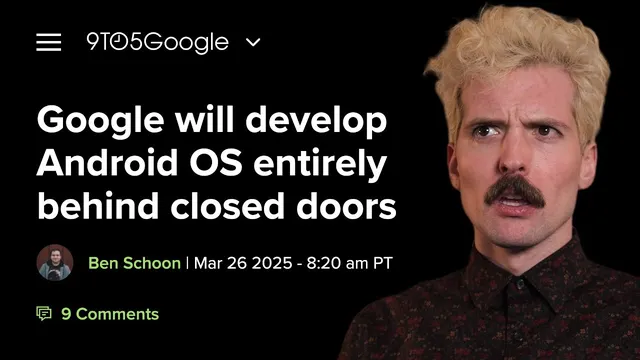
Google is consolidating Android development more heavily into private internal branches, reducing what outsiders can inspect and track in real time.
Briefing
Android’s open-source “magic” is shrinking as Google shifts more Android development into private, internal branches—reducing what outsiders can see, track, and modify. The change matters because Android’s openness has long powered community ROMs, security research, and developer confidence that platform behavior can be inspected and influenced. Even though Android’s core OS remains based on open components, the most important phone features increasingly live behind Google-controlled code and update pipelines.
For years, Android’s promise was straightforward: build on an open foundation (AOSP), then let manufacturers and the community customize. That openness, however, has been eroded in stages. Google moved key Google-owned services—like the Play Store and notification/account infrastructure—out of the open Android core into separately updated, closed components. The result is a split reality: an AOSP-based phone can be “open,” but many mainstream apps and experiences assume Google’s proprietary service layer.
The story then turns from architecture to governance. Google has historically controlled what merges into AOSP and when new source drops appear, while manufacturers struggled to deliver timely OS updates because they had to reconcile upstream changes with their own forks. The new concern is that Google is now consolidating development further internally, meaning the public AOSP branch may lag behind what’s actually being built. The transcript describes merge conflicts between internal and public work and even cites examples where Google engineers must cherry-pick patches from private development to resolve issues before releasing open-source builds.
Google’s rationale is framed as streamlining: fewer branches, cleaner release cadence, and “trunk-based” development. A key mitigation is timing—Google is committing to quarterly platform releases, which would reduce how long developers wait for updated open-source snapshots. Still, the shift limits external visibility into what’s changing, which can slow community experimentation and make it harder to anticipate platform behavior.
The transcript also links today’s Android strategy to antitrust pressure. In the Epic Games dispute over app store rules, a court found Google’s Play Store bundling and payments to device makers created an illegal monopoly. The ruling forces changes such as letting competing app stores access the Play Store catalog, allowing alternative stores to be installed via Play, and stopping payments that keep rivals off devices. That threat to Google’s distribution advantage helps explain why Google may want to reduce competitive advantages that non-Pixel Android devices can offer.
Meanwhile, the transcript argues that Android’s “open edge” has narrowed in other ways: Google’s proprietary camera and processing stack, Google Pay limitations on certain open forks, and the increasing difficulty of running fully featured Google experiences on privacy-focused or community ROMs. The Linux kernel remains open under GPL, but the rest of the stack appears increasingly subject to Google’s internal control.
Overall, the central claim is not that Android is becoming fully closed overnight. It’s that the parts people care about—features, integrations, and update timing—are drifting away from what outsiders can inspect and influence. For developers and open-source enthusiasts, that shift risks turning Android from a playground of modifiable code into a platform where users and community builders can only see and change less of what actually runs on their phones.
Cornell Notes
Android’s openness is being narrowed as Google moves more Android development into private internal branches, leaving the public AOSP releases less representative of what’s actively being built. Over time, Google also separated core Google functionality—like Play Store and notification/account infrastructure—from open Android, meaning AOSP-only devices can lack key app compatibility and features. The transcript connects the shift to antitrust pressure from the Epic Games case, which challenged Google’s Play Store monopoly and bundling payments to device makers. While Google says it will still publish source code and is committing to quarterly platform releases, external developers will have less visibility and fewer opportunities to track changes before they land. The Linux kernel remains open under GPL, but much of the user-facing “phone experience” is increasingly controlled by Google’s proprietary components.
What does “Android is open except Play Services” mean in practice for someone trying to run an AOSP-based phone or ROM?
How did Android’s early promise of “write once, run everywhere” evolve into today’s fragmented experience?
Why does the transcript say Google’s internal branch consolidation is a big deal for developers and community ROM maintainers?
How does the Epic Games antitrust case connect to Google’s Android development and bundling strategy?
What remains open even as other parts of Android become more controlled?
What mitigation does the transcript mention for the reduced transparency of AOSP development?
Review Questions
- What specific Google-controlled components does the transcript say were moved out of open Android core, and how does that affect app compatibility?
- How does branch consolidation (public AOSP vs internal development) change what external developers can predict or prepare for?
- Which parts of Android are still constrained by open-source licensing obligations, and which parts appear to be under tighter Google control?
Key Points
- 1
Google is consolidating Android development more heavily into private internal branches, reducing what outsiders can inspect and track in real time.
- 2
Google previously moved major Google-owned capabilities (including Play Store and notification/account infrastructure) out of open AOSP into separately updated, closed components.
- 3
AOSP-based openness can still leave devices without key mainstream functionality because many apps depend on Google’s proprietary service layer.
- 4
Antitrust pressure from the Epic Games case threatens Google’s Play Store monopoly mechanics, including bundling payments to manufacturers and restrictions on competing stores.
- 5
Google’s stated mitigation includes quarterly platform releases, but public AOSP may still lag behind internal work and create merge conflicts.
- 6
The Linux kernel remains open under GPL, but much of the user-facing Android experience (camera/processing, payments, and other integrations) is increasingly controlled by Google.
- 7
The transcript frames the overall shift as a gradual move from an inspectable, hackable platform toward one where core phone differentiators are less accessible to community forks.