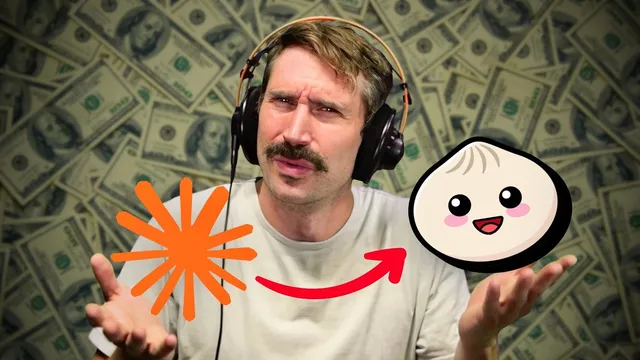
Anthropic confirms software engineering is NOT dead
Based on The PrimeTime's video on YouTube. If you like this content, support the original creators by watching, liking and subscribing to their content.
Anthropic’s acquisition of Bun is presented as evidence that engineering expertise and tooling infrastructure still matter, even amid “software engineering is done” predictions.
Briefing
Anthropic’s acquisition of Bun is being framed as a direct rebuttal to the recurring claim that software engineering will be “done” within months. Bun will remain MIT-licensed and open source, but the deal signals that Anthropic is willing to pay for the people and infrastructure behind a high-performance JavaScript runtime—because that expertise is useful for building and shipping Claude Code tooling at scale.
The transcript lays out two linked questions: why Bun would sell, and why Anthropic would buy. Bun’s sustainability problem is treated as the key driver. Bun has operated as a VC-backed open-source project since its early days, raising a $7 million seed round, yet it lacked a clear path to monetization. A competitor, Dino Deploy, is cited as having a straightforward revenue model (transparent pricing such as $20 for pro and custom enterprise tiers), making Bun’s “how does this last?” uncertainty feel especially persistent. The answer offered is that Bun’s team found a buyer rather than a business model—while also promising continuity: Bun stays MIT and actively maintained, with the same team continuing work after the acquisition.
On Anthropic’s side, the motivation is tied to Claude Code’s delivery needs. Bun is described as enabling Claude Code to produce self-contained executables that run across platforms more easily. That matters because CLI tools often depend on packaging and runtime compatibility, and the transcript argues that Bun’s role in the toolchain gives Anthropic leverage over performance and distribution. The acquisition is also portrayed as a way to influence Bun’s roadmap so Anthropic can keep its command-line ecosystem competitive as Open Code grows quickly and supports multiple models rather than locking users into a single one.
The most forceful portion of the argument targets the “software engineering is over” narrative. The transcript points to Bun’s MIT license as a practical contradiction: if software engineering truly becomes unnecessary, Anthropic could theoretically fork Bun and implement changes without buying the company. Instead, Anthropic is hiring more engineers and expanding the team to deliver features faster—an investment that, in the transcript’s view, contradicts the idea that human engineering effort will be obsolete soon. The speaker also notes a pattern of repeated “it’s done” predictions tied to successive model releases (from earlier Claude and ChatGPT cycles to later systems), arguing that those claims don’t align with real-world spending.
Finally, the transcript broadens the critique beyond Anthropic. It challenges the logic behind “weekend replacement” narratives for software services—where users supposedly can rebuild paid tools quickly using AI coding assistants—calling it unrealistic for most businesses and teams. It then adds a speculative angle: the acquisition may reflect “language games,” with claims that Open Code is heavily Rust-based while Bun is heavily Zig-based, implying strategic positioning in programming languages. The segment ends with an advertisement for Convex, pitching a backend platform that aims to reduce SQL complexity and keep data in sync through real-time updates.
Overall, the deal is presented as evidence that hard engineering skills remain valuable, and that major AI companies are still betting on the software stack—runtime, tooling, and maintainers—rather than treating engineering as a short-lived phase.
Cornell Notes
Anthropic’s purchase of Bun is portrayed as a practical counterargument to claims that software engineering will be “done” in a few months. Bun’s VC-backed open-source model lacked a clear monetization path, so selling became a sustainability solution while keeping Bun MIT-licensed and actively maintained. For Anthropic, Bun’s value is linked to Claude Code: Bun can help produce self-contained, cross-platform executables and gives Anthropic influence over Bun’s roadmap for CLI tooling. The transcript treats the acquisition—and the plan to hire more Bun engineers—as evidence that “engineering is over” predictions don’t match how companies allocate real money. It also argues that MIT licensing would make forking easier than buying if engineering truly didn’t matter.
Why does Bun’s acquisition get framed as a sustainability turning point?
What does Bun enable for Claude Code that makes the purchase strategically useful?
How does the MIT license undermine the “engineering is done soon” claim in the transcript’s logic?
What concrete post-acquisition changes are mentioned for Bun?
Why does the transcript criticize “weekend replacement” narratives for paid software services?
What speculative “language games” theory is offered about the acquisition?
Review Questions
- What specific capabilities does Bun provide that the transcript connects to Claude Code’s ability to ship cross-platform executables?
- How does the transcript use MIT licensing to argue against the idea that software engineering will disappear soon?
- Which sustainability problem for Bun is cited, and how does the transcript contrast it with Dino Deploy’s monetization approach?
Key Points
- 1
Anthropic’s acquisition of Bun is presented as evidence that engineering expertise and tooling infrastructure still matter, even amid “software engineering is done” predictions.
- 2
Bun’s sustainability challenge is attributed to being a VC-backed open-source project without a clear monetization path, unlike Dino Deploy’s transparent pricing.
- 3
Bun is portrayed as enabling Claude Code to package self-contained, cross-platform executables, making it strategically valuable for CLI tooling.
- 4
Bun is expected to remain MIT-licensed and open source, stay actively maintained, and continue development on high-performance JavaScript tooling and Node.js compatibility.
- 5
The transcript argues that if engineering were truly “over,” Anthropic could fork MIT-licensed Bun rather than buying the company and expanding its team.
- 6
The acquisition is also framed as a way to influence Bun’s roadmap and accelerate feature delivery by hiring more engineers.
- 7
Beyond Anthropic, the transcript challenges “weekend replacement” claims for paid software services as unrealistic and time-costly for most teams.