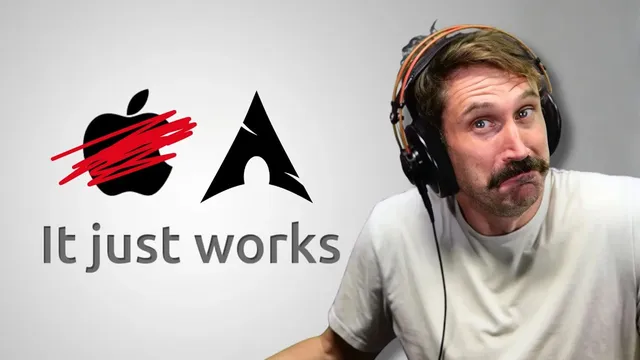
Apple Introduces The Year Of The Linux Desktop!
Based on The PrimeTime's video on YouTube. If you like this content, support the original creators by watching, liking and subscribing to their content.
Microsoft is described as removing local-account creation mechanisms during Windows 11 setup, pushing users toward Microsoft Live sign-in during initial setup.
Briefing
Apple’s latest push toward a more “Linux-like” desktop experience is framed as a turning point, but the real catalyst is Windows: Microsoft is tightening Windows 11’s setup around online accounts and removing options for creating local accounts during installation. The transcript treats that shift as more than a login change—it’s portrayed as a broader pattern of making PCs increasingly dependent on Microsoft services, with knock-on effects for offline use and user control.
The most concrete grievance centers on Windows setup behavior. Microsoft is described as removing “known mechanisms” for creating local accounts in the out-of-box experience, after those mechanisms were used to bypass Microsoft account setup. The transcript argues that Microsoft’s response is to remove the feature rather than preserve user autonomy while fixing the underlying configuration issues that could leave devices partially set up. The speaker’s broader claim is that the default direction won’t stay optional: even if workarounds exist today, the transcript predicts they’ll be narrowed over time.
That tightening is linked to a business model built around constant connectivity. The transcript points to features like Copilot-related capabilities (snapshots and semantic search across history) as tools that could monetize user data and to startup-menu ads as evidence that Microsoft is moving toward advertising as a core revenue stream. The argument is that ads and AI—potentially personalized—require users to be online and tied into Microsoft accounts, making offline-first workflows harder to maintain.
As Windows becomes less appealing, the transcript claims momentum is shifting toward Linux and macOS. It cites growing dissatisfaction with Windows’ performance and feel—described as “chunky,” laggy, unreliable—and adds that gaming on Linux is improving as Steam expands Linux support. The “year of the Linux desktop” framing is less about a single release and more about a convergence of pressures: account requirements, ads, and perceived UI/UX decline.
macOS is treated as a mixed bag. Apple is criticized for UI and design regressions, with a jab at a new macOS release (“OSX 26 Tahoe”) and its calculator app—portrayed as visually over-rounded and bloated. Still, the transcript acknowledges macOS’s historical strength for developers: a smoother out-of-the-box experience and strong interface polish. The pivot toward Linux comes from the promise of a similarly polished feel without the same account and ad constraints.
To make that case, the transcript highlights a Linux desktop setup using tools described as “Omachi” (with references to Hyperland and Waybar). The pitch is that Linux can deliver a Mac-like responsiveness and aesthetics with minimal configuration—while still allowing personalization through keybindings and components. The transcript also claims the setup can run on older PCs and be installed quickly, with a cited install time of about 1 minute and 48 seconds.
Overall, the transcript’s core message is that Windows’ move toward account-locked, online-first setup—paired with ads and data-driven features—creates a practical opening for developers to switch. Linux is positioned as the best “freedom” alternative: smooth, customizable, and increasingly accessible, making the next year a plausible inflection point for desktop adoption among technical users.
Cornell Notes
Windows 11 setup is portrayed as moving away from local accounts by removing mechanisms that previously allowed bypassing Microsoft account requirements in the out-of-box experience. The transcript connects that change to a broader online-first strategy, including ads in the startup menu and AI features that rely on user history. Those pressures are framed as pushing developers toward Linux (and sometimes macOS) because Windows increasingly feels slow, unreliable, and less user-controlled. Linux is presented as both customizable and increasingly “out-of-the-box” friendly, with a specific desktop setup (Omachi on Hyperland/Waybar) described as quick to install and smooth even on older hardware. The takeaway: desktop choice is shifting from preference to necessity as account and monetization constraints tighten on Windows.
What specific change in Windows 11 setup is driving the strongest backlash?
Why does the transcript link account requirements to monetization?
How does the transcript explain why Windows users might feel pushed away beyond account login?
What role does Linux desktop usability play in the “year of the Linux desktop” claim?
How does the transcript treat macOS in this comparison?
Review Questions
- What does the transcript claim Microsoft removed in Windows setup, and what problem did that change aim to prevent?
- Which two monetization-related examples does the transcript use to connect online account requirements to advertising/AI?
- How does the transcript argue Linux can match the “out-of-the-box” feel associated with macOS, and what tools are named in that setup?
Key Points
- 1
Microsoft is described as removing local-account creation mechanisms during Windows 11 setup, pushing users toward Microsoft Live sign-in during initial setup.
- 2
The transcript frames the removal as a default shift toward online-first use, not a temporary workaround situation.
- 3
Ads in the startup menu and AI features tied to user history are presented as reasons Microsoft wants accounts and connectivity.
- 4
Windows is portrayed as worsening in day-to-day usability—laggy, unreliable, and increasingly prompt/advertisement-driven.
- 5
The “year of the Linux desktop” claim rests on a convergence of Windows friction and improving Linux desktop/gaming support.
- 6
A Linux desktop setup using Omachi on Hyperland/Waybar is presented as quick to install, smooth, and customizable with minimal configuration.
- 7
Linux is positioned as especially attractive to developers, while the transcript doubts non-technical users would adopt tiling-window workflows easily.