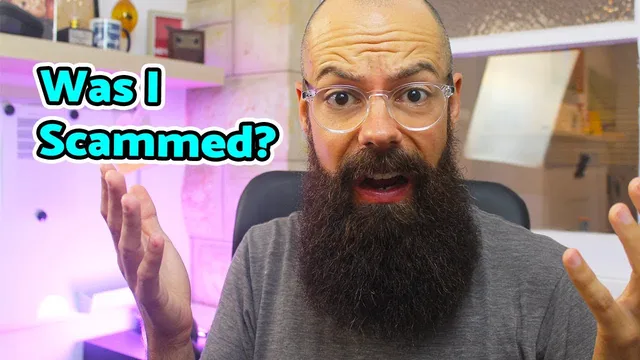
Are PhDs a scam? Not where I expected this to go...
Based on Andy Stapleton's video on YouTube. If you like this content, support the original creators by watching, liking and subscribing to their content.
A PhD can feel like a scam when expectations about time, difficulty, risk, and career outcomes aren’t clearly communicated at the start.
Briefing
A PhD can feel like a “scam” to some people—not because the system is always built on outright fraud, but because key realities are often left unspoken while powerful incentives pull students into the pipeline. Using a definition of scam as “dishonest or illegal activity… involving tricking people,” the discussion frames the gray zone: PhDs may overlap with scam-like experiences when expectations are misaligned, recruitment messaging is persuasive, and financial benefits flow to universities, supervisors, or both.
The biggest source of “dishonesty” is described as omission rather than deception. Research is inherently unpredictable—progress can hinge on hours of work yielding nothing, or a sudden breakthrough arriving from a brief online search. Yet many prospective students enter with assumptions about timelines, difficulty, and post-PhD outcomes that aren’t fully clarified at the start. The result is a common emotional pivot point: when things go wrong, students may feel lied to because the risks—how long it takes, how hard it can be, how stressful it can become financially, and how uncertain academic careers are—were never made explicit. The argument is that this can be “dishonest” in effect without being “deceptive” in intent.
Recruitment and supervision add another layer. University marketing teams are portrayed as naturally incentivized to persuade applicants to enroll, creating a “bubble” that makes leaving feel awkward once someone is committed. More direct pressure can appear at the supervisor level, where supervisors benefit from maintaining a steady flow of researchers feeding their publication output. That structure isn’t a pyramid scheme, but it can create incentives for “love bombing”—intense early praise and promises of belonging that may not match what later unfolds. The transcript emphasizes that not every supervisor uses tricks, but the incentives can blur into manipulation.
Money is the most contentious part of the scam definition. PhD students are described as paid “atrociously” relative to the market value of their skills, and universities rely on low-cost research labor. Financial benefits exist at multiple levels: supervisors may use student work to support grant applications; universities may profit indirectly through patents, licensing, and the prestige that helps them secure larger grants. For self-funded students, the financial imbalance is even clearer.
Still, the system isn’t framed as purely one-sided. Some PhD graduates become professors, earn more, or find the work genuinely rewarding. But the transcript argues that many others—especially as universities shrink, grant money tightens, and competition for tenure grows—finish without realistic pathways. When outcomes aren’t explained early, the mismatch can lead to a “scammed” feeling. The conclusion: a PhD isn’t automatically a scam, but it’s a risky default path unless applicants understand the incentives, the uncertainty, and their own career fit—because for many, the system’s benefits don’t materialize as promised.
Cornell Notes
The transcript treats “PhD scam” as a question about incentives and expectations, not just fraud. It uses a scam definition centered on tricking people for gain, then checks whether PhDs meet those criteria: dishonesty often comes from what’s left unsaid (uncertain timelines, difficulty, and job outcomes), while “trick” dynamics can arise from university marketing and supervisor incentives like love bombing. Financial benefit is real—universities and supervisors gain from cheap research labor, grants, prestige, and sometimes patents or licensing—yet the system also helps some graduates succeed. The core tension is that many students feel unprepared for an outcome landscape that may not support most of them, especially as academic hiring and funding tighten.
What makes a PhD feel “dishonest” even when no one is actively lying?
Where do “trick” dynamics show up in the PhD pipeline?
How does the transcript connect PhDs to the “making money” part of a scam definition?
Why doesn’t the transcript treat the PhD system as a simple winner/loser scam?
What conditions make “scammed” feelings more likely for many PhD students?
Review Questions
- How does the transcript distinguish “dishonesty” from “deception” in the context of PhD expectations?
- Which incentives at the university and supervisor level are described as creating gray-zone “trick” dynamics?
- What combination of funding, hiring, and expectation-setting is argued to drive many students toward feeling “scammed”?
Key Points
- 1
A PhD can feel like a scam when expectations about time, difficulty, risk, and career outcomes aren’t clearly communicated at the start.
- 2
Research uncertainty is inherent, but students may still experience “dishonesty” when key realities are left unexplored.
- 3
University marketing can create a persuasive enrollment “bubble,” making later exit feel awkward.
- 4
Supervisor incentives can blur into manipulation, including love-bombing that doesn’t match later realities.
- 5
Financial benefit flows through cheap research labor, grant applications, and institutional prestige; patents and licensing can add additional value.
- 6
Some PhD graduates succeed in academia or find strong career fit, so outcomes aren’t uniformly negative.
- 7
As academic hiring and grant funding tighten, more students may finish without realistic pathways, increasing “scammed” feelings.