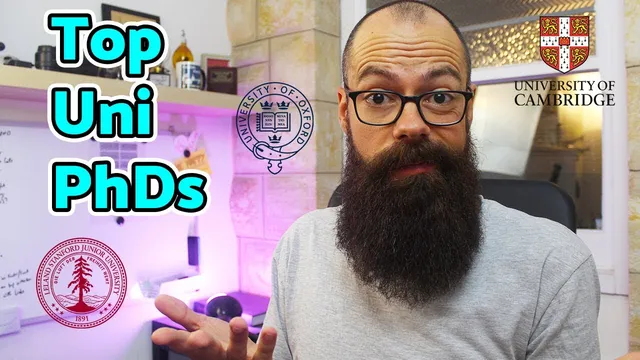
Are PhDs From Top Universities Better? The top considerations
Based on Andy Stapleton's video on YouTube. If you like this content, support the original creators by watching, liking and subscribing to their content.
Prestige from top universities can improve academic career prospects because it is recognized across the global academic system.
Briefing
Getting a PhD from a top, globally recognized university can boost career outcomes—especially for academia—but it comes with a real tradeoff: pressure, competition, and sometimes toxic dynamics can intensify the downsides as much as the prestige amplifies the upsides. The core appeal is straightforward. A PhD from institutions such as Oxford, Cambridge, Yale, Harvard, MIT (and similar names) carries status that tends to be “absorbed” by the academic system worldwide. That recognition can make it easier to secure academic positions across countries.
Yet the benefits aren’t free. People coming out of these elite environments often report a more turbulent path inside the program. The pressure to perform is higher, competition for limited post-doc and PhD opportunities is sharper, and students are surrounded by exceptionally driven peers. One anecdote describes a Cambridge professor noting that PhD life there involves both more pressure and more competition—students are among the brightest and the stakes feel correspondingly higher.
The transcript also highlights extreme examples of how competitiveness can curdle into misconduct. A graduate from Oxford reportedly described sabotage between students—altering lab notebook records, deleting or ripping out pages—so severely that lab books had to be locked away. Beyond peer pressure, there are concerns about supervisory power. At top institutions, the supervisor can effectively dictate the trajectory of a student’s PhD, including how the work progresses and what the experience feels like. If that supervisor combines high expectations with ego or poor interpersonal behavior, the student can suffer regardless of the university’s reputation.
That leads to a broader point: prestige is not the only determinant of a good PhD, and lower-ranked universities aren’t automatically inferior. A well-respected department with strong experts in a specific field can still produce excellent research training. However, the transcript argues that going to a very obscure program can be a gamble—especially if the supervisor and research area aren’t well connected or respected, which can make the journey unnecessarily hard for anyone aiming at academia.
For choosing where to apply, the transcript lays out four practical considerations. First, prioritize the expert network: look for names that repeatedly appear in respected papers and check whether the department is productive in the relevant subfield. Second, assess the research setup and resources—equipment, experimental infrastructure, and even the university’s location relative to fieldwork needs. Third, consider the lived experience: whether the city and campus feel livable for years, and whether student services and nearby activities support a sustainable routine. Fourth, treat funding as a major decision factor. Self-funding is discouraged unless there’s a clear, specific plan, because tuition and living costs—and the stress of covering them—can undermine creativity and delay broader life milestones.
In the end, a top-university PhD can be worth it if applicants weigh prestige against the amplified risks. The transcript’s bottom line is conditional: take the opportunity if it fits the right people, resources, environment, and—crucially—financial stability, because the reputation can act as an amplifier for both outcomes.
Cornell Notes
A PhD from a top university can improve academic career prospects because global prestige is recognized across the academic system. But elite programs also intensify pressure and competition, which can make the experience more turbulent, including reports of extreme peer sabotage and the outsized impact of a supervisor’s personality. Applicants are urged not to treat rankings as the only signal; strong departments at less famous universities can still deliver excellent training if the field’s experts and research output are credible. The transcript emphasizes four selection criteria: expert network (paper authorship and connections), experimental resources and infrastructure, the livability of the city/campus for years, and—most importantly—funding to avoid financial stress that harms creativity and well-being.
Why does a top-university PhD often help for academic careers, according to the transcript?
What are the main downsides of elite PhD programs beyond “hard work”?
How should applicants evaluate universities if they’re not aiming exclusively for the most famous names?
Which practical factors matter during the PhD, not just the department’s reputation?
Why does funding outweigh prestige in the transcript’s decision framework?
What is the transcript’s overall “worth it” conclusion?
Review Questions
- What specific mechanisms make prestige from top universities matter for academic hiring, and what countervailing risks are described?
- How can an applicant use publication authorship patterns to judge whether a department is respected in a particular field?
- Which of the four decision criteria (experts, resources, city/campus, funding) would you prioritize first for your goals, and why?
Key Points
- 1
Prestige from top universities can improve academic career prospects because it is recognized across the global academic system.
- 2
Elite PhD environments often intensify pressure and competition, which can make the student experience more turbulent.
- 3
Supervisor behavior can heavily shape a PhD; an ego-driven or harmful supervisor can create problems regardless of institutional rank.
- 4
Applicants should evaluate departments by the expert network and field credibility, using evidence from respected papers and recurring author names.
- 5
Research success depends on practical infrastructure—equipment, experimental setup, and location advantages for the specific work.
- 6
City and campus livability matter for long-term performance; a great lab group can’t compensate for an unlivable environment.
- 7
Funding is a major determinant of whether a PhD is sustainable; self-funding is discouraged because financial stress undermines creativity and well-being.