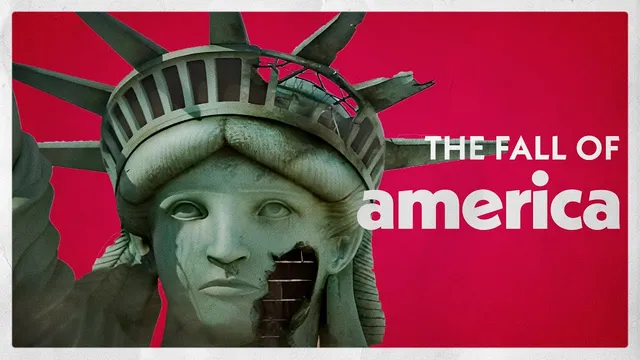
Are We Living Through The End Of An Empire?
Based on Second Thought's video on YouTube. If you like this content, support the original creators by watching, liking and subscribing to their content.
The transcript frames imperial decline as a slow accumulation of failures rather than a single “fall” event.
Briefing
The United States is showing the same long, grinding signs of decline that marked past empires—less a sudden “fall” than a steady loss of resilience as economic, political, and geopolitical pressures compound. The core claim is that the U.S. isn’t failing because of a single bad leader or one-off policy mistake, but because the underlying system driving power—capitalism—prioritizes profit and cost-cutting over the kind of sustained investment and social protection that make empires able to absorb shocks.
A major parallel is drawn to the Roman Empire, which many Americans already compare to the U.S. through themes like expansionism, extreme inequality, global influence, military dominance, and recurring economic crises. Rome’s end is framed not as a single inflection point but as “death by a thousand cuts”: crumbling infrastructure, corruption, widening inequality, eroding trust in institutions, humiliating military defeats, and endless conflict that drains resources. The decisive example is Rome’s supply chain—state-subsidized grain shipments and shipping infrastructure eventually fail when the state can’t or won’t maintain the mundane systems that keep society running.
That same slow-motion pattern is then mapped onto the U.S. timeline. The argument points to repeated crises—Great Depression, Red Scares, McCarthy-era politics, the 9/11 era, the 2008 financial crash and Great Recession, COVID-19, and simmering problems tied to climate change and the weakening of U.S. control in the periphery. It also highlights the U.S. losing ground economically, militarily, and geopolitically to China, while U.S. rhetoric about freedom and self-determination is undercut by international perceptions shaped by the Gaza war. In this framing, the usual Western habit of blaming “the other side” misses the deeper driver: the system’s incentives.
COVID-19 becomes the centerpiece example. Despite differences in political branding between Trump and Biden, the pandemic response is portrayed as shaped by capitalism’s “prime directive”—keeping markets running even at high human cost. The result, in this account, is a leadership failure to follow science and prevent deaths, with more emphasis on economic continuity than public health.
Resilience is offered as the dividing line between empires that endure and those that fail. Resilience means rebuilding infrastructure after disasters, adjusting after economic shocks, and acting quickly during disease outbreaks. The U.S. is presented as repeatedly falling short: Flint, Michigan’s water crisis persists; New Orleans still bears long-term damage after Hurricane Katrina; rail safety problems include derailments carrying toxic chemicals; and after the 2008 crash, millions lose homes while institutional investors—specifically BlackRock is named—turn housing into a long-term rental trap.
The same logic is extended abroad. The U.S. is described as extracting wealth from developing countries through exploitative lending conditions and privatization demands, then outsourcing manufacturing to China to cut costs. China, by contrast, is portrayed as taking a longer view—planning years ahead, raising living standards, and building modern infrastructure—eventually offering development aid without the same domination requirements. As extraction becomes harder, the argument says the U.S. leans more on coercion: proxy wars and major conflicts, including wars framed around Ukraine, Taiwan, and Israel/Arab states, are treated as the “last chance” to regain leverage.
The conclusion is blunt: the U.S. may not collapse dramatically, but the contradictions are sharp enough—and the failures frequent enough—that the country is living through the end of an empire, likely over decades rather than a single apocalyptic moment.
Cornell Notes
The transcript argues that the United States is entering a long decline similar to the Roman Empire’s “death by a thousand cuts,” where repeated failures accumulate rather than one event triggers collapse. It links U.S. problems—economic crises, infrastructure decay, weak pandemic protection, and geopolitical setbacks—to the underlying incentives of capitalism, especially profit preservation over resilience. Political differences between major parties are treated as superficial because both operate within the same economic base. Resilience is presented as the key factor separating empires that adapt from those that fail, and the U.S. is portrayed as repeatedly lacking it at home and abroad. The result is a gradual loss of capacity and influence, not an immediate fall, but an extended fade from dominance.
Why does the transcript reject a single “fall of Rome” moment, and how does that shape its view of U.S. decline?
What role does capitalism play in the transcript’s explanation of both domestic crises and pandemic outcomes?
How does the transcript define “resilience,” and what U.S. examples are used to argue resilience is failing?
Why does the transcript say blaming individual leaders misses the real cause of imperial decline?
What comparison is made between U.S. economic strategy abroad and China’s, and what consequence is predicted?
How does the transcript connect geopolitical conflict to the idea of “last chance” for an empire?
Review Questions
- What does the transcript identify as the main difference between empires that endure and empires that fail?
- Which specific examples are used to argue that U.S. resilience is weak in infrastructure and public health?
- How does the transcript connect domestic economic incentives to foreign policy behavior and conflict?
Key Points
- 1
The transcript frames imperial decline as a slow accumulation of failures rather than a single “fall” event.
- 2
Roman decline is used as a template: infrastructure and supply-chain breakdowns occur when the state can’t maintain essential systems.
- 3
U.S. decline is linked to repeated crises over decades, including economic shocks and long-term problems like climate change and shifting geopolitical power.
- 4
Political differences between major U.S. parties are treated as superficial because both are constrained by the same capitalist economic base.
- 5
COVID-19 is presented as a case where market continuity outweighed public-health prevention, leading to high death tolls.
- 6
Resilience—rapid adaptation, infrastructure repair, and protective action during shocks—is presented as the deciding factor for whether an empire endures.
- 7
The transcript argues that as U.S. extraction becomes less effective abroad, coercion and proxy wars increase as a substitute for lost leverage.