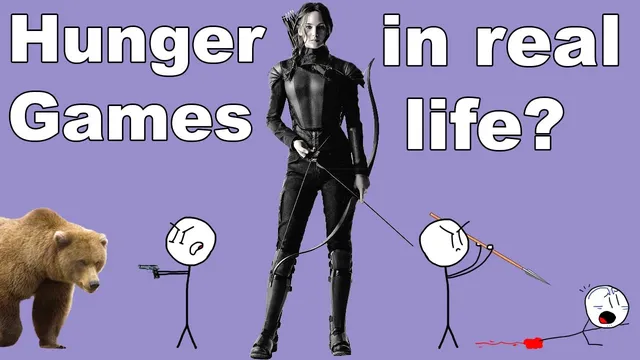
Are We Moving Toward a Real Life Hunger Games?
Based on Second Thought's video on YouTube. If you like this content, support the original creators by watching, liking and subscribing to their content.
Game 2 Winter is planned as a 24/7, nine-month survival contest in Siberia with 30 international competitors, limited gear (a knife and about 100 kg of supplies), and a single emergency exit via a panic button.
Briefing
The prospect of “real-life Hunger Games” is no longer just science fiction: a 24/7 televised survival contest in Siberia—Game 2 Winter—has been planned with minimal restrictions, raising the question of how far entertainment can go before it normalizes human suffering. The show is scheduled to run for nine months across a remote island roughly 9 square kilometers in size, with 30 international competitors dropped in harsh conditions and given only a knife and about 100 kg of supplies. Organizers have said “everything is allowed,” including fighting, alcohol, murder, rape, and smoking, while also claiming participants remain subject to Russian criminal law. If a violent crime is caught on camera, arrests would follow—yet the contest environment itself is already lethal even without interpersonal violence.
Survival hinges on extreme nature: Siberian temperatures are expected to swing from around 35°C in summer to below -40°C in winter. Competitors must forage and hunt for food, build shelter, and contend with predators such as grey wolves and grizzly bears. A panic button is provided for emergencies, linked to a GPS satellite so a rescue helicopter can airlift contestants to safety. But pressing it ends participation and costs the chance at the reported 1.3 million prize, turning rescue into a tradeoff rather than a safety net.
That structure echoes a long-running human pattern: governments have historically used mass spectacles to distract populations and manage political risk. The transcript traces the phrase “bread and circuses” to ancient Rome, where leaders offered cheap entertainment and free bread to keep citizens occupied amid real hardships. Roman games weren’t limited to gladiatorial combat; they also included animal battles and elaborate special events, including a staged naval battle in the Coliseum basin. The modern world may not replicate those spectacles directly, but the appetite for “death games” persists in film and television—citing titles like The Hunger Games, Battle Royale, and the upcoming Game 2 Winter.
A scientific journal cited in the transcript suggests the trend could intensify. Tourism expert Daniel William McKenzie Wright of the University of Central Lancashire argues that within about 200 years, hunting humans could emerge as a form of sport and entertainment, driven by desensitization to violent death through media, widening economic inequality, and the growth of theme-park-style experiences. The paper’s forecast is that by 2200, death games could occupy at least part of the tourism and entertainment industry—potentially serving political functions as well, such as reducing prison overcrowding, addressing starvation pressures, and keeping the public controlled through the fear of selection.
Still, the transcript frames a moral counterpoint: normalizing the killing of fellow humans for pleasure would erode compassion—an essential marker of humanity. Whether Game 2 Winter becomes a template for more brutal spectacles may depend on public tolerance, network interest, and whether the contest’s “rules” can coexist with the reality of violence on camera. For now, the central warning is simple: if society treats death as entertainment, the line between fiction and reality may keep moving.
Cornell Notes
The transcript links ancient Roman “bread and circuses” to modern “death game” entertainment, arguing that mass spectacles can distract populations and manage political risk. It highlights Game 2 Winter, a planned 24/7 survival show in Siberia with 30 competitors, minimal restrictions (“everything is allowed”), and only a panic button as an emergency exit—at the cost of winning. The environment itself is deadly, with predators and extreme temperatures from about 35°C to below -40°C. A cited tourism expert predicts that by around 2200, death games could become part of tourism and entertainment, fueled by media desensitization and extreme economic inequality. The ethical tension is whether such normalization would destroy compassion and humanity’s moral boundaries.
How does the transcript connect ancient Rome’s “bread and circuses” to modern death-game entertainment?
What are the key rules and safety mechanisms planned for Game 2 Winter?
Why is the Siberian setting itself portrayed as a major threat, even without interpersonal violence?
What forecast does the cited tourism expert make about the future of death games?
What practical “societal functions” does the transcript attribute to death games in that forecast?
Review Questions
- What specific design choices in Game 2 Winter (rules, panic button, prize structure) make it more than a typical survival contest?
- Which factors does Daniel William McKenzie Wright identify as drivers of a future where death games become entertainment, and how do they connect to economic inequality?
- How does the ancient Rome comparison function in the transcript—what does it suggest about why societies tolerate extreme spectacles?
Key Points
- 1
Game 2 Winter is planned as a 24/7, nine-month survival contest in Siberia with 30 international competitors, limited gear (a knife and about 100 kg of supplies), and a single emergency exit via a panic button.
- 2
Organizers reportedly indicated that “everything is allowed,” but participants would still face Russian criminal law if crimes are captured on camera.
- 3
The contest’s lethality comes not only from potential human violence but also from predators (grey wolves and grizzly bears) and extreme temperature swings from around 35°C to below -40°C.
- 4
Pressing the panic button triggers rescue but ends a contestant’s eligibility to win the reported 1.3 million prize, making safety a strategic tradeoff.
- 5
The transcript draws a historical parallel to ancient Rome’s “bread and circuses,” where mass spectacles distracted citizens and helped political leaders manage unrest and prisoners.
- 6
A cited tourism expert predicts that by around 2200 death games could become part of tourism and entertainment, driven by media desensitization and widening economic inequality.
- 7
The ethical tension centers on whether normalizing the killing of fellow humans for sport would erode compassion and humanity’s moral boundaries.