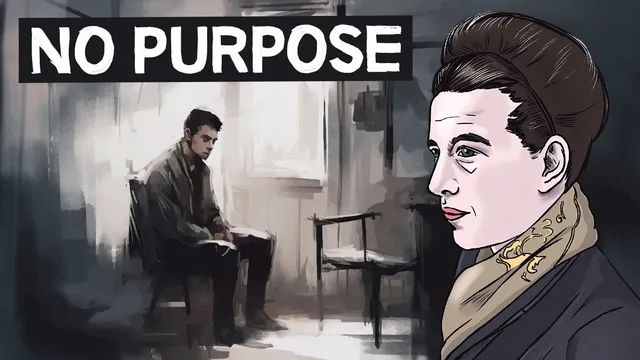
Are You a Subhuman? | The Existential Crisis You Can’t Ignore
Based on Einzelgänger's video on YouTube. If you like this content, support the original creators by watching, liking and subscribing to their content.
De Beauvoir treats freedom as unavoidable: even attempts to escape it are still choices that carry responsibility.
Briefing
Existentialist philosopher Simone de Beauvoir frames “freedom” as both a privilege and a burden—and warns that people who try to flee that freedom end up denying responsibility, becoming easy targets for manipulation, and even enabling oppression. The central insight is that freedom can’t be escaped: even refusing to engage with life is still a choice. When someone rejects the ambiguity of freedom, they don’t just lose authenticity; they risk sliding into attitudes that make them dangerous to themselves and others.
De Beauvoir’s starting point is the double-edged nature of freedom. Life arrives with “facticity”—the given conditions that shape circumstances, from social pressures to war to economic constraints. Yet freedom means acting despite those limits, transcending facticity enough to forge an authentic path. The tension is constant: people are both subjects who can create meaning and objects shaped by forces beyond their control. What matters is not whether constraints exist, but whether a person treats them as destiny or as material to work with.
Because freedom is ambiguous and personal, de Beauvoir rejects universal step-by-step ethics for living freely. A guide that claims to deliver freedom through someone else’s blueprint would actually surrender one’s agency. Instead, “true freedom” requires figuring out one’s own direction and choosing it actively—while accepting responsibility for how choices affect others. Freedom without responsibility turns into passivity; passivity turns people into objects of circumstance.
De Beauvoir traces the roots of freedom-denial to childhood. Children experience the adult world as absolute: parents and teachers appear godlike, and customs and values feel inevitable “as the sky and the trees.” As adults, many people cling to that earlier certainty by adopting a “serious” stance—subordinating freedom to supposedly unconditioned values. The serious person seeks identity in predefined roles, trades critical thinking for external authority, and uses a higher purpose as an existential lifebuoy. This can look selfless, but it often functions as an escape from ambiguity.
When the serious system collapses—or when someone never fully commits to critical engagement—the serious person can tip into the “subhuman” archetype. For de Beauvoir, subhuman has nothing to do with genetics or appearance. It’s a stance that drifts through life letting class, genetics, or social position define the self, treating facticity as everything. The subhuman rejects freedom and copes through distractions, often adopting ideologies passively. De Beauvoir’s warning is stark: the subhuman is dangerous not because of inherent inferiority, but because passivity and manipulability make them usable by tyrants and oppressive movements.
In sum, de Beauvoir’s existential crisis is not about whether freedom exists—it’s about what happens when people try to run from it. Denying ambiguity may offer short-term certainty, but it erodes authenticity, dodges responsibility, and can feed the very systems that harm others. The path out, for most people, is to reclaim freedom as a lived practice: confronting facticity without surrendering agency, and choosing responsibly in a world that never hands over ready-made meaning.
Cornell Notes
Simone de Beauvoir treats freedom as unavoidable and inherently ambiguous: people are both subjects who can choose and create meaning, and objects shaped by circumstances beyond their control. “Facticity” names those constraints, but freedom means acting despite them—transcending conditions enough to forge an authentic path. De Beauvoir argues that trying to escape freedom is still a choice, and it shifts responsibility onto external forces. She describes two archetypes that deny freedom: the “serious person,” who subordinates freedom to unconditioned values and abandons critical thinking, and the “subhuman,” who drifts through life letting genetics, class, or fate define the self and adopts ideologies passively. Both attitudes can become dangerous because they make people easy to manipulate and willing to ignore others’ humanity.
What does de Beauvoir mean by “facticity,” and how does it relate to freedom?
Why does de Beauvoir reject universal, step-by-step “ethics of freedom”?
How does the “serious person” deny freedom?
What makes the “subhuman” different from the “serious person” in de Beauvoir’s framework?
Why does de Beauvoir call the subhuman “dangerous”?
How does de Beauvoir connect freedom to responsibility?
Review Questions
- How does “facticity” differ from “freedom,” and why does de Beauvoir treat them as a constant tension rather than opposites?
- What psychological or developmental pathway does de Beauvoir link to the rise of the “serious person” and the “subhuman”?
- Why does de Beauvoir think universal ethics for freedom are impossible, and what does that imply for how someone should decide what to do?
Key Points
- 1
De Beauvoir treats freedom as unavoidable: even attempts to escape it are still choices that carry responsibility.
- 2
“Facticity” names the given constraints of life; freedom means acting and creating meaning despite those limits.
- 3
Freedom is ambiguous and personal, so universal step-by-step guides for “becoming free” risk surrendering agency to someone else’s blueprint.
- 4
The “serious person” denies freedom by subordinating it to supposedly unconditioned values and replacing critical thinking with external authority.
- 5
The “subhuman” denies freedom by drifting through life as if genetics, class, or fate define the self, often adopting ideologies passively.
- 6
De Beauvoir warns that both archetypes can become dangerous because denial of freedom makes people easier to manipulate and more likely to ignore others’ humanity.
- 7
Freedom without responsibility turns into passivity; freedom with responsibility recognizes that choices affect other people.