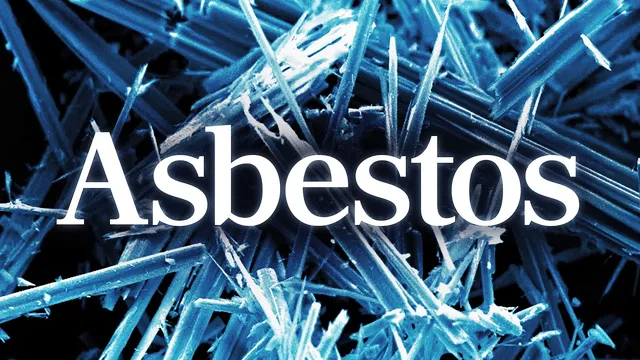
Asbestos is a bigger problem than we thought
Based on Veritasium's video on YouTube. If you like this content, support the original creators by watching, liking and subscribing to their content.
Asbestos becomes dangerous when fibers become airborne and lodge in lung tissue, where the body struggles to remove them and inflammation can drive disease.
Briefing
Asbestos is far more dangerous—and far more widespread—than regulators and the public have treated it to be, largely because detection rules, legal definitions, and industry thresholds have repeatedly failed to capture the fibers that actually get inhaled. The result is a long trail of preventable harm: from dust released during the collapse of the World Trade Center, to asbestos found in consumer products and children’s play materials, to communities unknowingly exposed through naturally occurring deposits.
The health risk begins at the microscopic level. Asbestos fibers are built from tightly bonded silicate structures that don’t burn and can be woven into durable materials—exactly why they became so valuable for fireproofing and insulation. But once airborne, the fibers lodge deep in lungs and other tissues. The body struggles to break them down because the fibers are too stiff and long, triggering chronic inflammation and scarring. Over decades, that process links to diseases including asbestosis and mesothelioma, a cancer of the chest lining.
For much of the 20th century, asbestos was treated as a miracle material. It was used in brake pads, insulation, building panels, surgical dressings, and even consumer products such as toothpaste and filters. Workers paid the price early: cases like Nellie Kershaw’s—where factory dust led to severe illness and death—helped establish asbestos as a workplace hazard. Yet early regulations often covered only certain manufacturing settings, leaving shipbuilders, miners, and construction workers exposed. Even when evidence mounted, exposure limits and enforcement lagged behind real-world conditions.
A turning point came with Dr. Irving Selikoff, who connected asbestos exposure to mesothelioma and other cancers and built a case using medical histories from shipyard workers. Industry pushback followed: research funding, public relations campaigns, and efforts to discredit findings. Later, internal documents surfaced showing companies had studied hazards and, in some cases, suppressed results—an “industrial coverup” compared to tobacco-era concealment.
Even after bans and phase-outs, the system kept stumbling over technicalities. The EPA’s attempt to ban asbestos in the United States failed in court because regulators had to prove an outright ban was the only solution under a narrow legal standard. That left a patchwork: some asbestos types phased out, others still allowed, and detection methods that often miss the smallest—and potentially most dangerous—fibers.
The World Trade Center dust became a stress test for those weaknesses. Sampling relied heavily on polarized light microscopy (PLM), which struggles to detect asbestos below about 1% by weight and misses many fibers shorter than roughly five micrometers. Researchers using transmission electron microscopy (TEM) found asbestos levels above safety thresholds, and some reports were reportedly removed quickly. The core problem wasn’t only measurement—it was definition: what counts as “asbestos” depends on fiber length, morphology, and whether fragments are treated as hazardous, even though lungs respond to fibers regardless of regulatory categories.
Asbestos also keeps showing up where people don’t expect it. Geologists found naturally occurring asbestos spread across large areas near Las Vegas, and off-roading dust samples there revealed amphibole asbestos at high concentrations. Separate investigations found asbestos fibers in talc-based cosmetics and children’s toys, with manufacturers disputing results as “cleavage fragments” or other mineral contaminants.
The throughline is simple: asbestos persists in the environment, moves through supply chains via mixed ores, and slips through regulatory and scientific loopholes. The story ends not with a solved problem, but with a warning that exposure can still happen—especially when detection, definitions, and enforcement don’t match how asbestos behaves in air, soil, and human tissue.
Cornell Notes
Asbestos is a group of durable silicate minerals that become deadly when fibers get airborne and lodge in lungs and other organs. Decades of medical evidence—especially work linking exposure to mesothelioma and asbestosis—showed the health toll, but regulations and industry thresholds often lagged behind real exposure. Detection and legal definitions repeatedly failed: methods like polarized light microscopy can miss smaller fibers, and court challenges narrowed what regulators could ban. Asbestos also appears outside traditional workplaces, including in naturally occurring deposits near Las Vegas and in some consumer products and children’s play materials due to contamination from mixed mineral ores. The stakes remain high because asbestos doesn’t decay and exposure can continue long after mining and manufacturing decline.
Why do asbestos fibers cause disease even though they’re “just” minerals?
How did early workplace rules miss many exposed workers?
What changed public understanding of asbestos risk in the 1960s?
Why did the EPA’s attempt to ban asbestos fail legally, even after cancer risks were widely accepted?
How did detection methods after 9/11 shape what people were told about safety?
Why can asbestos be found in consumer products and even children’s play materials?
Review Questions
- What biological mechanism makes asbestos fibers difficult for the immune system to clear, and how does that connect to cancer risk?
- How do PLM and TEM differ in what they can detect, and why does that matter for exposure assessments after events like 9/11?
- What legal and definitional constraints kept asbestos regulation from fully eliminating exposure, even when health harms were documented?
Key Points
- 1
Asbestos becomes dangerous when fibers become airborne and lodge in lung tissue, where the body struggles to remove them and inflammation can drive disease.
- 2
Workplace protections historically covered only some manufacturing settings, leaving many exposed jobs—like shipyards and construction—outside effective safeguards.
- 3
Industry-funded research, PR campaigns, and document suppression delayed recognition of asbestos’s full health impact despite mounting medical evidence.
- 4
Regulatory bans have been undermined by legal standards requiring proof that an outright ban is the only solution, leading to partial phase-outs rather than complete elimination.
- 5
Asbestos detection can fail when methods miss small fibers or when regulatory definitions exclude certain fiber sizes or “cleavage fragments,” even if they may still pose risk.
- 6
Asbestos exposure can occur outside traditional workplaces through naturally occurring deposits and through contamination from mixed mineral ores used in consumer products.
- 7
Asbestos persists in the environment and doesn’t naturally decay, so exposure risk can continue long after mining and manufacturing decline.