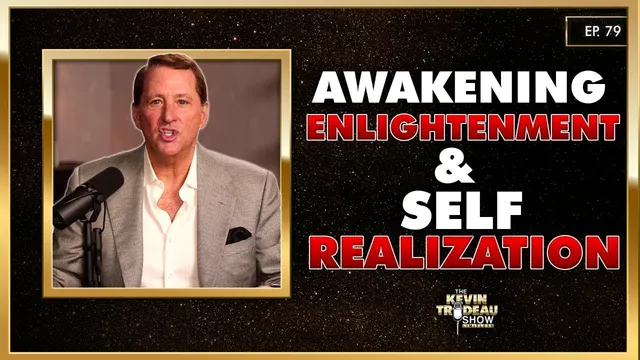
Awakening and Enlightenment From A Self Realized Master | Ep. 79
Based on The Kevin Trudeau Show: Limitless's video on YouTube. If you like this content, support the original creators by watching, liking and subscribing to their content.
True self-realization is described as anchoring in Oneness—static unconditional love and wordless knowingness—rather than chasing intense experiences.
Briefing
Spiritual liberation and self-realization are presented as a direct, inner shift into “Oneness” (pure unconditional love and knowingness), not as something reached through psychedelics, sex, material attainment, or “spiritual experiences” performed by intermediaries. The core claim is that many popular spiritual teachers and practices deliver a convincing imitation—an experience that feels profound but remains trapped in the dualistic world of matter, energy, space, and time—so it cannot deliver the stable, wordless state of awakening.
A major thread runs through the talk: people often confuse intensity with truth. Psychedelic drugs (named examples include LSD, mesculin, peyote, psilocybin/magic mushrooms, marijuana, and “iasa”), psychic readings, Reiki-like energy work, tarot/crystal practices, demon-clearing, and even church-style “laying on of hands” are framed as routes to altered states that can mimic spirituality without producing genuine enlightenment. The talk argues that true Oneness is static and anchored—beyond human comprehension and “ineffable”—and that no one who is truly anchored in that state could have gained it through drug-induced experiences.
To make the point, the transcript uses analogies built around lack of comparison. Eating only at fast-food chains is likened to having only one reference point for “real food,” so a later meal at a different chain can feel like nirvana even though it isn’t. Likewise, a fish that briefly breaks the surface and sees air, mountains, and boats may believe it has reached heaven, but it has only glimpsed one layer of reality. Spiritual experiences are treated the same way: without access to the “real thing,” people mistake a partial glimpse for the destination.
The talk also attacks the authority structure common in religion and guru culture. Priests, ministers, and spiritual intermediaries are portrayed as maintaining separation—claiming special access to God, demons, angels, or spiritual dimensions—so followers must bow, confess through an intermediary, or rely on the teacher as the unique channel. True spirituality, in contrast, is described as removing the veil of duality so the individual recognizes their own divinity and the divinity of everyone else. In that state, the transcript claims, there are no demons to fear, no angels to chase, and no need for forgiveness because separation itself dissolves.
A practical takeaway is offered through a repeated instruction: follow “the right people,” meaning mentors who have been where the seeker wants to go and can guide from personal experience rather than theory. The transcript lays out traits for evaluating teachers—teachability, humility, confidence without arrogance, clear communication, fearlessness, compassion, and non-attachment to prestige or control. It warns that many teachers operate from fear, judgment, condescension, or obsession with changing others, and that such behavior signals they are still in duality.
Finally, the talk describes enlightenment as a shift in perception and identity: the mind and ego quiet, the “self” witnesses the body and karma, and life is experienced as one—pain without suffering, desire without grasping, and a simultaneous view of past/present/future. The transcript closes by framing awakening as already available within: liberation is not a distant place to travel to, but the light turning on inside a person, after which everything changes.
Cornell Notes
The transcript argues that genuine self-realization means becoming anchored in “Oneness”—pure unconditional love and wordless knowingness—rather than chasing spiritual thrills. It claims that altered states from psychedelics, sex, material success, or intermediaries (psychics, mediums, Reiki-style healers, and “demon-clearing” practices) can feel transformative but remain trapped in duality. A key test offered is internal: if someone still has questions about their own realization, they are not enlightened; true awakening is described as ego and mind dissolving so the veil lifts. Guidance for seekers centers on choosing mentors who have personal experience of the destination, show compassion and fearlessness, communicate clearly, and avoid fear-based, judgmental, or controlling behavior. The talk frames liberation as already within—like turning on a light in a dark room—rather than something to attain through external rituals.
Why does the transcript treat psychedelics and other “spiritual experiences” as unreliable paths to enlightenment?
What analogies are used to explain why people may mistake a partial glimpse for the real destination?
How does the transcript define “Oneness,” and what does it say happens to demons, angels, time, and space?
What criteria does the transcript propose for choosing spiritual teachers or mentors?
What is the transcript’s “self-check” for whether someone is enlightened?
How does the transcript describe the lived experience of enlightenment?
Review Questions
- What specific distinction does the transcript make between a spiritual experience and anchored enlightenment in Oneness?
- Which teacher behaviors (fear-based, judgmental, controlling, condescending, attached to prestige) are treated as red flags, and why?
- How does the transcript explain why uncertainty about one’s own realization is used as evidence of not being enlightened?
Key Points
- 1
True self-realization is described as anchoring in Oneness—static unconditional love and wordless knowingness—rather than chasing intense experiences.
- 2
Psychedelics, sex, material attainment, and intermediary-based “spiritual events” are framed as likely imitations when they don’t produce stable Oneness.
- 3
A recurring warning is that people misinterpret partial glimpses as the destination because they lack a deeper reference point.
- 4
Mentors are recommended to be chosen based on personal experience of the destination, not on theory, books, or seminars alone.
- 5
The transcript lists behavioral indicators of duality in teachers: fear, judgment, condescension, obsession with changing others, and attachment to prestige or control.
- 6
Enlightenment is portrayed as an internal shift—like turning on a light—where ego and mind quiet and perception changes to unity.
- 7
The talk emphasizes that liberation is already within, not a distant place reached by external rituals or intermediaries.