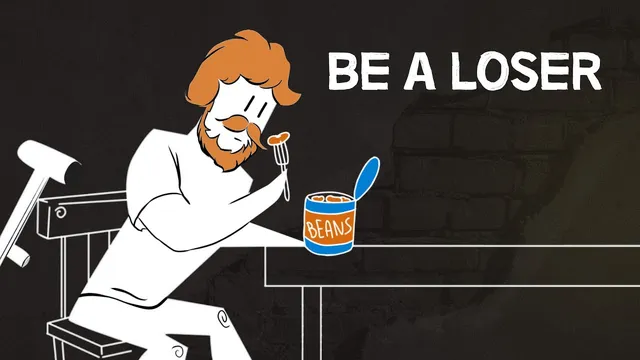
Be a Loser if Need Be | The Philosophy of Epictetus
Based on Einzelgänger's video on YouTube. If you like this content, support the original creators by watching, liking and subscribing to their content.
“Loser” is a shifting social label because competence and success vary by culture and current ideals.
Briefing
Epictetus treats “being a loser” as a social label that often masks a deeper choice: whether to trade inner freedom for external approval. In consumer-driven cultures, wealth, fame, and status function like promises of happiness—until they prove unreliable, because they depend on forces outside a person’s control. The Stoic prescription is blunt: pursue what can’t be taken away, and be willing to walk away from “lesser things” even if society calls the result failure.
The starting point is the word “loser” itself. A dictionary definition—someone “incompetent or unable to succeed”—doesn’t settle the matter, because competence and success shift with culture, religion, and social fashion. What counts as success ranges from running a small business to achieving something as grand as “putting people on another planet.” In practice, “loserdom” becomes a moving target tied to external goods, especially money and fame. People build an idealized checklist of what they “need” to be complete—such as a stable job, an attractive partner, children, and a white picket fence, or alternatively a large social-media following and an impressive network. When someone doesn’t match the prevailing script, they’re branded a loser—often not only for lacking the desired outcomes, but also for being ridiculed for it.
Epictetus’ critique targets the psychology behind that pursuit. External achievements attract attention because they seem to guarantee happiness: fantasies of being adored, receiving praise, and collecting likes. Yet the emotional payoff tends to fade into baseline contentment, now attached to a bigger price tag. Epictetus describes wealth and fame as weak and “slavish,” precisely because they’re beyond control. Even the pursuit of high-status goals can demand harsh conformity—rules, restricted diets, relentless training, and the risk of losing everything anyway. The question becomes whether the toil is worth it when public praise can flip into shame overnight.
Stoicism draws a sharp line between things and the way people judge them. Loved ones appear “special” because of perception and attachment, not because they are inherently different from other human beings. The same logic applies to external objects: what people chase is often the image they project onto it, reinforced by social imitation—wanting what everyone else wants and rejecting what everyone else rejects. Epictetus doesn’t deny that majority preferences can sometimes align with well-being; the problem is treating social consensus as a reliable compass for happiness.
So what’s “so bad” about being a loser? The answer depends on how the label is interpreted. If someone has enough for basic needs but lacks the usual markers—no partner, no social circle, no followers, no impressive job—others may treat them as “less.” But Epictetus argues that comparisons like “I’m richer, therefore I’m better” are logically broken, because property and style don’t equal the person who owns them. External circumstances don’t determine inner well-being; the desperate effort to avoid being seen as inferior is what threatens happiness and freedom.
Epictetus ultimately frames the choice as a cost-benefit tradeoff. “Vulgar” living buys reputation and material desirability by sacrificing tranquility, while “philosopher” living may bring obscurity and mockery. The point isn’t self-neglect; it’s choosing inner peace over dependence on fickle opinions. In that sense, being laughed at can even become an advantage—because it frees someone from paying the ongoing price of conformity. The “winner” is the person who stays free, even if society calls them a loser.
Cornell Notes
Epictetus treats “loser” as a shifting social verdict tied to external goods like money and fame. Those goods attract people because they promise happiness, but they’re unreliable and beyond control, so the pursuit often costs inner peace and freedom. Stoicism prioritizes what lies within a person’s control—judgment, contentment, right action, tranquility, and restraint—while urging people to drop “lesser things” even if that means social ridicule. Being labeled a loser isn’t inherently harmful; it becomes harmful only when someone treats public approval as the measure of worth. The real decision is what price to pay: reputation through conformity, or freedom through independence.
Why does the label “loser” fail to describe anything stable or objective?
What makes wealth and fame so tempting, and why does Epictetus call them weak?
How does Epictetus’ distinction between “things” and “appearances” change how people should evaluate external life?
What sacrifice does Epictetus highlight when people chase prestigious goals?
Why does being perceived as “less” threaten people’s happiness, even when they have enough?
How can being called a loser become an advantage?
Review Questions
- Which external goods in the transcript are described as beyond control, and how does that affect the pursuit of happiness?
- How does the “things vs. appearances” distinction apply to social status, not just relationships?
- What tradeoff does the transcript present between “vulgar” living and “philosopher” living?
Key Points
- 1
“Loser” is a shifting social label because competence and success vary by culture and current ideals.
- 2
In consumerist settings, the label often tracks external goods—especially money and fame—rather than inner character.
- 3
Epictetus treats wealth and praise as unreliable because they depend on forces outside personal control.
- 4
Public validation can fade into baseline happiness, while the pursuit still extracts a high emotional and practical cost.
- 5
Stoicism prioritizes what’s within control: judgment, contentment, tranquility, right action, and restraint.
- 6
Comparisons that equate having more (money, eloquence, status) with being better are logically flawed because property isn’t the person.
- 7
Being ridiculed can become beneficial when it frees someone from the ongoing effort to conform for approval.