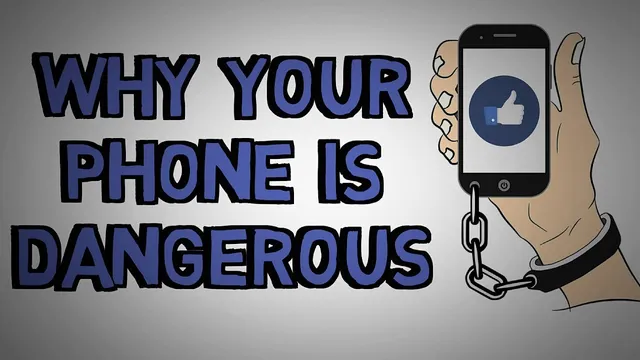
Be Careful When Using Your Phone (animated)
Based on Better Than Yesterday's video on YouTube. If you like this content, support the original creators by watching, liking and subscribing to their content.
Smartphone and social media use can create dopamine-driven reward loops that make repeated checking feel satisfying and difficult to resist.
Briefing
Smartphones aren’t just a time-waster—they’re engineered to hijack attention through dopamine-driven reward loops, and that constant pull is eroding real-world communication and focus. The core danger isn’t only “using too much,” but using it in ways that fragment attention: even when a phone buzzes and isn’t checked, the mind still splits, leaving a lingering mental “residue” that makes it harder to fully concentrate on whatever came before.
The transcript paints a familiar scenario: a “five-minute break” turns into twenty minutes because the phone becomes the default companion. That pattern matters because it normalizes endless micro-distractions—small pauses that quietly steal time. More broadly, it argues that living through a screen makes people more asocial and weakens communication skills. Real conversations require eye contact, body language, and facial expressions—signals that can’t be practiced through texting, likes, or social feeds. The result is a mismatch between what people think they’re doing (connecting) and what they’re actually doing (consuming mediated interaction).
Why people keep returning to their phones comes down to design incentives. Social media companies spend large sums to keep users on their platforms longer, because more time on-site means more money. The mechanism described is dopamine: the brain releases dopamine when it anticipates a reward. Notifications, likes, and messages create repeated “hits” of satisfaction, training the brain to crave the next one. The transcript links this cycle to addiction-like behavior, comparing it to how other dopamine-boosting activities (gambling, alcohol, heroin) can lead some people to seek the same high repeatedly—while emphasizing that phone notifications are milder, not harmless.
A key warning targets self-deception. People may not notice their own dependency, but common indicators include checking the phone without intending to, scrolling during spare moments, or reaching for it automatically whenever there’s a lull. The transcript also cites research on attention residue: after an interruption, the mind takes roughly 15 minutes to regain full focus. Applied to phones, a notification can act like a sudden interruption—turning a deep task (like writing) into a divided attention state, then leaving lingering thoughts that reduce productivity.
The attention problem has safety implications too. Splitting attention while driving is portrayed as especially dangerous because reaction time drops when the brain is juggling two tasks. The proposed fix isn’t abandoning phones; it’s using them more mindfully.
Two practical steps are offered. First, delete social media apps from the phone to remove the one-click habit loop; users can still access sites through a browser, but only through a deliberate action. Second, disable notifications (or put the phone on silent) so the device doesn’t constantly trigger dopamine anticipation. The transcript frames these changes as a way to reclaim focus and even improve mood, recommending a one-week experiment to observe how much time and attention were previously lost to automatic browsing.
Cornell Notes
Smartphones and social media are portrayed as attention traps powered by dopamine-based reward loops. Notifications and likes create repeated satisfaction that trains users to check again, forming a cycle that can resemble addiction. Beyond time loss, constant interruptions damage concentration through “attention residue,” where the mind takes about 15 minutes to fully refocus after a distraction. The transcript argues that mediated communication also weakens real-world social skills because it lacks eye contact, body language, and facial cues. The suggested response is practical: delete social media apps to break one-click habits and disable notifications (or use silent mode) to stop constant dopamine triggers.
How does dopamine explain why phone use becomes hard to stop?
What is “attention residue,” and why does it matter for productivity?
Why does the transcript claim phone-based communication can weaken real social skills?
What self-check does the transcript offer to spot potential phone addiction?
How do deleting apps and disabling notifications reduce harmful phone behavior?
Why is phone use while driving singled out as especially dangerous?
Review Questions
- What mechanisms (dopamine and attention residue) does the transcript use to explain both compulsive checking and reduced concentration?
- Which two habit changes are recommended to reduce phone-driven distraction, and how does each one break a specific behavior loop?
- How does the transcript distinguish between having many online “friends” and forming real support-based friendships?
Key Points
- 1
Smartphone and social media use can create dopamine-driven reward loops that make repeated checking feel satisfying and difficult to resist.
- 2
Even unviewed notifications can fragment attention, leaving “attention residue” that slows a return to deep focus.
- 3
Relying on phone-based interaction can weaken real-world communication skills because it lacks eye contact, body language, and facial-expression practice.
- 4
Automatic phone habits often show up as checking without intention—especially during brief idle moments.
- 5
Attention fragmentation has safety consequences, particularly while driving, because reaction time drops when focus is split.
- 6
Breaking the habit can be done without quitting phones: delete social media apps to remove one-click scrolling and disable notifications to stop constant dopamine triggers.
- 7
A one-week experiment is suggested to observe how much time and mental bandwidth were previously lost to mindless browsing.