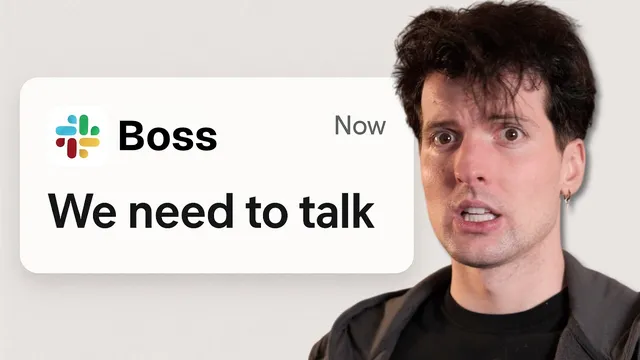
Being a good engineer kinda sucks
Based on Theo - t3․gg's video on YouTube. If you like this content, support the original creators by watching, liking and subscribing to their content.
Measure replaceability using “bus factor” to understand whether you’re undervalued, essential, or trapped maintaining critical systems.
Briefing
Good engineering can feel miserable when speed and competence collide with team insecurity—and the long-term fix isn’t technical, it’s social. A personal career arc at Twitch shows how being “the best engineer” on the wrong team can trigger political backlash, HR involvement, and a cascade of stress, even when the work is objectively correct. The core lesson: leverage and impact matter, but so does the environment that turns competence into support rather than threat.
The rant starts with a career reality check: engineers should ask how replaceable they are—often through “bus factor.” If disappearing barely hurts the company, promotions and bargaining power will be limited. If disappearing would cripple delivery, the engineer can become trapped maintaining systems indefinitely. That framing sets up the speaker’s experience of being essential on one team, then later discovering how quickly that “essential” status can become a liability.
At Twitch, the speaker’s early career involved repeated reorgs and unstable assignments, including a video-on-demand platform team that was cut soon after joining. A move to the safety team changed everything. Within weeks, a manager pushed back on the speaker’s level and pay, effectively advocating for a promotion and forcing honest self-assessment. With that support, the speaker gained confidence to propose architectural and tooling improvements, negotiate raises, and hire additional talent. The team also created cross-team “swaps” to unblock roadmaps—sending engineers temporarily to help other groups ship safety features faster. In that setting, shipping faster improved both outcomes and relationships.
Later, a team swap to the creator org exposed a harsher dynamic. The speaker left a safety seat that couldn’t be refilled by simply hiring another mid-level engineer; speed and delivery patterns were hard to replace. In the new org, competence drew suspicion. The speaker described being blocked for months on tickets, then taking them on and finishing them in hours—only to face hostility. A manager monitored the speaker’s calendar and escalated concerns about meetings with higher-ups. The tension escalated during a hackathon where the speaker rebuilt the mobile app from scratch, won, and still received an HR warning after leadership was influenced by the mobile team’s complaints.
The most vivid example came from a dashboard change. After a long discussion with a product manager about why syncing layouts across devices would break usability (percentage-based layouts don’t translate across aspect ratios), the proposal returned unchanged weeks later. The speaker exploded in the meeting, arguing with data from an aspect-ratio experiment and user statistics. Even when correctness was supported by evidence, the political cost was real.
The speaker then ties these workplace conflicts to a broader principle: stop doing work that doesn’t benefit one’s role and leverage—an advice they failed to follow. When the environment punishes speaking up, “doing the right thing” can damage career outcomes. The closing argument shifts from grievance to strategy: engineers need motivated allies. Competence matters, but trust networks matter more. The speaker credits mentors, friends, and defenders for sustaining growth and ultimately enabling a career outside Twitch. The practical takeaway is to find teams where improvement is rewarded, and if they don’t exist, move—because otherwise the only outcomes are burnout, suppression, or relocation to a healthier environment.
Cornell Notes
The speaker’s career at Twitch illustrates how engineering excellence can become a liability when team culture treats speed as a threat. On the safety team, supportive leadership and clear leverage turned faster shipping into promotions, better pay, and cross-team collaboration. After moving to the creator org, the same pattern—taking delayed tickets and finishing quickly—triggered insecurity, calendar scrutiny, HR escalation, and conflict with product decisions. The speaker argues that the real differentiator isn’t just technical skill; it’s whether the environment rewards competence and whether engineers can find trusted, motivated allies. When those allies don’t exist, the long-term solution may be leaving rather than trying to “win” politics.
Why does the speaker emphasize “bus factor” before giving workplace advice?
What made the safety team a positive environment for the speaker?
How did the creator org differ, and what did that do to the speaker’s career?
What was the dashboard dispute, and why did it matter?
What “failed advice” does the speaker admit, and what does it mean in practice?
What’s the speaker’s proposed long-term solution?
Review Questions
- How does “bus factor” change an engineer’s approach to promotions, workload, and long-term career planning?
- Compare the safety team and creator org using specific examples of leadership behavior and team reactions to fast shipping.
- What evidence did the speaker use to argue against the dashboard syncing proposal, and why didn’t correctness prevent career damage?
Key Points
- 1
Measure replaceability using “bus factor” to understand whether you’re undervalued, essential, or trapped maintaining critical systems.
- 2
A supportive manager can convert technical leverage into promotions, better pay, and confidence to propose improvements.
- 3
Cross-team collaboration can work when the culture rewards unblocking and shared outcomes, as it did in safety.
- 4
When team insecurity turns competence into a threat, even correct work can trigger political retaliation and HR escalation.
- 5
Speaking up without strategic awareness can backfire if the environment punishes dissent or threatens internal power structures.
- 6
If trusted, motivated allies don’t exist where you work, the sustainable option may be to leave rather than keep fighting the same dynamics.
- 7
Career growth accelerates when engineers find allies who defend them, coach them, and reward progress.