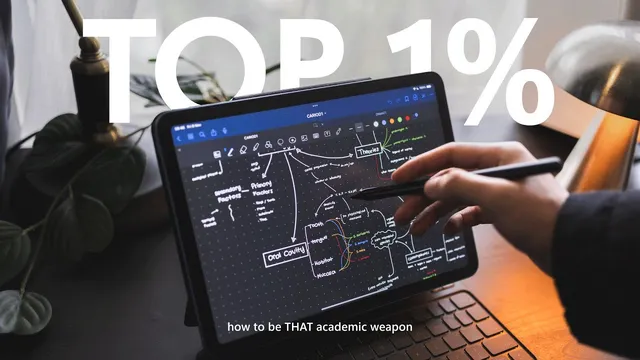
being a top 1% student is easy, actually. here's how
Based on Kai Notebook's video on YouTube. If you like this content, support the original creators by watching, liking and subscribing to their content.
Use the blurting method: pause during learning and verbally recite what you understood in your own words without looking at the material.
Briefing
Top 1% students separate themselves less by raw study time and more by how they process information: they study actively, organize for the “big picture,” stay ahead of the semester, and use outside materials when needed—while protecting health so performance doesn’t collapse under burnout. The core message is efficiency: everyone gets 24 hours, but high performers convert those hours into better recall and understanding.
The first habit is the “blurting method,” a form of active recall done during learning. Instead of passively reading or watching, students pause and verbally recite what they just understood in their own words—often without looking at the material. The transcript gives a dental example: while reviewing a slide about dental carries in dentin, the learner looks away and blurts the three-step process from memory (demineralization of dentin, degeneration of organic material, and bacterial invasion). The payoff is twofold: it forces interleaved processing (brief breaks that require retrieval) and it turns comprehension into long-term retention by testing recall immediately.
Second comes note strategy. Copying lecture notes is treated as low-yield because it can become passive transcription. Instead, top students organize notes to visualize structure and reduce overwhelm—especially when lectures load students with many branches and details. The transcript argues that mind maps are a more efficient organizing tool than rewriting everything: a single exam mind map can cover most topics, using only key terms and arrows/lines to show relationships. If a term is forgotten, students return to lecture notes rather than rebuilding the whole system, saving time while improving recall through visual structure.
Third, high performers are proactive early and stay proactive. Rather than waiting until midterms loom, they treat the semester like a marathon: preparation starts at the beginning and continues consistently. The transcript notes that top students often arrive to class already equipped—flashcards, organized notes, and mind maps—so they can engage with the lecture rather than scramble afterward. To maintain that rhythm, it recommends using trackers (including a Notion-style subject tracker that logs how long it’s been since a topic was reviewed) and scheduling tools like aiflow, which integrates calendars and task management, supports tagging subjects, and can generate routines.
Fourth, top students don’t rely solely on professor-provided materials. They use external sources—textbooks, free PowerPoints, and other online materials—to fill gaps, gain alternative explanations, and cover what may appear on exams even if it wasn’t taught directly. In the transcript, language barriers are a specific driver: some professors teach in Tagalog, so external resources help broaden understanding and study from different angles.
Finally, health is framed as the foundation for sustained studying. Sleep, nutrition, and mental wellbeing are presented as prerequisites for effective learning, contrasting with brute-force cramming that can damage long-term performance. The overall formula is straightforward: study smarter with active recall and efficient organization, stay ahead with consistent planning, supplement with outside resources, and protect the body and mind that make all of it possible.
Cornell Notes
Top 1% students focus on study efficiency and information processing rather than just studying longer. A key method is the blurting method: pause during learning and verbally recite what was just understood in your own words without looking at the material, turning passive intake into active recall. Students also avoid low-yield note copying and instead organize for the big picture, using tools like mind maps that compress many topics into a visual structure for faster review and better memorization. They start preparing early, track progress across the semester, and use external sources when lecture materials are incomplete or hard to understand. Health—sleep and nutrition—is treated as essential for maintaining study performance over time.
How does the blurting method work, and why is it effective for retention?
What’s the difference between copying notes and using notes strategically?
Why does the transcript recommend mind maps over rewriting everything into notes?
What does “proactive early” mean in practice, and how do students sustain it?
Why use external sources instead of relying only on professor materials?
How does the transcript connect health to academic performance?
Review Questions
- Which steps make blurting different from normal studying, and what does the transcript say it improves (understanding vs. retention)?
- How do mind maps address the problem of information overload compared with rewriting lecture notes?
- What combination of behaviors and tools helps maintain proactive studying across an entire semester?
Key Points
- 1
Use the blurting method: pause during learning and verbally recite what you understood in your own words without looking at the material.
- 2
Treat note copying as low-yield; prioritize organizing notes to visualize the subject’s structure and main relationships.
- 3
Build mind maps that compress key terminologies and topic connections, then use lecture notes only to fill gaps when terms are forgotten.
- 4
Start studying early and keep going throughout the semester rather than ramping up only near exams.
- 5
Track review timing with a subject tracker so practice stays consistent across weeks.
- 6
Supplement lecture materials with external sources when exams may include content not directly taught or when language barriers exist.
- 7
Protect sleep and nutrition to avoid burnout and maintain long-term study effectiveness.