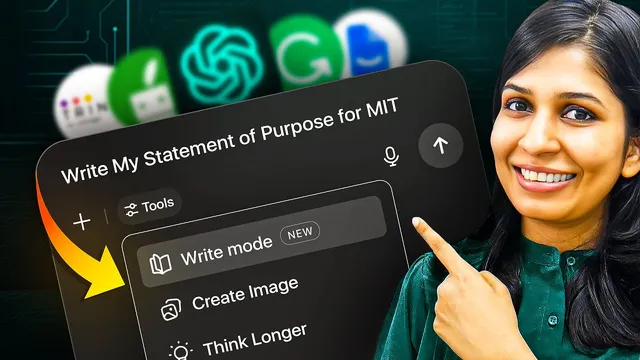
Best AI tools for SOP Writing 2025 | Write Statement of Purpose with 0% AI Content
Based on WiseUp Communications's video on YouTube. If you like this content, support the original creators by watching, liking and subscribing to their content.
Use AI only for language and grammar correction; avoid rephrasing or rewriting sentences.
Briefing
Admissions committees increasingly scrutinize statements of purpose (SOPs) for signs of AI involvement, and the safest path is using AI only for language and grammar—not for rewriting. The core message is blunt: even if an SOP is not “plagiarized,” AI-generated rephrasing can still look mechanical and can trigger rejection when universities use AI-detection systems.
The transcript lays out two common ways students use AI tools. One approach feeds the student’s experiences, research, and target programs into an AI platform to generate a full SOP. The other approach is more popular: students write the SOP themselves, then paste it paragraph by paragraph into an AI tool to reword sentences into a more professional style. That second method is treated as a trap. Polished wording can still be “AI generated content,” and the resulting prose may lose the applicant’s natural voice. The narrator claims that after reviewing hundreds of SOPs, it became possible to tell whether AI intervention occurred just by reading the document—an ability admissions staff can likely match or exceed.
Because of that, the transcript recommends a strict boundary: use AI tools only for grammar and language correction. Tools named for this purpose include Grammarly and Quillbot, along with “Trina” and “PayPal” as examples of platforms offering language/grammar support. The suggested workflow is to upload the SOP to the tool or install a browser/Word extension so corrections happen while writing. The goal is to keep the applicant’s voice intact while removing errors.
A major concern is university AI checkers. The transcript claims universities use AI-detection tools to estimate whether an SOP was AI generated, and that rejected applicants may be asked to explain a high “AI percentage.” It also warns that online AI checker sites are unreliable: even fully human-written SOPs may be flagged at high rates (the transcript cites around 50% as a typical misleading output). As a result, the advice is not to chase reassurance from checker percentages.
Instead, the transcript argues for human review. Students are urged to avoid online AI reviewers and use human reviewers who can provide feedback without replacing the student’s voice. Attempts to “humanize” AI output with additional software are also discouraged, with the claim that universities can detect these patterns.
Finally, the transcript promotes services for SOP instruction and review, including a study abroad course and an SOP review program offering two rounds of review intended to correct and polish documents without AI tools. The overall takeaway is that applicants should write their SOPs themselves, use AI only for grammar-level fixes, and rely on human feedback rather than AI detection tools or AI-based rewriters.
Cornell Notes
The transcript warns that universities may reject SOPs when AI-detection systems flag them as AI-generated, even if the content is not plagiarized. It distinguishes between using AI to rewrite (which can make text sound mechanical and “AI generated”) versus using AI only for grammar and language correction (which is presented as safer). It also cautions that third-party online AI checkers are unreliable and can label human-written SOPs as highly AI-like. Instead of chasing checker percentages, it recommends human reviewers and writing the SOP in the applicant’s own voice. Named grammar tools include Grammarly and Quillbot, with additional examples of Trina and PayPal for language/grammar correction.
Why does paragraph-by-paragraph rewording still risk an SOP being flagged as AI-generated?
What boundary does the transcript set for AI tool usage in SOP writing?
Which tools are mentioned as suitable for grammar and language correction?
Why does the transcript treat online AI checker percentages as unreliable?
What review method does the transcript recommend instead of AI-based review?
What does the transcript say about trying to “humanize” AI-generated SOPs?
Review Questions
- What specific difference between “rewriting” and “grammar correction” does the transcript treat as decisive for AI detection risk?
- Why does the transcript argue that online AI checker scores should not be trusted as a final verdict?
- How does the transcript justify preferring human reviewers over AI reviewers for SOP feedback?
Key Points
- 1
Use AI only for language and grammar correction; avoid rephrasing or rewriting sentences.
- 2
Paragraph-by-paragraph AI rewording can still produce AI-generated-sounding text that may be detectable by admissions readers.
- 3
Universities may use AI checkers to estimate AI-generated content and can reject SOPs with high AI percentages.
- 4
Online AI checker tools are described as unreliable and may flag even human-written SOPs at high rates.
- 5
Rely on human reviewers for feedback instead of AI reviewers or AI-based “humanizing” tools.
- 6
Write the SOP in your own voice and submit it without depending on AI detection scores for reassurance.