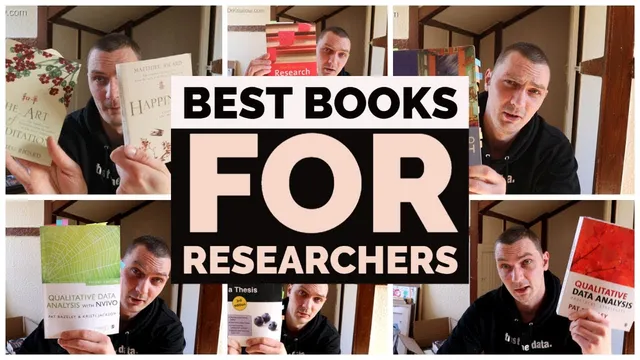
Best books about doing research, data analysis, qualitative methods and methodologies + some extras
Based on Qualitative Researcher Dr Kriukow's video on YouTube. If you like this content, support the original creators by watching, liking and subscribing to their content.
Start with an accessible research fundamentals text that clarifies paradigms, epistemologies, and validity before moving into specialized methods.
Briefing
A curated reading list for researchers and students—spanning research design, mixed methods, interviewing, grounded theory, qualitative data analysis, and thesis writing—aims to replace methodological confusion with practical, readable guidance. The core message is that strong research work often starts with a small set of foundational books that clarify paradigms, methods, and analysis in plain language, then gets reinforced through more specialized texts.
For general research, Gary Thomas’s “How to Do Your Research Project” is recommended as an unusually accessible entry point. It breaks down research paradigms and epistemologies—topics that often feel abstract—using simple, plain writing rather than dense academic jargon. The list also highlights Colin Robson’s “Real World Research,” a more comprehensive, “everything you need” reference. Robson’s approach distinguishes between fixed and flexible research designs (rather than simply labeling studies as quantitative vs. qualitative), and the book is praised for explaining procedures like sampling and for covering quantitative data analysis clearly—an area the reviewer admits struggling with.
To ground those general ideas in applied practice, “Introduction to Research Methods in Education” is suggested as a detailed, thorough guide with exercises and questions at the end of chapters. While framed around education, the methods are described as transferable across contexts, making it useful beyond any single discipline.
Mixed methods research gets a single, go-to recommendation: “Designing and Conducting Mixed Methods Research” by Creswell and Clark. The emphasis is on planning and conducting mixed methods studies, analyzing data, and understanding design categories such as sequential and exploratory/explanatory structures.
Interviewing is treated as a surprisingly under-supplied topic in book form, with “Doing Interviews” by Quil (Quil is the name given in the transcript) singled out. The book is valued for covering structured, semi-structured, and other interview types, plus transcription and the basics of interview data analysis—described as thin but information-dense.
For methodology depth, grounded theory takes center stage. “Basics of Qualitative Research” by Charmaz is recommended specifically for constructivist grounded theory, including detailed guidance on coding (initial coding and related procedures). The recommendation is tied to personal experience using grounded theory during a PhD and building an analysis approach that still informs the reviewer’s work.
Qualitative data analysis is anchored by “Qualitative Data Analysis” (the same author as the grounded theory and NVivo text). The book is credited as the foundation for thematic analysis and for understanding coding, cross-case and within-case analysis. For NVivo, the list points to another book by the same author focused on using the software, while also referencing a course (“from zero to NVivo”) for learning the practical workflow.
Finally, thesis writing gets its own practical theory-and-skill builder: “How to Write a Thesis.” It’s praised not only for thesis structure but for writing techniques such as free writing, plus exercises and guidance on linking paragraphs.
As a counterweight to technical reading, the list adds well-being and self-development extras: Ken Robinson’s “The Element,” meditation-focused books by Matthew Rard (including “Happiness” and “The Art of Meditation”), and Anne Lamott’s “Bird by Bird,” framed as light, encouraging writing guidance—especially helpful during the pressure of graduate study.
Cornell Notes
The reading list prioritizes a small set of foundational books that make research methods and analysis easier to apply. For general research, Gary Thomas’s “How to Do Your Research Project” is valued for clear explanations of paradigms, epistemologies, and validity, while Colin Robson’s “Real World Research” is praised for its fixed vs. flexible design framework and broad coverage, including sampling and quantitative data analysis. Mixed methods guidance comes from Creswell and Clark’s “Designing and Conducting Mixed Methods Research,” and interview basics are covered in “Doing Interviews” by Quil, including transcription and core analysis. Grounded theory is handled through Charmaz’s constructivist approach with detailed coding guidance, and qualitative analysis is anchored by “Qualitative Data Analysis,” with NVivo support via a related NVivo-focused book plus a “from zero to NVivo” course. Thesis writing skills are strengthened with “How to Write a Thesis,” including free writing techniques.
Which general research book is recommended for beginners who struggle with paradigms and epistemologies?
What framework does Colin Robson’s “Real World Research” use instead of the usual quantitative vs. qualitative split?
What mixed methods book is recommended, and what design categories does it cover?
Which book is recommended for interview methods, and what makes it stand out despite being “thin”?
For constructivist grounded theory, which text is recommended and what part of it is emphasized?
What are the core qualitative analysis and NVivo recommendations?
Review Questions
- Which two general research books are recommended, and how do their approaches differ (paradigms/validity vs. fixed/flexible designs)?
- What mixed methods design categories are mentioned as examples in the Creswell and Clark text?
- How do the grounded theory and qualitative data analysis recommendations connect through coding and thematic analysis?
Key Points
- 1
Start with an accessible research fundamentals text that clarifies paradigms, epistemologies, and validity before moving into specialized methods.
- 2
Use a comprehensive research methods reference that covers sampling and design choices end-to-end, including quantitative data analysis if needed.
- 3
For mixed methods, rely on a planning-and-analysis framework that organizes designs into categories like sequential and exploratory/explanatory.
- 4
Treat interviewing as a distinct skill set: cover interview types, transcription, and at least the basics of analysis rather than assuming everything is intuitive.
- 5
For constructivist grounded theory, prioritize a coding-focused guide that details initial coding and related procedures.
- 6
Build qualitative analysis competence around thematic analysis, coding, and both within-case and cross-case approaches.
- 7
Strengthen thesis writing with a book that targets writing mechanics (e.g., free writing) and not just thesis structure.