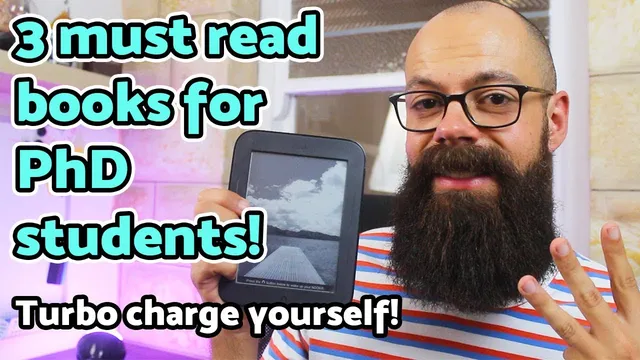
Best books for PhD students | Turbocharge your PhD and yourself!
Based on Andy Stapleton's video on YouTube. If you like this content, support the original creators by watching, liking and subscribing to their content.
Atomic Habits is used to build PhD routines like consistent writing, research, and literature reading through the four levers: make habits obvious, attractive, easy, and rewarding.
Briefing
For PhD students trying to survive academia without burning out, three books are presented as a practical toolkit: build better habits, protect deep focus, and manage stress with small, actionable mental skills. The core message is that success in research isn’t just about working harder—it’s about working consistently, concentrating on high-impact tasks, and keeping mental health stable when supervision and deadlines create constant pressure.
Atomic Habits by James Clear is framed as the foundation for stopping self-sabotage and replacing it with repeatable routines. The emphasis lands on habits that matter in a PhD: writing often, doing research consistently, and reading the literature in a steady sequence. Clear’s four-part habit system is translated into concrete tactics—make the desired behavior obvious by placing the tools for it in reach (for example, keeping reading materials nearby instead of defaulting to a phone), make it attractive by pairing the task with something the person actually wants to do (like reading before checking a phone or taking a book instead of a device), make it easy by shrinking tasks to a two-minute starting point and reducing friction, and make it rewarding by tracking progress visually or using small feedback loops. The transcript also highlights “habit stacking” as a way to create momentum: when sitting down, open the target paper rather than emails; after lunch, go straight to lab work; then return to analyze results. The goal is not constant busyness, but effective work that leaves room for life.
Deep Work by Cal Newport is then positioned as the focus engine that turns those habits into real expertise. The routine described is two daily blocks of deep work—two hours in the morning and two hours in the afternoon—dedicated to the highest-value tasks on a list. The book’s central contrast is between deep work and “shallow” activity such as email, social media, and other low-value distractions. To make deep work stick, the transcript points to ritualizing focus, embracing boredom as a skill (allowing downtime without reaching for a phone), and quitting social media—especially after realizing that building an audience through LinkedIn content wasn’t the same as doing deep research work. A key tactic is “drain the shallows,” including making it harder to be interrupted by turning off email and phone during focus blocks. While Cal Newport’s suggestion to schedule every minute is rejected as too rigid for one person, the underlying principle—protecting uninterrupted time—remains.
Finally, The Power of Small by Ashley and Dr Trish Leonard Curtin is offered as the balancing counterweight to productivity. Where the first two books emphasize output, this one targets the emotional mechanics of stress. It draws on cognitive behavioral therapy-style approaches and stoic ideas: ignoring or suppressing bad feelings makes things worse, while facing what can’t be controlled and preventing overreaction helps avoid self-sabotage. In a PhD environment where supervisors can heavily shape stress levels and mental health, the book is presented as a set of small, manageable skills that keep well-being steadier while the work continues.
Cornell Notes
The transcript recommends three books as a combined system for PhD success: Atomic Habits (James Clear) for building consistent routines, Deep Work (Cal Newport) for protecting concentrated time, and The Power of Small (Ashley and Dr Trish Leonard Curtin) for managing stress and mental health. Atomic Habits is applied through four habit levers—make it obvious, attractive, easy, and rewarding—plus habit stacking (e.g., opening the right paper instead of emails, going straight to lab work, then analyzing results). Deep Work is implemented with scheduled focus blocks and tactics to reduce distractions, including quitting social media and making interruptions harder during deep work. The Power of Small adds CBT/stoic-inspired tools to reduce overreaction and maintain balance under ongoing academic pressure.
How does Atomic Habits translate into day-to-day behavior for a PhD student?
What does “deep work” mean in this context, and how is it scheduled?
Which distraction-reduction strategies are highlighted, and what tradeoff is acknowledged?
Why is The Power of Small positioned as necessary alongside productivity books?
What is the practical goal across all three recommendations?
Review Questions
- Which of Atomic Habits’ four levers (obvious, attractive, easy, rewarding) would most directly fix your current PhD bottleneck, and what specific change would you make to your environment?
- How would you design a deep-work schedule that protects focus without adopting a rigid “minute-by-minute” plan?
- What CBT/stoic-style coping skill from The Power of Small would you use when stress triggers overreaction or avoidance?
Key Points
- 1
Atomic Habits is used to build PhD routines like consistent writing, research, and literature reading through the four levers: make habits obvious, attractive, easy, and rewarding.
- 2
Habit stacking is presented as a way to create momentum by chaining actions (e.g., open the target paper instead of emails; go straight to lab work; analyze results afterward).
- 3
Deep Work is implemented with two daily focus blocks (morning and afternoon) dedicated to high-value tasks rather than shallow activities like email and social media.
- 4
Distraction control includes quitting social media, embracing boredom, and “drain the shallows” by reducing interruptibility during focus periods (turning off email/phone).
- 5
Cal Newport’s “schedule every minute” approach is treated as optional; flexible time blocks can preserve deep work without causing stress.
- 6
The Power of Small is positioned as a mental-health counterweight to productivity, using CBT/stoic-inspired ideas to reduce overreaction and self-sabotage under academic pressure.