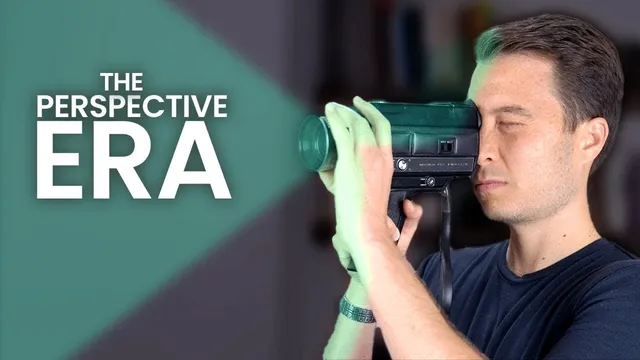
Beyond Attention: Why Perspective is the Ultimate Resource
Based on Tiago Forte's video on YouTube. If you like this content, support the original creators by watching, liking and subscribing to their content.
Perspective is framed as the next scarce resource because attention and information are abundant but coherence and judgment are not.
Briefing
The core shift driving modern life is moving from scarcity of space, to scarcity of time, to scarcity of attention—and now toward scarcity of perspective. As attention becomes a commodity measured in “eyeballs,” the next differentiator is the ability to step back, see the full picture, and form a coherent point of view about what matters. That “high ground” thinking—holistic understanding, emotional awareness, and value-based judgment—turns information overload into direction, and it matters because it determines how people make decisions, set strategy, and convert knowledge into action.
For most of human history, wealth came from controlling physical territory and resources. Industrialization reinforced a zero-sum mindset: if someone gained, someone else lost. But after World War II, the economic center of gravity shifted toward time. Middle-class households had disposable income but limited time, so mass media, consumer finance, advertising, and television turned “time is money” into a business model. Then the same pattern repeated: once time was fully monetized, companies competed for the next scarce input—human attention—powered by the internet and technology.
In the attention era, attention isn’t just a byproduct; it’s the product. Companies can lose money for long stretches yet still be valued in the billions because eyeballs and engagement are treated as economic value. Yet the transcript argues that attention is now running out. Every minute is filled with device use, social media, podcasts, and constant informational pressure. The result is a persistent fear that something better is always available elsewhere, producing exhaustion rather than insight.
That exhaustion is framed as evidence that the attention era is closing and the perspective era is beginning. Perspective is described as a leadership position in one’s own life: deciding a mission, strategy, and desired future instead of reacting to whatever is most urgent. The transcript links this to a broader psychological problem—humans evolved for information scarcity, but the internet has made sharing information effectively free. Knowledge went from rare and expensive to abundant and instantly accessible, while the mind’s threat-detection instincts still fire at notifications as if danger is near. The mismatch creates perpetual overload.
The practical answer is not to consume less information in a vague way, but to build a system that turns abundance into results. The “second brain” approach is presented as a set of small, intentional habits for reading, listening, and note-taking—designed to reliably convert scattered inputs into usable outputs. At the center is the CODE methodology: Capture, Organize, Distill, and Express. Capture preserves insights; Organize makes them retrievable for consistent progress; Distill reduces notes to essential metaphors, facts, quotes, and research; Express uses modern tools to share work and articulate a point of view.
Ultimately, the transcript portrays the perspective era as learning to “surf” the tidal wave of information abundance. With CODE in place, perspective becomes something people can actively construct—rising above noise, seeing from a uniquely personal high ground, and using knowledge to create work that closes the gap between vision and reality.
Cornell Notes
The transcript argues that economic value has shifted from space to time to attention, and that attention is now running out. With information abundant but psychologically overwhelming, people need “high ground” thinking—holistic perspective, emotional awareness, and value-based judgment—to turn overload into direction. Perspective is framed as a leadership role: setting mission and strategy rather than reacting to urgency. To operationalize this, the “second brain” system uses CODE—Capture, Organize, Distill, and Express—to convert scattered notes and inputs into actionable knowledge and shareable work. The stakes are practical: perspective determines how people make decisions and produce results in modern work and life.
Why does the transcript claim attention became a scarce resource, and what does that look like in everyday life?
How does the shift from information scarcity to information abundance create a psychological problem?
What is “perspective,” and why is it positioned as the next ultimate resource?
How does the transcript connect perspective to personal leadership?
What does the “second brain” system do, and how does CODE make it work?
Why is “Express” the final step rather than just another productivity task?
Review Questions
- How does the transcript explain the progression from space scarcity to time scarcity to attention scarcity, and what changes in each era?
- In what ways does the mind’s evolution for scarcity conflict with today’s information abundance, according to the transcript?
- Use CODE to outline a workflow for turning a stream of notes into a finished piece of work. What happens at each step?
Key Points
- 1
Perspective is framed as the next scarce resource because attention and information are abundant but coherence and judgment are not.
- 2
Attention is treated as a commodity measured in engagement, which helps explain why companies can be valued for eyeballs even when profits lag.
- 3
Information abundance creates overload because human psychology still responds to notifications and novelty as if they signal danger.
- 4
“High ground” thinking—stepping back to see the full picture—enables planning instead of constant reaction to urgency.
- 5
The second brain approach aims to convert scattered inputs into actionable knowledge through intentional reading, listening, and note-taking habits.
- 6
CODE (Capture, Organize, Distill, Express) provides a repeatable creative workflow that turns notes into shareable output.
- 7
Express is positioned as the end goal of the creative process: using distilled material to communicate a unique point of view and create real work.