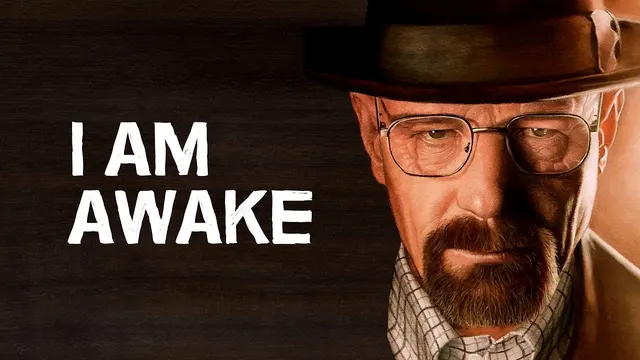
Breaking Bad: The Psychology of Walter White (based on Nietzsche)
Based on Einzelgänger's video on YouTube. If you like this content, support the original creators by watching, liking and subscribing to their content.
Walter White’s arc is framed as a Nietzschean shift from “last man” conformity to a will-to-power pursuit of self-actualization.
Briefing
Walter White’s descent into Heisenberg isn’t portrayed as a simple fall into evil so much as a Nietzschean shift from “last man” complacency to a self-made, power-seeking “higher human.” Before his cancer diagnosis, Walt lives by the herd’s standards—quiet, risk-averse, and socially diminished—teaching chemistry to students who don’t respect him and taking a second job where he’s repeatedly mocked. Despite his credentials (a Ph.D. and a past role in the startup Gray Matter), he refuses help from Gretchen and Elliot, resents their success, and carries a private sense of shame and inadequacy. The diagnosis becomes the catalyst that collapses his old constraints, turning a life of “little treats” and routine into an urgent project of self-actualization.
Nietzsche’s framework supplies the moral and psychological contrast. The “last man” chases short-term comfort and avoids the danger of becoming more; Walt initially fits that pattern, even if he works hard and stays outwardly “decent.” His terminal illness, however, forces a reckoning with time and fear. As his outlook changes, he begins to answer a deeper longing for heroism and control—captured in his declaration to Jesse, “I am awake.” From there, his meth production becomes more than a means to provide; it becomes a vehicle for will-to-power, the drive to express capability and impose meaning through action.
The transformation shows up in how Walt changes his moral posture. Early on, he still justifies himself through family duty, but later he sheds collective morals and invents new ones aligned with his ascent. He stops behaving like a meek man who absorbs humiliation and instead asserts himself physically and strategically—attacking bullies, killing when necessary, and using deceit and manipulation to remove obstacles. Even his relationship to violence and revenge shifts from reluctant compliance to calculated dominance. Nietzsche’s idea that “good” is what increases power—and “bad” what comes from weakness is used as a lens for Walt’s evolving choices.
As Heisenberg, Walt doesn’t just become more effective; he becomes psychologically freer. He describes fear as the real enemy, claiming that since his diagnosis he sleeps better and feels awake rather than trapped. His sense of competence expands into an “empire business” mindset, culminating in the satisfaction of winning against major rivals like Gus Fring and the Salamanca family. The costs are catastrophic—death, destruction, and criminal notoriety—but the narrative insists that the psychological payoff is real: he feels alive, in control, and even experiences remission.
The series’ final accounting reframes everything. When Skyler asks why he did it, Walt abandons the earlier selfless story and delivers the core confession: “I did it for me. I liked it. I was good at it. … I was really…alive.” In Nietzschean terms, the arc is less about moral correction and more about self-overcoming—an attempt to cross the tightrope between the “beast” of human weakness and the possibility of a higher self, even when that crossing leaves ruin behind.
Cornell Notes
Walter White begins as a “last man” figure in Nietzsche’s sense: risk-averse, socially diminished, and living by herd-approved decency while privately resenting his own limits. His cancer diagnosis breaks the routine that kept him stuck, and fear—once constant—loosens its grip. Teaming with Jesse (and later Saul Goodman) turns his chemistry into a will-to-power project, where he creates new rules and treats dominance as a form of meaning. Although the path brings violence and devastation, Walt’s internal transformation is marked by regained control, returned libido, and even cancer remission. The ending seals the interpretation: he admits he did it “for me,” because he liked it and felt alive.
How does the transcript connect Walter White’s early life to Nietzsche’s “last man” archetype?
Why does the cancer diagnosis function as a turning point in the Nietzschean reading?
What does “will-to-power” look like in Walt’s choices as Heisenberg?
How does the transcript distinguish “amoral” from “immoral,” and why does that matter for Walt?
What alternative actions does the transcript highlight before Walt “breaks bad,” and what do they reveal?
How does the ending confession—“I did it for me”—recast the entire arc?
Review Questions
- Which specific behaviors in Walt’s early life most strongly match the “last man” description, and why?
- What changes in Walt’s relationship to fear after his diagnosis, and how does that enable his shift into Heisenberg?
- How does the transcript use examples of violence, deceit, and moral reinvention to connect Walt to Nietzsche’s Overman concept?
Key Points
- 1
Walter White’s arc is framed as a Nietzschean shift from “last man” conformity to a will-to-power pursuit of self-actualization.
- 2
His early life is marked by social diminishment, risk aversion, and resentment—despite genuine talent and past success with Gray Matter.
- 3
The cancer diagnosis functions as a psychological rupture that reduces fear and accelerates a move from passive decency to active self-command.
- 4
As Heisenberg, Walt sheds inherited collective morals and adopts new rules aligned with dominance, including calculated violence and manipulation.
- 5
Walt’s meth-making becomes an “empire business,” turning technical brilliance into a vehicle for power and meaning.
- 6
The transcript emphasizes that the transformation brings personal psychological gains—control, libido return, and remission—while also producing widespread destruction.
- 7
The final confession (“I did it for me… I was really…alive”) rejects the earlier family-provision justification and anchors the arc in self-driven desire.