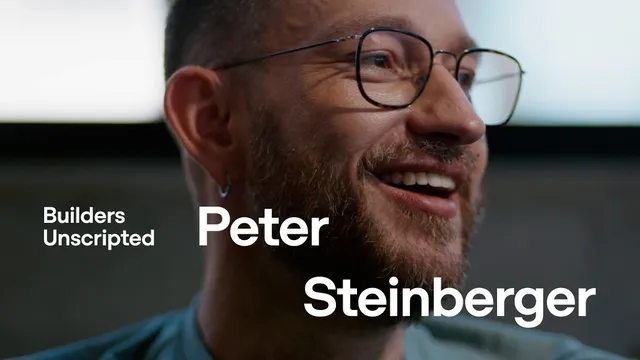
Builders Unscripted: Ep. 1 - Peter Steinberger, Creator of OpenClaw
Based on OpenAI's video on YouTube. If you like this content, support the original creators by watching, liking and subscribing to their content.
OpenClaw’s momentum came from tool-backed, end-to-end automation—spec generation, building, and browser testing—rather than isolated code snippets.
Briefing
Open-source builder Peter Steinberger credits a new wave of AI coding tools—especially Codex—for turning “unfinished ideas” into working software at a pace that previously required teams. The breakthrough isn’t just that models write code; it’s that they can operate with enough tool access to solve problems end-to-end, letting a solo developer iterate through specs, testing, deployment, and even debugging workflows faster than traditional development cycles.
Steinberger describes a sensory shift in how building feels right now. Early experiments with AI coding tools produced rapid, dopamine-like wins, but the real turning point came when he took a half-finished project and forced it through a more complete pipeline: generating a spec from a large Markdown bundle, then issuing build commands, and finally wiring in browser automation via Playwright to validate login flows. Even when early outputs were messy, the moment it worked—after crashes and iterative fixes—made the possibilities feel concrete rather than theoretical. From there, he says he couldn’t sleep, because the toolchain made previously “hard-to-finish” ideas suddenly reachable.
OpenClaw, the project at the center of the conversation, is framed less as a single master plan and more as the accumulation of months of exploration. Steinberger built prototypes for personal automation—starting with ideas like interacting with WhatsApp—then kept iterating as the “labs” didn’t appear to deliver what he wanted. He describes OpenClaw as a name that evolved through multiple versions, with the product-market signal arriving when friends asked to use it and when he personally relied on it during a trip to Marrakesh where connectivity was unreliable. Convenience mattered: translating content, finding restaurants, searching his computer, and sending messages.
A vivid example of agentic problem-solving came when OpenClaw handled a voice message in a way Steinberger hadn’t explicitly programmed. The system detected the audio format from the file header, converted it using FFmpeg, and then used an OpenAI API call (via cURL) to transcribe it—despite missing Whisper locally. Steinberger emphasizes that this kind of capability depends on granting the agent the right environment access, including placing an OpenAI key in the environment so the agent can call the API.
As OpenClaw grew, Steinberger also confronted the security and reliability expectations that come with public release. He initially ran an early Discord setup with minimal safeguards, then shut it down after a flood of messages triggered by a restart mechanism (LaunchDaemons). Later he added sandboxing—described as running inside a Mac Studio “Castle”—and found that even empty containers can be “filled” by creative agent behavior, such as building its own cURL-like tooling. He now brings in a security expert to focus on safer deployment patterns and to address the mismatch between “trusted network” assumptions and real-world public exposure.
Steinberger’s productivity philosophy centers on workflow learning rather than over-optimizing setups. He warns against the “agentic trap,” where people spend too long tuning infrastructure instead of practicing effective prompting and iterative architecture thinking. He also treats code review differently: with AI-assisted development, he prioritizes intent over exact code, asking whether a pull request’s goal fits the broader system and whether a fix should be generalized beyond a single feature.
Looking ahead, he wants OpenClaw to be installable and hackable enough for everyday users—something a parent could run, but also something builders can modify. His advice to developers outside the early adopter wave is to approach agentic tools playfully, build something they actually want, and recognize that the competitive edge will belong to people who use AI effectively, not people who avoid it.
Cornell Notes
Peter Steinberger says OpenClaw became real once AI coding tools started doing full, tool-backed workflows—spec generation, building, browser-based testing, and iteration—fast enough that a solo developer could finish what used to stall. He built OpenClaw through months of exploration rather than a single plan, with WhatsApp-style automation and real-world convenience (like unreliable travel internet) driving the “click.” A key capability example: OpenClaw handled a voice message by detecting the audio format, converting it with FFmpeg, and transcribing via an OpenAI API call using cURL—despite missing Whisper locally. As the project scaled, security and reliability became central, leading to sandboxing and a shift toward safer deployment assumptions. Steinberger’s broader message: treat AI coding as a skill, avoid over-optimizing setups, and focus on intent, architecture, and playful experimentation.
What made Steinberger’s AI coding experiments shift from novelty to something he could build with?
How did OpenClaw emerge if there wasn’t a unified plan from the start?
What does the voice-message story reveal about agentic problem-solving?
Why did Steinberger change how he thinks about security as OpenClaw went public?
How does Steinberger’s workflow differ from typical AI coding adoption?
What does Steinberger mean by “prompt request” rather than “pull request”?
Review Questions
- What end-to-end workflow step convinced Steinberger that AI coding tools could reliably finish his project (and how did he validate it)?
- In the voice-message example, what specific chain of actions did the agent perform, and what did it rely on when Whisper wasn’t installed?
- How does Steinberger’s approach to code review prioritize intent and architecture over the exact submitted code?
Key Points
- 1
OpenClaw’s momentum came from tool-backed, end-to-end automation—spec generation, building, and browser testing—rather than isolated code snippets.
- 2
Steinberger built OpenClaw through iterative exploration, with real-world convenience (like unreliable travel internet) and friends’ requests serving as early product-market signals.
- 3
Agentic capabilities can emerge from environment access: placing an OpenAI key in the environment enabled API calls via cURL when local tools (like Whisper) were missing.
- 4
Public release forced a security and reliability rethink, leading to sandboxing and a security expert to address unsafe deployment patterns.
- 5
Steinberger warns against the “agentic trap” of over-optimizing setups; effective prompting and architectural thinking matter more than tuning infrastructure.
- 6
AI-assisted development changes review priorities: intent and system fit come before the exact code produced by a contributor.
- 7
Steinberger’s advice to newcomers is to start playfully—build something they want—and treat AI coding as a skill that improves with practice.