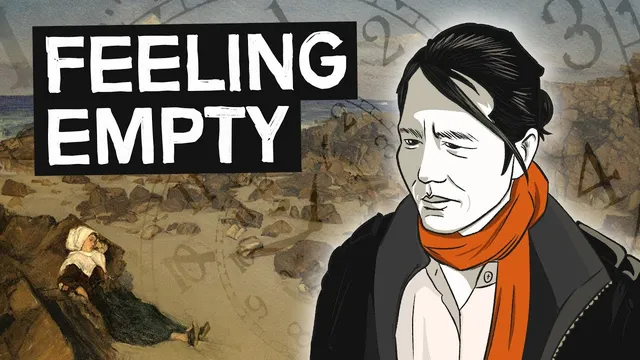
Byung-Chul Han’s Warning: Why Modern Life Feels Emptier Than Ever
Based on Einzelgänger's video on YouTube. If you like this content, support the original creators by watching, liking and subscribing to their content.
Achievement culture turns productivity into a moral demand, reshaping both work and leisure into constant performance.
Briefing
Modern life feels emptier because time has been broken into disconnected “points,” leaving people trapped in relentless activity without duration, narrative, or meaning. Byung-Chul Han’s warning centers on an “age of haste” in which achievement culture turns both work and leisure into checklists—so life becomes a sequence of tasks and consumptions rather than an experience that can cohere into something lasting. The result is a temporal crisis: restlessness, anxiety, and a frantic need to keep moving, even when nothing truly settles.
Han links this emptiness to the achievement society’s demand that people constantly perform. Failing to keep up marks someone as a “loser,” and productivity becomes a moral imperative. That logic spills beyond employment into so-called free time. Travel becomes a rushed itinerary designed to maximize activities; entertainment becomes quantity—bingeing on demand without anticipation or shared afterglow; even dating shifts toward serial monogamy and novelty, treating depth and long commitment as boredom to be avoided. In this framework, activity is no longer a means—it becomes an end. Contemplation and reflection are squeezed out, and “duration” disappears.
The deeper mechanism is how people experience time. Han describes “atomized time” as discontinuous: events don’t connect into a meaningful whole, so there’s no binding thread between past, present, and future. Without that continuity, experiences remain shallow and hard to complete. The pursuit of more experiences in less time also backfires. Han’s warning is blunt: trying to live faster makes life shorter in lived substance, because fulfillment can’t be measured by the number of events. Where one moment follows another too quickly, nothing endures.
Han argues that earlier eras offered structure that modernity has largely lost. In prehistoric life, time’s cycles—seasons, lunar rhythms—gave stability. Later, religion supplied a larger narrative that made events fit into a purposeful whole. He points to Abrahamic ritual life as an example of time “stabilization,” where recurring practices like Ramadan create rhythm and shared meaning rather than isolated moments. But as God’s role as a stabilizer faded, time lost theological direction. Promising and fidelity—commitments that extend into the future and thereby found duration—declined in importance, leaving people jumping from possibility to possibility.
Recovery, for Han, requires a counterweight to the active life: a revitalization of “vita contemplativa.” The fix isn’t simply slowing down for its own sake; it’s learning the “art of lingering,” where leisure is not a break that merely restores energy for work, but a space to endure, reflect, and inhabit time. In contemplative lingering, time is not used like a tool. Thoughts arise, journeys become experiences in themselves, and rituals or solitude create transitions with gravity. Han’s claim is that contemplation returns “scent” to time—liberating people from the compulsion to labor—and gives life back duration, vastness, and the conditions for genuine meaning.
Cornell Notes
Byung-Chul Han links modern emptiness to a changed relationship with time. In an achievement-driven culture, both work and leisure become forms of productivity, pushing people into relentless activity and leaving no room for contemplation. That pressure produces “atomized time,” a discontinuous sequence of isolated moments that lacks narrative connection between past, present, and future. Han argues that trying to live faster increases anxiety and shortens lived fulfillment because meaning depends on duration, not the number of events. Recovery comes through “vita contemplativa”—the art of lingering—where leisure becomes a space to inhabit time through reflection, rituals, and solitude rather than merely recuperating for more labor.
How does Han connect achievement culture to the feeling of emptiness?
What is “atomized time,” and why does it matter for experience?
Why does Han say living faster makes life “shorter,” even if more happens?
How did earlier structures of time differ from modern “point-like presences”?
What does “the art of lingering” change about leisure?
Why does Han treat intervals—periods of not achieving—as necessary?
Review Questions
- How does atomized time prevent experiences from becoming meaningful, according to Han?
- What role do commitments (like promising or fidelity) play in Han’s account of duration?
- Why does Han treat contemplative leisure as more than recovery from work?
Key Points
- 1
Achievement culture turns productivity into a moral demand, reshaping both work and leisure into constant performance.
- 2
Leisure becomes a continuation of labor logic when free time is used mainly to recuperate for more work.
- 3
The “age of haste” produces anxiety and restlessness by accelerating life into a sequence of disconnected moments.
- 4
Han’s “atomized time” lacks narrative connection between past, present, and future, undermining completion, reflection, and lasting meaning.
- 5
Pursuing more experiences faster can reduce fulfillment because meaning depends on duration, not event quantity.
- 6
Earlier sources of time-structure—cyclical rhythms and religious narratives—helped bind experiences into coherent wholes.
- 7
Recovery requires “vita contemplativa”: the art of lingering, where time is inhabited through reflection, rituals, and solitude rather than used to chase outcomes.