Can ChatGPT Create a Netflix Series Idea? - The Feedback Loop
Based on All About AI's video on YouTube. If you like this content, support the original creators by watching, liking and subscribing to their content.
The workflow generates an initial series concept by combining genre constraints with inspiration from Severance, devs, Westworld, and Black Mirror.
Briefing
A multi-expert “feedback loop” prompt can turn a rough Netflix-style series pitch into a higher-scoring, more polished pre-cap by repeatedly evaluating, critiquing, and rewriting until it hits a target rating. The core idea is to treat a series intro like a product that can be stress-tested: generate an initial concept, score it across specific writing criteria, solicit critique of the critique, then rewrite with concrete improvement instructions—repeating the cycle until multiple expert perspectives align on quality.
The process starts by defining what kind of show the pitch should resemble. The workflow narrows the brief to a drama/mystery tone and identifies the types of “experts” needed to judge a TV series hook: screenwriters, story consultants, genre experts, and behavioral experts. To ground the style, it also pulls inspiration from well-known series—Severance, devs, Westworld, and Black Mirror—by converting short descriptions into a PDF and having ChatGPT’s advanced data analysis read the document. From that input, the system generates several original series ideas and selects “ID number six: Memory Lane.”
Next comes the pre-cap: a ~300-word narrated setup designed to function like a trailer’s opening. The draft then gets evaluated by an expert-style rubric that assigns a 0–100 score across categories such as intrigue, character depth, setting, and plot potential. In the example, the first evaluation lands at 88.7, which signals strong fundamentals but leaves room for refinement.
The key twist is that the critique itself is put through another round. After the initial evaluation, a second pass asks the model to critique its own critique, then re-evaluates the same pre-cap with “more nuance.” That re-scoring drops the number, which becomes the justification for targeted rewrites. The system then requests explicit instructions for how to raise the rating toward 95—adding refinements like enhancing the setting, deepening secondary characters, and expanding the clinic’s motivation.
A rewrite follows, and the updated pre-cap is re-scored. The workflow then escalates by running the revised pitch through additional expert lenses: a story/genre consultant and a Hollywood pre-cap writing specialist. When that specialist scores the pre-cap at 84, the loop repeats again—keeping the writing language while adding new, rating-oriented instructions—until the pitch reaches a satisfactory level.
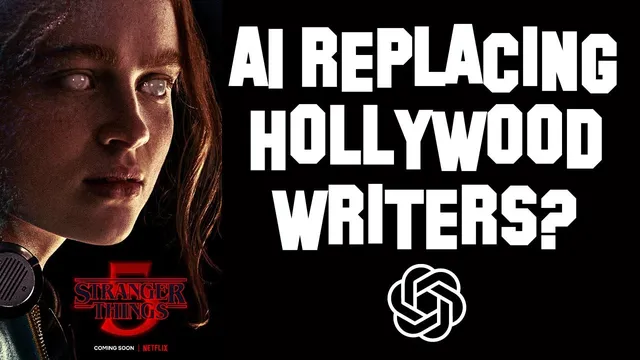
Finally, the method extends beyond text. It uses Midjourney image prompting to generate scene-based visuals for a trailer-like sequence, using the pre-cap as the source material and producing prompts for multiple scenes (e.g., 16 scenes starting from scene one). The overall takeaway is a practical, iterative pipeline: generate → evaluate → critique the critique → rewrite with specific improvement directives → re-evaluate across multiple expert roles, then optionally visualize the result. It’s also framed against current industry tension around AI and writers, using the workflow to test how far AI can go in producing pitch-ready creative assets.
Cornell Notes
The workflow builds a Netflix-style series pitch by using a repeated evaluation-and-rewrite loop. It begins with genre targeting (drama/mystery), draws inspiration from shows like Severance, devs, Westworld, and Black Mirror via a PDF, and generates multiple original ideas before selecting “Memory Lane.” A ~300-word pre-cap is scored from 0–100 across criteria such as intrigue, character depth, setting, and plot potential. After an initial score (88.7), the critique is stress-tested by asking for a more nuanced re-evaluation, which lowers the score and triggers concrete improvement instructions aimed at reaching 95. The revised pre-cap is then re-scored by multiple expert perspectives, and the final concept can be visualized with Midjourney scene prompts.
How does the process turn a vague series idea into a structured pitch?
What does the scoring system measure, and why does it matter?
Why does the workflow ask the model to critique its own critique?
What kinds of rewrite instructions are used to push the score toward 95?
How does using multiple expert perspectives change the outcome?
How are visuals generated from the pre-cap, and what’s the practical link?
Review Questions
- What specific rubric categories are used to score the pre-cap, and how do they map to the rewrite instructions?
- Why might a pre-cap score drop after a “more nuanced” re-evaluation, and what does the workflow do in response?
- How does the workflow’s use of multiple expert roles (story/genre consultant vs. Hollywood pre-cap specialist) affect the number of rewrite cycles?
Key Points
- 1
The workflow generates an initial series concept by combining genre constraints with inspiration from Severance, devs, Westworld, and Black Mirror.
- 2
A ~300-word narrated pre-cap is scored on a 0–100 rubric using criteria like intrigue, character depth, setting, and plot potential.
- 3
Critique is stress-tested by asking for critique-of-critique and then re-evaluating with more nuance, which can lower scores and expose gaps.
- 4
Rewrites target specific improvement directives aimed at raising the rating toward 95, such as strengthening setting detail, expanding secondary characters, and clarifying clinic motivation.
- 5
Multiple expert lenses are used to re-score the revised pre-cap, forcing additional iterations when one perspective still finds weaknesses.
- 6
The final concept can be translated into a visual trailer by generating Midjourney scene prompts directly from the pre-cap’s narrative beats.