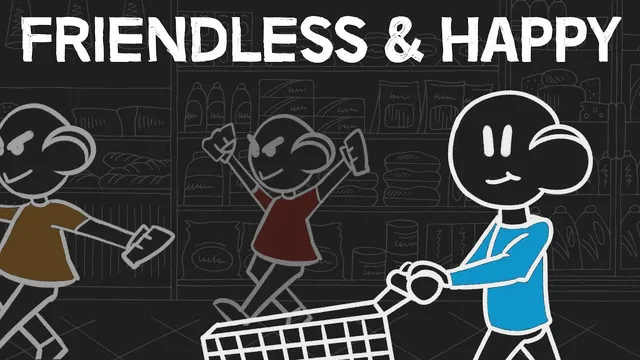
Can we be Happy without Friends? | The Social Minimalist
Based on Einzelgänger's video on YouTube. If you like this content, support the original creators by watching, liking and subscribing to their content.
Friendship can be valuable, but humans need interaction and basic connectedness more than a dense network of close friends.
Briefing
Friendship isn’t a survival requirement—and for many people, a minimalist approach to social ties can deliver the benefits of connection without the time, energy, and emotional costs of maintaining a large friend group. The core idea is that humans need interaction, not necessarily a dense network of close friends; when basic needs and competence are secure, the absence of traditional friendships doesn’t automatically translate into loneliness or social isolation.
The argument begins with a philosophical baseline from Epicurus, who treated friendship as one of the most important routes to happiness, placing it alongside necessities like food and shelter. Epicurus’ “philia” is built on trust, fair treatment, and generosity, and it supports practical and emotional well-being—sharing knowledge, offering help in hardship, and strengthening life opportunities. Modern life, however, changes the conditions under which friendship operates. Technology and online communities make many social functions easier to obtain without traditional face-to-face circles: problem-solving can happen in forums, like-minded groups can be found beyond local geography, and even dating has become routine through online platforms. Streaming and games also compete with in-person meetups, while future immersive environments could further reduce the need for conventional social gatherings.
Yet friendship comes with downsides that matter more in today’s individualistic, time-poor societies. Time is the first cost: busy schedules leave little energy for socializing, so many people choose solitary pursuits to recharge. Energy follows—after work, evenings often go to passive entertainment rather than relationships. Money is another barrier, since socializing frequently requires spending. There’s also a subtler price: friendships can demand conformity. People may “wear masks,” suppress unwanted traits, and manage mutual expectations to stay liked—an emotional labor that solitude avoids. Not all friendships align with Epicurean ideals either; bad friends can actively harm well-being, and Buddhist guidance warns against associating with foolish companions when wiser alternatives aren’t available.
The case for social minimalism gains support from psychologist Daniel Marson, who argues that humans need interaction but not necessarily strong, friendship-level bonds. A lack of friends, in this view, is not inherently wrong, and it doesn’t automatically mean social isolation or unhappiness. The distinction is crucial: social isolation is about the absence of connection, while having few or no friends can still allow basic connectedness through minimal, functional interactions.
Still, the conclusion resists going to extremes. Social interaction remains beneficial, especially when it’s scarce in modern cultures. The practical takeaway is a balanced stance: minimize harmful or burdensome relationships, preserve opportunities for connection, and avoid the belief that happiness requires a large circle of friends. Even small moments of human contact—like a brief conversation—can satisfy the deeper need for connection without locking someone into costly, high-maintenance social life.
Cornell Notes
The central claim is that happiness doesn’t require a large network of friends. Epicurus valued friendship as a major source of pleasure and support, but modern technology and social structures make many functions of friendship available through lighter forms of interaction. Today’s friendships also carry costs—time, energy, money, and the emotional labor of conformity—so a minimalist social strategy can reduce harm while preserving connection. Psychologist Daniel Marson argues that people need interaction and basic connectedness, not necessarily strong friendship bonds for survival or happiness. The best approach for most people is not friendlessness as an ideology, but avoiding excessive or toxic social ties while keeping enough human contact to feel connected.
How does Epicurus define friendship, and why did he treat it as essential to happiness?
Why does modern life weaken the “need” for traditional friendships?
What are the main costs of having friends in today’s individualistic context?
How do toxic or harmful friendships change the argument about friendlessness?
What distinction does Daniel Marson draw between social isolation and having friends?
Why does the conclusion reject extreme social minimalism?
Review Questions
- What does Epicurus consider the foundation of friendship, and how does that differ from romantic love?
- Which four costs of maintaining friendships are emphasized, and which one is described as “hidden”?
- How does Daniel Marson’s distinction between social isolation and having friends support a minimalist approach?
Key Points
- 1
Friendship can be valuable, but humans need interaction and basic connectedness more than a dense network of close friends.
- 2
Technology and online communities make many social functions available without traditional, local friend circles.
- 3
Modern individualism increases the practical costs of friendship—especially time and energy.
- 4
Friendships can require conformity, leading people to “mask” parts of themselves to meet expectations.
- 5
Bad or toxic friendships can harm well-being, making solitude sometimes preferable to harmful companionship.
- 6
A lack of friends doesn’t automatically equal loneliness; social isolation is about missing connection, not missing friendships.
- 7
Most people benefit from some level of human contact, so social minimalism works best as a balance, not an extreme.