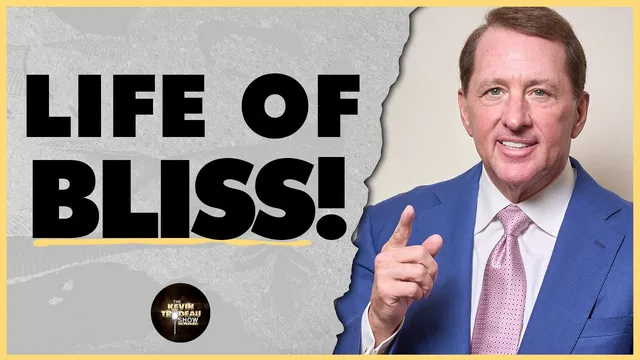
Can You Be Rich And Enlightened?
Based on The Kevin Trudeau Show: Limitless's video on YouTube. If you like this content, support the original creators by watching, liking and subscribing to their content.
Spiritual enlightenment and wealth are presented as compatible when attachment is absent rather than when possessions are absent.
Briefing
Spiritual materialism—being wealthy, enjoying luxury, and still reaching enlightenment—hinges on one mechanism: attachment. Wealth and spirituality aren’t treated as opposites; the dividing line is whether money, possessions, and pleasures are loved as tools for compassion or clung to as extensions of the self. When attachment is absent, loss doesn’t trigger collapse. When attachment is present, even “junk” can feel like it belongs to the body, and losing it can feel like losing a limb.
The core distinction is between pain and suffering. Pain is described as inevitable—injuries, deaths, business failures, disasters, betrayal, and heartbreak are part of life. Suffering, by contrast, is framed as optional and tied to how a person relates internally to what happens externally. The transcript uses vivid examples—roller coasters, haunted houses, and tearful moviegoers—to argue that people can experience intense emotions while still remaining an observer of themselves. In that “witness” mode, crying can be enjoyed as expression rather than spiraling into suffering.
From there, the transcript reframes money through a spiritual lens. Money is portrayed not as a rival to God but as an expression of the same source—universe consciousness, awareness, love, and God—working through people. The “love of money” is labeled the root of evil, not money itself. The practical takeaway is to love people first and use money instead of loving money, treating wealth as energy that can be directed toward connection, creativity, and service.
A personal anecdote is used to illustrate the attachment thesis: after having extensive assets across multiple cities and countries, the speaker says government actions removed those possessions, yet no emotional devastation followed because the items were treated as enjoyed rather than owned in an identity sense. The transcript then intensifies the point with a “hoarders” example involving bottle caps. Even when the caps have no sentimental value and are essentially scrap-level junk, the person can’t let them go because their energy is “permeated” into the objects—so clearing them feels like bodily harm.
The prescription is not renunciation of life’s pleasures but energetic detachment. The transcript describes detachment as a way to stay free and liberated while still manifesting a full life—raising children, being a good spouse or friend, working hard, learning creative skills, growing food, cooking, and making money. It closes by expanding the concept of enlightenment into an inner state: total awareness that dissolves duality (the sense of separate “me and you”), removes triggers that push emotional buttons, and sustains humility, clarity, certainty, and joy regardless of external circumstances. In that state, everything is viewed as an expression of one universal consciousness, making peace and bliss feel stable rather than conditional.
Cornell Notes
The transcript argues that spiritual enlightenment and wealth can coexist when the real issue is attachment, not money. Pain is treated as unavoidable, but suffering is optional—linked to whether a person becomes an observer of experience rather than fusing with it. Money and possessions are framed as expressions of God/universal consciousness, so the “love of money” is the problem, not money itself. Detachment is illustrated through examples like enjoying emotions during movies and the inability of a hoarder to discard worthless bottle caps. The goal is a liberated inner state—free from emotional triggers—while still enjoying life, creativity, relationships, and material comforts.
What does “spiritual materialism” mean in this transcript, and what makes it work?
How does the transcript separate pain from suffering?
Why does the transcript claim money isn’t inherently spiritual poison?
What do the bottle-cap and “hoarders” examples illustrate about attachment?
How does the transcript connect detachment to everyday life and creativity?
What does “enlightenment” look like in the transcript’s description of consciousness?
Review Questions
- How does the transcript define attachment, and what consequences does it say attachment has during loss?
- What evidence or examples are used to argue that suffering is optional even when pain is real?
- According to the transcript, how should money be positioned relative to God and compassion?
Key Points
- 1
Spiritual enlightenment and wealth are presented as compatible when attachment is absent rather than when possessions are absent.
- 2
Pain is framed as inevitable, while suffering is framed as a choice tied to internal attachment and emotional triggering.
- 3
Becoming a “witness” or observer is offered as a way to experience strong emotions without collapsing into suffering.
- 4
Money is described as an expression of God/universal consciousness; the harmful element is loving money above the source of supply.
- 5
Detachment is illustrated as the difference between enjoying possessions and treating them as extensions of identity.
- 6
The transcript links detachment to a stable inner state—peace, bliss, clarity, humility, and joy—regardless of external circumstances.
- 7
A practical spiritual ethic is summarized as: love people first and use things, rather than letting things use or define the self.