Can You Sleep Too Much? (The Answer Might Surprise You)
Based on Better Than Yesterday's video on YouTube. If you like this content, support the original creators by watching, liking and subscribing to their content.
Sleep deprivation is linked to shorter life and multiple mental and physical health problems, including depression, anxiety, memory issues, heart disease, and weight gain.
Briefing
Sleep deprivation is strongly linked to shorter life and a cascade of psychological and physiological problems—depression, anxiety, memory issues, poor concentration, heart disease, and weight gain. For most adults, the commonly cited “sweet spot” is about 7–9 hours per night, where recovery tends to be sufficient. But the relationship between sleep duration and mortality risk isn’t a straight line: getting more sleep doesn’t automatically keep lowering risk forever.
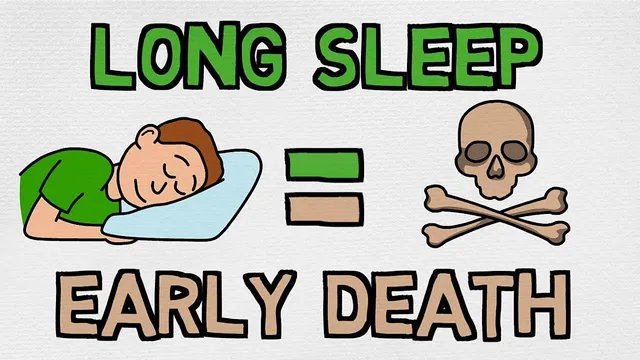
Once average sleep surpasses roughly 9 hours, mortality risk trends upward, mirroring the elevated risk seen with consistently sleeping less than 6 hours. That pattern raises an uncomfortable question: if more sleep seems beneficial, why would longer sleep correlate with earlier death? The explanation offered is that sleep functions as the body’s primary regeneration system, repairing both physical wear and mental strain accumulated during daily stress.
A park-statue analogy frames the mechanism. Daily stressors—physical and psychological “hits and scratches”—accumulate on the statue, while sleep is the adult who repairs it. When the repair time is uninterrupted, the statue’s damage is corrected and the collapse happens later. But if an alarm clock interrupts the repair before it’s finished, small imperfections remain. Over time, those unresolved “cracks” represent aging and accumulated damage, increasing the chance of earlier failure.
That model also clarifies why sleeping longer than 9 hours can appear harmful without implying that extra sleep itself is toxic. Illness changes the workload. Some people—“statues” struck harder, repeatedly—face conditions that demand more regeneration, triggering longer sleep as part of the immune response. In that scenario, extended sleep is a reaction to sickness, not the cause of death. The correlation between long sleep and earlier mortality is therefore treated as a case of correlation without causation: the underlying illness is often too powerful for sleep’s restorative effects to fully counter.
The guidance that follows is practical rather than prescriptive. There is no single universal sleep target, but 7–9 hours fits many adults. Sleeping more than 9 hours every day can be a warning sign when it comes with persistent daytime fatigue—especially if someone still feels tired despite long sleep. That pattern may indicate an underlying problem worth medical evaluation.
Age and activity level matter. Teenagers typically need more sleep—around 9.5 hours on average—so longer sleep can be normal. Physically active people, including elite athletes, may require 10–12 hours during competitive seasons because training adds greater physical stress.
Overall, the message is to sleep as much as needed to feel rested, avoid routinely cutting sleep short with alarms that interrupt recovery, and treat consistently excessive sleep—particularly when paired with ongoing fatigue—as a potential signal to investigate health issues rather than to self-limit sleep.
Cornell Notes
Sleep duration and mortality risk follow a non-linear pattern: both short sleep (under ~6 hours) and long sleep (over ~9 hours) are associated with higher death risk. The proposed mechanism is that sleep acts as daily regeneration that repairs the cumulative “damage” from physical and psychological stress; interrupting sleep (e.g., with an alarm) can leave repair incomplete. Longer sleep can also reflect illness, which increases the body’s need for regeneration through immune activation—so the illness, not extra sleep, may drive the higher mortality correlation. The takeaway is individualized sleep needs: many adults do best around 7–9 hours, teens often need ~9.5 hours, and athletes may require 10–12 hours. Consistently sleeping >9 hours while still feeling fatigued warrants medical attention rather than restricting sleep.
Why does mortality risk rise when sleep goes beyond about 9 hours, even though sleep is generally protective?
How does the statue analogy explain the risk of sleeping too little or being interrupted?
What does “correlation doesn’t mean causation” mean in this sleep context?
When is sleeping more than 9 hours likely normal versus concerning?
What practical sleep advice follows from the regeneration model?
Review Questions
- What non-linear pattern between sleep duration and mortality risk is described, and what approximate thresholds are used?
- How does the regeneration analogy connect alarm-clock interruptions to accumulated damage and earlier risk?
- What conditions or situations are given as reasons someone might legitimately need more sleep than the typical adult range?
Key Points
- 1
Sleep deprivation is linked to shorter life and multiple mental and physical health problems, including depression, anxiety, memory issues, heart disease, and weight gain.
- 2
Mortality risk is not linear with sleep duration: risk rises with consistently short sleep (under ~6 hours) and with consistently long sleep (over ~9 hours).
- 3
Sleep is framed as daily regeneration; repeatedly interrupting sleep (e.g., with an alarm) can leave “repair” incomplete and increase accumulated damage.
- 4
Long sleep can reflect illness: immune activation and recovery needs can increase sleep time, so long sleep may correlate with mortality without being the cause.
- 5
There is no single universal sleep amount; many adults do best around 7–9 hours, while teenagers often need about 9.5 hours and athletes may need 10–12 hours.
- 6
Sleeping over 9 hours every day is more concerning when it comes with persistent daytime fatigue, which may warrant medical evaluation.
- 7
If you feel rested, the recommended approach is to sleep as much as your body requires rather than trying to cap sleep duration.