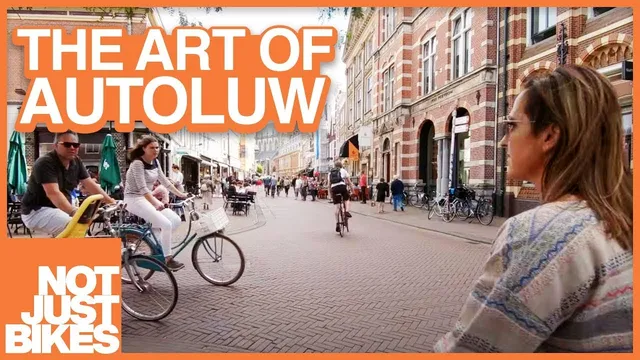
Car-free Streets are Amazing (and we need more of them)
Based on Not Just Bikes's video on YouTube. If you like this content, support the original creators by watching, liking and subscribing to their content.
Auto-luw is not car-free; it restricts car access while keeping some vehicle access possible.
Briefing
Dutch cities’ “almost car-free” neighborhoods—known as woonerf/“auto-luw” areas—deliver a rare mix of liveliness and calm: people of all ages walk, socialize, and move around without the constant pressure of motor traffic. The key distinction matters. “Auto-luw” does not mean “car-free”; it means car access is heavily restricted (the Dutch term is different from “car-free,” and “nearly car-free” is often the most accurate translation). That nuance helps explain why the concept repeatedly triggers backlash when proposed elsewhere.
Across cities, proposals to limit through traffic often spark claims that businesses will collapse, deliveries will stop, people with reduced mobility will be stranded, and emergency vehicles won’t be able to reach fires. Those fears have surfaced in multiple places, including Toronto’s King Street pilot that limited through traffic to speed up streetcars, and Copenhagen’s pedestrianization proposal that drew intense threats—so severe the mayor traveled with bodyguards in 1962. Similar resistance appeared in the Netherlands during the 1970s “Stad/traffic circulation” planning era that reshaped streets into today’s car-light environments. Yet outcomes have tended to contradict the dire predictions: Copenhagen’s pedestrian streets have kept shops doing well even through cold, snowy winters, and the Netherlands’ car-light districts have become easier to navigate rather than harder.
Once residents experience auto-luw in practice, the day-to-day reality often flips the narrative. With fewer cars, streets are less clogged, walking becomes more comfortable, and the area becomes more accessible for people who don’t drive—children, seniors, and anyone who would otherwise rely on others for transport. Small businesses, which typically resist car-light changes first, often benefit because they depend more on foot traffic than on parking. People also tend to prefer walking along an “outer loop” of streets rather than along the side of a busy road.
Importantly, auto-luw doesn’t ignore drivers who truly need to use cars. It can make trips faster for residents, delivery vehicles, handicapped vehicles, and emergency services because the majority of through car traffic is removed. The guiding principle is access with constraints: cars may be allowed, but routes and parking are limited to protect walking, cycling, and transit.
A concrete example is Amsterdam’s Friends Halls neighborhood, where cars are permitted only on certain routes, with limited street parking mainly for deliveries. Former surface parking spaces have been converted into gardens, playgrounds, and bicycle parking—turning curb space into public space.
The concept isn’t universal, and North American attempts often fail when they start from a “car-first” assumption—planning pedestrian streets as if people will drive to them. Auto-luw works best where destinations already cluster: mixed-use areas with shops, homes, offices, and services within walking distance. It fits older neighborhoods built before cars, but it can also succeed in new developments, such as Amsterdam’s “Stad/Station” area around a major train station. Amsterdam is now pushing expansion through an agenda aimed at making large parts of the city nearly car free, with more details promised for later—while the broader lesson is clear: the fear-driven backlash has repeatedly failed to match the lived results.
Cornell Notes
Auto-luw (often translated as “nearly car-free”) is a Dutch approach that restricts car access without eliminating cars entirely. The concept repeatedly faces backlash elsewhere—claims include business collapse, stranded mobility needs, and blocked emergency response—but real-world examples in Toronto and Copenhagen, and earlier Dutch planning, have produced the opposite outcome: calmer streets, easier navigation, and strong local commerce. With fewer cars, walking becomes more comfortable and independent mobility improves for seniors, children, and non-drivers. Small retail benefits from foot traffic rather than parking, while deliveries and emergency vehicles can move more efficiently because through traffic is reduced. Auto-luw works best in mixed-use areas where destinations are close together, and it can be applied to older neighborhoods or carefully designed new districts.
What’s the difference between “car-free” and the Dutch concept of “auto-luw,” and why does that distinction matter?
Why do opponents often predict economic and safety collapse, and how do real examples challenge those claims?
How does auto-luw improve day-to-day mobility for people who don’t drive?
Why can small businesses do well in car-light areas even when parking is reduced?
How can auto-luw still work for drivers, deliveries, and emergency vehicles?
What conditions make auto-luw more likely to succeed, and why do some North American attempts fail?
Review Questions
- What translation pitfalls can distort public understanding of “auto-luw,” and how might that affect political debate?
- List two mechanisms by which restricting car through traffic can improve mobility and commerce at the same time.
- Why does auto-luw depend on land-use patterns like mixed-use proximity, and what goes wrong when that isn’t present?
Key Points
- 1
Auto-luw is not car-free; it restricts car access while keeping some vehicle access possible.
- 2
Backlash often relies on worst-case predictions (business collapse, blocked deliveries, emergency access failures) that have repeatedly failed to match outcomes.
- 3
Car-light streets tend to become easier and safer to navigate, especially for seniors, children, and non-drivers.
- 4
Small retail businesses often benefit from foot traffic more than from parking availability.
- 5
Limiting through traffic can improve travel times for deliveries, handicapped vehicles, and emergency responders.
- 6
Auto-luw works best in mixed-use areas where destinations are close together, not in car-first designs that assume driving to pedestrian streets.
- 7
Amsterdam is pursuing expansion through an agenda aimed at making large parts of the city nearly car free.