Carl Jung & The Psychology of Self-Sabotage (feat. Emerald)
Based on Einzelgänger's video on YouTube. If you like this content, support the original creators by watching, liking and subscribing to their content.
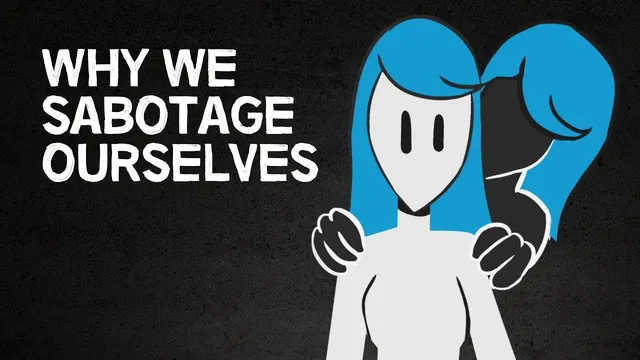
Self-sabotage can result from repressed Shadow Aspects acting like mini-personalities with their own agendas.
Briefing
Self-sabotage often isn’t a mystery of “bad choices” so much as a clash inside the psyche: repressed parts of personality—Jung’s Shadow—can act like semi-autonomous mini-personalities that override conscious plans. The practical takeaway is blunt: repression doesn’t make problems disappear; it pushes them into the unconscious, where they can run the show without consent.
Jung’s framework starts with the Shadow as a “dark closet” in the unconscious—an area where unwanted traits and motives are stored because they’re hard to face. People may repress these aspects because parents disapproved, social ideals demanded conformity, or life experiences taught that certain impulses bring pain. But the act of banishing them doesn’t solve the underlying conflict. Instead, the repressed material gains independence, operating outside conscious awareness and creating the conditions for self-sabotage.
A key correction in the discussion is that the Shadow isn’t merely “the negative side” of personality, nor a shadowy figure living somewhere outside the self. The Shadow is where the contents have been locked away. Those contents aren’t inherently evil or doomed; they become disruptive because they’re disconnected from conscious control.
The transcript also rejects a simplistic idea like “I repressed my greed” or “I repressed my joy.” Greed and joy are qualities, not discrete objects. To repress something, Jungian psychology treats it as a whole personality fragment—an attached set of attitudes, needs, and agendas. These Shadow Aspects function like mini-personalities split off from the ego (the conscious “I”). Each Shadow Aspect has its own goals, and those goals may conflict with the ego’s agenda, producing inner turmoil, resistance, procrastination, and even irrational decision-making.
An extended example illustrates how this plays out. A woman identifies strongly as a loner and pursues a countryside life and a successful online business to minimize dependence on others. Opportunities appear—like buying farmland—but she declines for flimsy reasons. She also quits blogging despite a growing audience and can’t justify the shift. From the ego’s perspective, the behavior is inexplicable. In the Jungian reading offered, the sabotage comes from a Shadow Aspect representing a disowned need for human connection. The woman’s conscious identity wants extreme independence, but the repressed part fears that success will remove the social contact it still clings to.
As her business grows, she would have money for her own home, avoid roommates, and stop using public spaces like laundromats—reducing the incidental social interaction the Shadow Aspect relies on. So the Shadow Aspect “trolls” the ego: it undermines financial success through unwise decisions, procrastination, and mental blocks (including sudden fatigue when she tries to work). The sabotage persists because the Shadow Aspect also resists being illuminated; being integrated would dissolve its autonomy and sense of safety.
The proposed solution is integration, not further repression. The first step is brutal honesty and observation: identify the ego’s needs and the Shadow Aspects’ agendas. Then the ego must weave the Shadow Aspect’s unmet needs into its own plan—reframing success so it includes connection (more time, freedom, and opportunities to socialize). When the need is met consciously, the Shadow Aspect no longer has to sabotage from the dark.
Cornell Notes
Self-sabotage can be driven by Jung’s Shadow: repressed personality fragments stored in the unconscious “dark closet.” These Shadow Aspects act like mini-personalities with their own agendas, which can conflict with the ego’s conscious goals. Because repression keeps these parts out of awareness, they can become autonomous and sabotage plans—often through procrastination, irrational decisions, or emotional dead ends. Integration means making the unconscious conscious: observe with brutal honesty what the ego wants and what the Shadow Aspects want, then adjust conscious goals to meet the Shadow’s unmet needs. When the need is addressed directly, the Shadow no longer has to operate covertly.
What is the Shadow in Jungian psychology, and why does it get blamed as “negative” so often?
Why doesn’t Jungian psychology treat self-sabotage as “repressing a trait” like greed or joy?
How do Shadow Aspects create inner conflict and sabotage?
What example shows Shadow-based self-sabotage in action?
What does integration look like when a Shadow Aspect is driven by an unmet need?
Why does the Shadow Aspect resist being “found” or illuminated?
Review Questions
- How does Jung’s concept of the Shadow differ from the idea that it is simply a negative personality trait?
- Why does the transcript argue that repression leads to autonomy rather than resolution?
- In the loner-business example, what unmet need drives the sabotage, and how is it addressed through integration?
Key Points
- 1
Self-sabotage can result from repressed Shadow Aspects acting like mini-personalities with their own agendas.
- 2
Repression doesn’t eliminate unwanted motives; it pushes them into the unconscious, where they can operate without conscious oversight.
- 3
Shadow Aspects aren’t just “traits” but personality fragments that include needs, perspectives, and decision-making impulses.
- 4
Inner turmoil and irrational choices often reflect conflicts between the ego’s conscious goals and a Shadow Aspect’s agenda.
- 5
A concrete way to reduce sabotage is to observe with brutal honesty what the ego wants and what the Shadow Aspect wants.
- 6
Integration means weaving the Shadow Aspect’s unmet needs into conscious plans, so the Shadow no longer has to sabotage covertly.