Checking Your Phone When You Wake Up Destroys Your ADHD Brain
Based on Ali Alqaraghuli, PhD's video on YouTube. If you like this content, support the original creators by watching, liking and subscribing to their content.
Morning phone-checking can trap people with ADHD in a comfort state by keeping dopamine-related curiosity engaged through messages and notifications.
Briefing
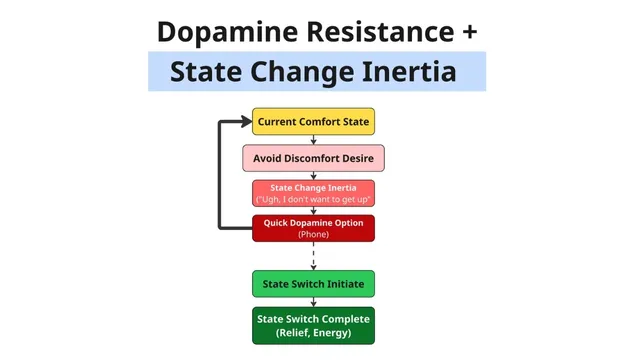
Checking a phone the moment someone wakes up can trap people with ADHD in a “current comfort” brain state long enough to make getting out of bed feel unusually difficult. The core mechanism isn’t just a generic “dopamine hit” problem; it’s a specific inertia created by switching from comfort to action. Messages, emails, and notifications provide immediate curiosity and engagement, keeping dopamine-related circuitry active while the body stays in bed—so the longer the habit continues, the harder it becomes to exit that state.
The transcript distinguishes two related concepts. “Dopamine resistance” refers to the tendency for many people with ADHD to have a lower dopamine baseline, especially when tasks feel boring or dreaded, making it harder to start. But the more decisive factor for morning phone-checking is “state change inertia”: the brain resists leaving a comfortable baseline. The pattern is familiar—doomscrolling even when it feels wrong, or lying in bed for an hour or two and then feeling shame. That shame, the transcript argues, is misplaced; the real driver is brain chemistry and the difficulty of transitioning away from comfort.
The proposed fix targets the transition itself. First, prevent the comfort state from forming by removing the phone from arm’s reach. A practical approach is placing the phone in a lock box across the room or using physical distance so that waking up requires movement—such as getting out of bed to turn off an alarm. The goal is to force an immediate break in comfort and trigger the state switch before the brain can latch onto notifications.
Second, redesign the environment so the first available “dopamine” comes from work or from nothing at all. If the phone isn’t nearby, the brain eventually faces a choice: boredom or action. The transcript frames boredom as a powerful lever because the brain “hates” it, and without an easy stream of intrigue, people are more likely to get up—either to sleep longer if truly tired or to seek stimulation through a different activity.
A final paradox is emphasized: once action begins—running, showering, cold showers, or starting a task—relief and energy often follow, sometimes even flow. Yet many still delay starting. The transcript attributes that gap to dopamine-related dynamics and executive-function friction, suggesting that understanding dopamine more deeply is necessary to fully explain why the “good for you” actions remain hard to initiate.
Overall, the takeaway is behavioral and systems-oriented: stop feeding the morning comfort loop. By changing physical setup and the first choices available on waking, people with ADHD can reduce state change inertia and make the morning transition less punishing.
Cornell Notes
Morning phone-checking can keep people with ADHD stuck in a “current comfort” state by feeding curiosity through emails and notifications. The transcript argues that the biggest problem is “state change inertia”—the brain’s resistance to leaving comfort—more than a simple “dopamine resistance” explanation. When the phone is within reach, the dopamine circuitry stays engaged with messages, making it harder to get out of bed the longer the habit continues. The recommended solution is to prevent that comfort state by moving the phone away (e.g., a lock box across the room) and forcing a physical step to turn off an alarm. If no dopamine-inducing option is nearby, boredom eventually pushes action or sleep, breaking the loop.
What’s the difference between “dopamine resistance” and “state change inertia” in the transcript’s framework?
Why does checking messages first thing in the morning make getting out of bed harder over time?
What practical environmental change is suggested to bypass the morning comfort loop?
How does the transcript use “boredom” as a tool?
What paradox does the transcript highlight about starting good actions?
How does the Jerry Seinfeld example support the environmental-design approach?
Review Questions
- How does “state change inertia” explain morning bed-staying better than “dopamine resistance” alone, according to the transcript?
- What two environment-based strategies are recommended to prevent the comfort state from forming after waking?
- Why does the transcript claim that initiating a task often feels easier once the state switch has already happened?
Key Points
- 1
Morning phone-checking can trap people with ADHD in a comfort state by keeping dopamine-related curiosity engaged through messages and notifications.
- 2
“State change inertia” is presented as the main mechanism: the brain resists leaving bed/comfort even when getting up is known to be beneficial.
- 3
Physical distance from the phone—such as a lock box across the room—reduces access and forces movement that breaks the comfort loop.
- 4
Placing the alarm across the room turns the first step into a required action, making it harder for the brain to stay comfortable and reactive.
- 5
Removing dopamine-inducing options nearby can lead to boredom, which the transcript treats as a push toward either sleeping more or getting up to act.
- 6
Starting good-for-you activities often produces relief and energy, creating a paradox where initiation remains hard until the transition begins.