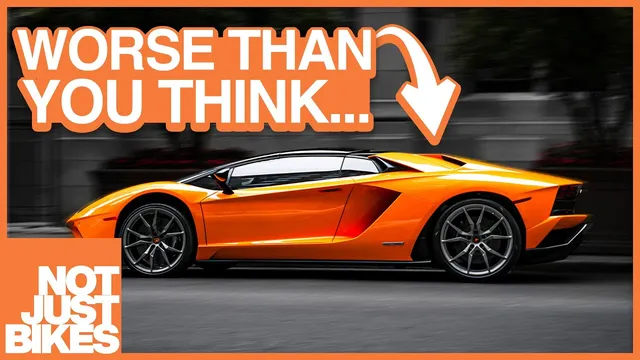
Cities Aren't Loud: Cars Are Loud
Based on Not Just Bikes's video on YouTube. If you like this content, support the original creators by watching, liking and subscribing to their content.
Urban noise pollution is linked to hearing loss at high decibel levels and to stress, sleep disruption, cardiovascular risk, and cognitive decline at lower sustained averages.
Briefing
Urban noise isn’t just an annoyance—it’s a measurable health and social risk, and most of it comes from motor vehicles. Research highlighted in Chris and Melissa Bruntlett’s book “Curbing Traffic” links sustained exposure to high noise levels with hearing loss (above 85 decibels) and broader harms at lower thresholds, including stress, sleep disruption, cardiovascular problems, cognitive decline, and even changes in behavior and social interaction. The World Health Organization’s guideline treats 55 decibels as the maximum acceptable average noise level, yet large shares of people live above it—while some cities reach extreme daytime levels that push noise toward permanent hearing damage.
Noise also reshapes daily life in ways people often don’t notice because humans adapt. Even when the sound doesn’t feel “loud,” it can trigger the body’s stress response across vertebrates, and for humans the long-term consequences show up through poorer sleep quality and downstream health effects. Studies cited from San Francisco found traffic noise correlates with less willingness to engage with strangers, more irritability, and more frequent early endings of conversations—suggesting noise pollution can erode patience and generosity, not just comfort.
The dominant source of city noise is motor vehicles, and the mismatch between harm and perception is part of why it persists. Drivers experience noise from inside soundproofed cabins, while pedestrians and cyclists absorb the full impact—especially from horns. The transcript argues that urban noise has become normalized, with city residents relying on noise-cancelling headphones for commutes, even though many cities have tools to reduce traffic noise.
Concrete policy and design choices in the Netherlands—especially in Delft—offer a roadmap. Delft’s quietness is traced to the 1979 “Wet Geluidhinder” (Dutch noise nuisance act) and later planning decisions, including moving a major elevated rail line underground via a tunnel completed in 2014. Instead of expanding road capacity, the freed space supported low-traffic streets, a dedicated transit right-of-way, and a canal—helping the area meet maximum noise requirements and enabling more housing and offices.
Delft’s approach also targets the physics of car noise. Reducing traffic volume is treated as the best lever, paired with routing vehicles away from the city center and promoting public transit and cycling. When speed can’t be eliminated, slowing vehicles matters: dropping speeds from 50 km/h to 30 km/h can cut noise by about 6 decibels. Road surfaces are another major lever—porous asphalt can reduce rolling noise by up to 6 decibels, and it’s often cheaper than building noise barriers or soundproofing. As a last resort, soundproofing barriers (including green barriers near schools) are used where noise exceeds permitted levels.
Field measurements in Delft and nearby Amsterdam reinforce the theme: quieter street design changes what people experience. In Delft, readings near the train station fall below 55 dBA, and the city center can dip under 40 dBA—library-quiet—when cars are absent. Vehicle-by-vehicle comparisons show cyclists and e-bikes produce far less noise than heavier vehicles, while mopeds and especially loud motorcycles (“farting motorcycles”) dominate peak noise complaints. Electric vehicles reduce engine noise at low speeds, but tire noise remains at higher speeds, so speed management and street design still determine whether cities stay livable. The transcript closes by arguing that mobility doesn’t have to come with constant noise—and that cities can be designed for calm without sacrificing capacity.
Cornell Notes
Urban noise pollution is tied to hearing loss and a range of health and social harms, with the biggest culprit being motor vehicles. Sustained exposure above WHO’s 55 dB average guideline is associated with stress, sleep disruption, cardiovascular issues, faster cognitive decline, and even changes in how people interact. The Netherlands—particularly Delft—demonstrates that noise reduction is achievable through traffic volume cuts, speed limits, and quieter infrastructure such as porous asphalt, plus targeted soundproofing where needed. Measurements near Delft’s train station show average levels below 55 dBA and very low readings in car-free areas. The transcript’s core message: cities aren’t inherently loud; car noise is a policy and design outcome that can be changed.
Why does noise at “moderate” levels still matter for health, even when it doesn’t feel loud?
What thresholds are used to connect noise exposure to hearing loss and acceptable averages?
How does Delft’s rail and street planning reduce noise enough to allow more development?
Which engineering and traffic levers reduce car noise most effectively?
What do the vehicle noise comparisons suggest about where complaints should focus?
Why might electric vehicles not eliminate urban noise on their own?
Review Questions
- What health outcomes are linked to long-term exposure to noise above 55 dBA, and how does sleep disruption fit into that chain?
- Which combination of policies and infrastructure choices in Delft helps keep average readings below 55 dBA near major transit areas?
- Based on the transcript’s measurements, which vehicle types contribute most to peak noise levels, and why does speed matter for tire noise?
Key Points
- 1
Urban noise pollution is linked to hearing loss at high decibel levels and to stress, sleep disruption, cardiovascular risk, and cognitive decline at lower sustained averages.
- 2
The WHO’s average noise guideline is 55 decibels; many populations live above it, and some cities experience extreme daytime levels far beyond that threshold.
- 3
Motor vehicles dominate urban noise, and drivers often underestimate it because they experience sound from inside relatively soundproof cabins.
- 4
Delft’s quieter environment comes from traffic planning (routing vehicles away from the center, promoting transit and cycling) and from infrastructure changes like moving rail underground and redesigning freed space.
- 5
Speed reduction is a major noise-control lever: cutting speeds from 50 km/h to 30 km/h can reduce noise by roughly 6 decibels.
- 6
Quieter road surfaces such as porous asphalt can reduce rolling noise by up to 6 decibels and can be more cost-effective than building noise barriers.
- 7
Electric vehicles reduce low-speed noise, but tire noise and vehicle weight mean speed management and street design remain essential for lasting noise reduction.