Clickbait is Unreasonably Effective
Based on Veritasium's video on YouTube. If you like this content, support the original creators by watching, liking and subscribing to their content.
YouTube’s engagement-driven ranking makes click-through rate central because impressions depend on whether viewers click when a video is shown.
Briefing
Clickbait isn’t just a guilty pleasure—it’s a measurable engine for getting science in front of more people. The core finding is that YouTube’s attention economy rewards packaging—titles and thumbnails—so strongly that even “accurate” curiosity-leaning headlines can outperform straightforward ones by dramatically increasing click-through rate and, in turn, impressions. That matters because impressions determine how widely a video spreads, and wider reach funds better production, more research, and higher-quality future work.
A personal example anchors the argument: a popular science video about a basketball dropped from a dam initially drew 16.3 million views, but almost none came from YouTube. The culprit was the packaging—“Strange Applications of the Magnus Effect”—which was too abstract for most viewers. When the same content was re-uploaded with a simpler title (“Basketball Dropped From Dam”), it gained tens of millions of views on YouTube. Later, with access to ContentID revenue tools and more experimentation, the creator leaned into a more systematic approach: testing thumbnail “reaction faces,” then iterating titles and images based on performance.
The discussion then widens into how YouTube changed incentives. Early on, subscriber feeds and off-platform virality (Reddit, Facebook) drove discovery. Over time, YouTube shifted toward keeping viewers on-platform by ranking what earns engagement rather than what comes from subscribed channels. That shift made click-through rate more important, because YouTube has limited “real estate” to show an endless catalog. If a video doesn’t earn clicks when it’s shown, it won’t get more chances to be seen.
A key complication is that “clickbait” means different things to different people. One definition is essentially marketing: attracting attention to get people to click. A second definition is more pejorative: sensationalized or misleading framing that exploits the curiosity gap by withholding key information. The transcript proposes a spectrum: at one end is dullness; at the other is maximally misleading withholding. The sweet spot for performance tends to sit near the boundary of what’s acceptable—where curiosity is sparked but the title and thumbnail still point to the actual content.
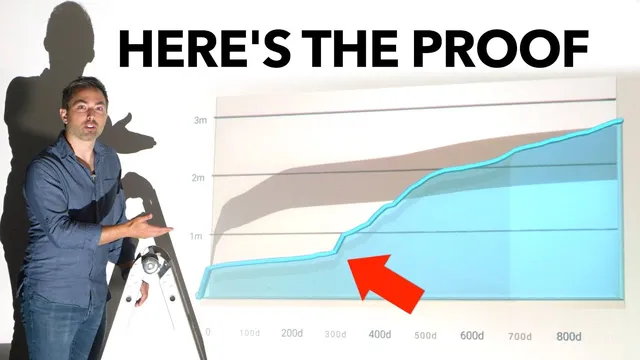
With YouTube’s real-time analytics (views, impressions, click-through rate), creators can run an informal arms race of packaging tests. The transcript describes a concrete case involving an asteroid video: after underperforming for days, changing the title and thumbnail to “These Are the Asteroids to Worry About” triggered a sharp improvement, eventually reaching 14 million views. The content itself didn’t change—only 38 characters and an image—yet the reach multiplied because the new packaging boosted impressions.
Finally, the argument reframes the ethics. The goal isn’t to trick viewers into watching the same video repeatedly; it’s to earn more impressions by matching what people find clickable with what the video actually delivers. The transcript claims that better packaging often improves clarity and accuracy, even for older uploads—switching vague or niche titles to more understandable ones can add millions of views. The payoff is a feedback loop: more views enable more resources for research, props, and expert fact-checking, which improves the next science film.
The segment ends with a sponsor plug for KiwiCo, but the main takeaway remains: on YouTube, packaging is not decoration—it’s a scientific variable that determines whether good ideas reach the audience they’re meant for.
Cornell Notes
The transcript argues that “clickbait” works largely because YouTube ranks videos by engagement, and engagement depends on click-through rate when a video is shown. Since impressions are limited, titles and thumbnails can determine whether a video gets more distribution. A spectrum is proposed: “legitbait” is attention-grabbing without deception, while more misleading “clickbait” exploits curiosity gaps by withholding key information. Real-time metrics let creators test multiple packaging variants and swap them based on performance; small changes can produce large reach gains without altering the underlying content. The practical implication is that better, clearer packaging can increase learning impact and fund higher-quality production through a views-to-resources feedback loop.
Why does YouTube make titles and thumbnails so consequential for a video’s success?
How does the transcript distinguish different kinds of “clickbait”?
What evidence is used to show that changing packaging alone can massively change reach?
How do real-time analytics change the behavior of creators?
Why does the transcript claim that “anti-clickbait” can still increase clicks?
What ethical justification is offered for optimizing titles and thumbnails?
Review Questions
- What specific YouTube incentive changes are described as increasing the importance of click-through rate?
- How does the proposed clickbait spectrum relate to the idea of “legitbait” versus misleading “clickbait”?
- In the asteroid example, what changed and why did that change plausibly affect impressions rather than the underlying video quality?
Key Points
- 1
YouTube’s engagement-driven ranking makes click-through rate central because impressions depend on whether viewers click when a video is shown.
- 2
“Clickbait” is not one thing: it can mean attention-grabbing marketing or misleading/sensational framing that exploits the curiosity gap.
- 3
A spectrum model helps explain why the most effective packaging often sits near the boundary of what feels acceptable rather than being purely dull or maximally deceptive.
- 4
Real-time metrics (including impressions and click-through rate) enable iterative A/B-style testing of titles and thumbnails after launch.
- 5
Small packaging changes—sometimes just a title and thumbnail—can produce large reach gains because they alter impressions, not the video’s content.
- 6
Better packaging can improve clarity and accuracy, including for older uploads, leading to additional views.
- 7
More views can fund better science production (research, props, expert fact-checking), creating a feedback loop between reach and quality.