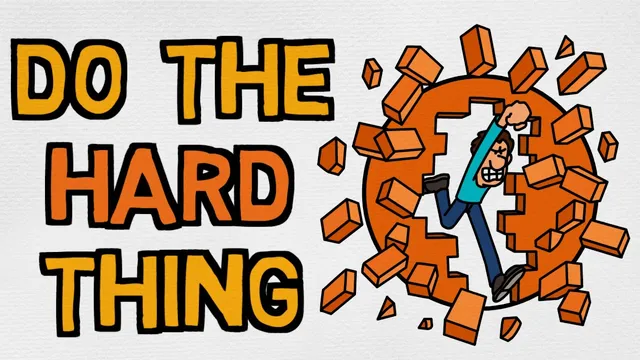
Comfort Will Ruin Your Life
Based on Better Than Yesterday's video on YouTube. If you like this content, support the original creators by watching, liking and subscribing to their content.
Avoid treating comfort as harmless; long-term comfort can cause regression by shrinking what feels manageable.
Briefing
Comfort can quietly sabotage long-term progress by shrinking what feels “easy” and making future challenges feel even harder. The core idea is that living mostly inside a comfort zone doesn’t just stall growth—it can lead to regression, because repeated avoidance trains the brain and body to handle less. A socially anxious person who keeps withdrawing from new interactions may start with a manageable fear, but as they spend more time alone, the “safe” boundary tightens. Calling old friends can then feel harder, not easier, because the fear grows through non-exposure—much like unused muscles atrophy.
The remedy is to spend daily time in a “growth zone,” where discomfort signals real progress. Improvement requires raising the challenge: lifting heavier weights instead of repeating the same routine, practicing language with recall rather than passive review, or pushing training beyond familiar effort. The discomfort is expected—often you feel incompetent or “like an idiot”—because worthwhile gains tend to feel difficult in the moment. The message isn’t to chase pain for its own sake, but to understand the mechanism: no improvement without challenge.
That said, discomfort isn’t automatically good. The framework adds a third category: a “danger zone,” where pushing too far can cause injury, burnout, or other setbacks that push progress backward. The transcript draws a line between productive strain and reckless overreach. It also notes a common failure pattern: people try to change everything at once, set unrealistic expectations, and quit quickly. Worse, repeated failure can harden into an identity—“I’m a failure”—so they stop trying altogether.
The practical solution is gradual escalation in small, manageable increments. Instead of jumping from sedentary to intense workouts five times a week, start with something achievable (for example, lighter gym sessions three times a week) and only increase once consistency is proven. This approach creates a positive feedback loop: completing small challenges builds evidence of capability, which boosts confidence and persistence, and that momentum can spread to other areas of life.
The transcript also emphasizes that growth should be cyclical, not constant. Even while expanding, people should retract slightly when difficulty becomes overwhelming, allowing the comfort zone to “catch up” and preventing burnout. Comfort is framed as temporary refuge, not permanent residence.
Finally, the guidance is to choose a “worthy challenge” that brings long-term benefit despite short-term discomfort—studying, resisting sugar, saving money—rather than doing anything merely painful. The call to action is simple: do something today that’s slightly harder than yesterday, whether that means reading a bit more, adding a few reps, or learning new words, and let consistent growth compound over time.
Cornell Notes
The transcript argues that comfort can erode future ability: staying too long in a comfort zone often shrinks it, so challenges later feel worse. Real progress happens in a growth zone, where discomfort comes from increasing challenge—like heavier lifts, harder practice, or longer effort. Discomfort becomes harmful in a danger zone, where overexertion leads to injury or burnout, and quick failure can turn into a belief that change is impossible. The recommended path is gradual, consistent escalation that builds a positive feedback loop of small wins, plus periodic retraction for recovery so the comfort zone can adapt. The goal is to seek challenges with long-term payoff, not pain for its own sake.
Why can “staying comfortable” lead to worse outcomes later?
What distinguishes the growth zone from the danger zone?
How do consistency, intensity, and duration move someone from comfort to growth?
What’s the “small increments” strategy, and why does it work?
Why should people retract difficulty instead of pushing harder indefinitely?
How does the transcript decide which discomfort is worth pursuing?
Review Questions
- What mechanisms make a comfort zone shrink over time, and how does that affect future behavior?
- Give an example of how you would move from comfort to growth using only one of the three levers: consistency, intensity, or duration.
- How can a person avoid slipping from the growth zone into the danger zone when trying to make a major life change?
Key Points
- 1
Avoid treating comfort as harmless; long-term comfort can cause regression by shrinking what feels manageable.
- 2
Progress requires leaving the comfort zone through increased challenge, even when it feels awkward or incompetent.
- 3
Discomfort is not automatically good—productive strain belongs in the growth zone, while reckless pushing can enter a danger zone.
- 4
Use gradual increments to reduce the chance of quitting and to build a positive feedback loop from small wins.
- 5
Retract difficulty when it becomes overwhelming so recovery happens and the comfort zone can adapt.
- 6
Choose challenges with long-term payoff (learning, health, saving) rather than discomfort with no durable benefit.
- 7
Don’t try to expand everywhere at once; pick a worthy area, start small, and scale when consistency is established.